

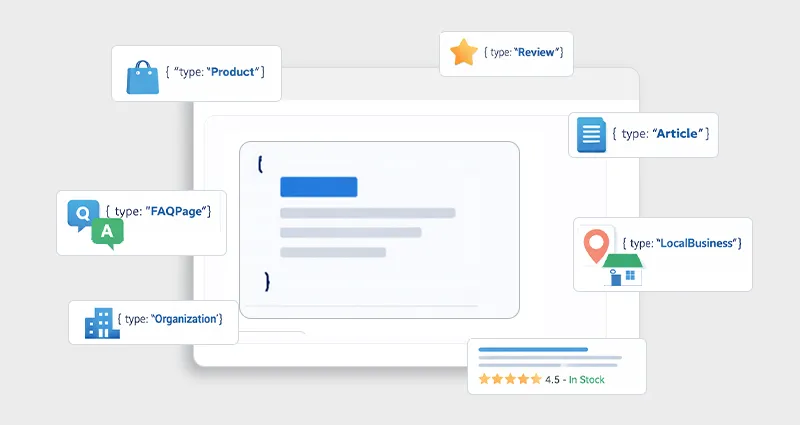
If you’re running an online store, getting traffic is only half the battle, getting users to click is where the real game begins. That’s exactly where essential schema markups for e-commerce websites come in.
Schema markup (a form of structured data for e-commerce) helps search engines understand your content better and display it as rich results for e-commerce, like product ratings, prices, availability, and FAQs, directly in search results.
From my experience working on e-commerce SEO projects, implementing the right e-commerce schema markup often leads to noticeable improvements in click-through rates (CTR), even without ranking changes. According to Google’s structured data documentation, properly implemented schema increases eligibility for enhanced search results, which directly impacts visibility.
In this guide, we’ll break down the 10 essential schema markups for e-commerce websites, how they work, and how to implement them using JSON-LD schema for e-commerce, Google’s recommended format.
What Is Schema Markup for E-commerce Websites?
Schema markup is a structured data vocabulary (from Schema.org) that helps search engines better understand and interpret your website content beyond plain text.
To fully grasp how structured data works, you should first understand e-commerce schema markup and how it connects with search engine algorithms.
For e-commerce websites, it adds context to critical elements such as product pages, category pages, and business information. This allows search engines to clearly identify details like pricing, availability, reviews, and brand information instead of guessing from unstructured content.
With schema markup for e-commerce websites, you can enhance how your store appears in search by enabling:
- Product details (price, availability, ratings, reviews)
- Business and brand information
- Navigation elements like breadcrumbs
- FAQs and customer support content
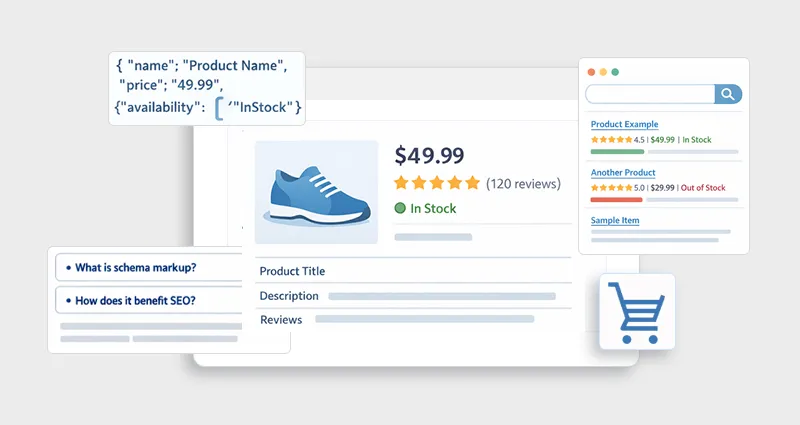
Most importantly, it powers e-commerce rich snippets , which display enhanced search results (like star ratings and pricing) and make your listings more attractive, often leading to higher click-through rates (CTR).
Why Schema Markup Matters for E-commerce SEO
Implementing e-commerce structured data SEO is more than a technical enhancement, it directly impacts how your store performs in search results.
Search engines rely on structured data to confidently present your content in enhanced formats. Without it, even high-quality product pages may appear as plain blue links, missing opportunities to stand out.
Key Benefits:
- Improves visibility in SERPs through rich snippets and enhanced listings
- Increases CTR by making listings more informative and visually appealing
- Helps Google accurately interpret product data, reducing ambiguity
- Boosts eligibility for advanced features like Google Shopping results and Knowledge Panels
According to Google Search Central, structured data makes your pages eligible for enhanced search features, which can improve user engagement and overall search performance.
10 Essential Schema Markups for E-commerce Websites
Let’s dive into the best schema types for e-commerce websites that you should prioritize.
1. Product Schema (Most Important)
Product schema markup for e-commerce is the backbone of structured data for any online store. It helps search engines clearly understand what you’re selling by defining key attributes such as product name, description, images, brand, and SKU.
Without a product schema, other enhancements like pricing or reviews may not function correctly. It also ensures your product pages are eligible for rich results, making it one of the most critical schema types.
It tells search engines:
- Product name
- Description
- SKU
- Brand
- Images
Example (JSON-LD):
{
"@context": "https://schema.org/",
"@type": "Product",
"name": "Wireless Headphones",
"image": "https://example.com/image.jpg",
"description": "High-quality wireless headphones",
"brand": {
"@type": "Brand",
"name": "XYZ"
}
}
Without this, other schemas like offers and reviews won’t work properly.
2. Offer Schema
Offer schema provides real-time commercial details like price, currency, availability, and discounts. This is especially important for transactional queries where users are ready to buy.
When implemented correctly, it allows search engines to display pricing directly in search results, which can significantly improve CTR and attract high-intent users.
It enables:
- Price display
- Stock availability (InStock, OutOfStock)
- Discounts
This is what makes your listing stand out in rich results for e-commerce.
3. Review Schema
Review schema highlights individual customer feedback on your products. It adds credibility by showing authentic user opinions, which play a major role in influencing buying decisions.
For e-commerce websites, this schema helps search engines understand user sentiment and enhances trust signals in search results.
It helps:
- Build trust
- Improve CTR
- Show real user experiences
4. Aggregate Rating Schema
Aggregate Rating schema summarizes all product reviews into an overall score (like 4.5 out of 5 stars). This is what generates the visible star ratings in search listings.
These ratings are proven to increase clicks because they instantly communicate product quality and popularity to potential buyers.
Example:
{
"@type": "AggregateRating",
"ratingValue": "4.5",
"reviewCount": "120"
}
From real-world testing, listings with ratings consistently outperform those without.
5. Breadcrumb Schema
Breadcrumb schema defines your website’s navigation structure, helping search engines and users understand how a page fits within your site hierarchy.
Instead of:
example.com/category/product
Google shows:
Home > Category > Product
This enhances both UX and SEO clarity.
6. Organization Schema
Organization schema provides key business information such as your brand name, logo, contact details, and social profiles.
This helps search engines establish brand credibility and can contribute to knowledge panel visibility, strengthening your overall online presence.
This defines your business details:
- Name
- Logo
- Contact info
It strengthens brand trust and helps Google connect your store with your brand identity.
7. FAQ Schema
The FAQ schema is one of the easiest ways to dominate SERP space.
FAQ schema allows you to display common questions and answers directly in search results. This not only increases your listing size but also addresses user concerns before they even click.
It’s particularly effective for product pages, shipping details, and return policies.
- Expands your listing
- Answers user questions instantly
- Improves visibility in People Also Ask
8. SearchAction Schema
SearchAction schema enables a search box for your website directly in Google search results. Users can search for products within your store without visiting your homepage first.
This is especially valuable for large e-commerce websites with extensive product catalogs.
9. Local Business Schema (For Stores with Physical Locations)
For e-commerce brands with physical locations, the Local Business schema helps optimize for local search. It includes details like store address, opening hours, and contact information.
This improves visibility in local results and Google Maps, making it easier for nearby customers to find your store.
If you have a physical store, this schema helps with:
- Local SEO
- Google Maps visibility
- Store hours and contact details
10. Video Schema
Video schema helps search engines understand and index product-related videos. If you use demos, tutorials, or product showcases, this schema can make your videos appear in search results.
It enhances engagement and can drive additional traffic from video-based search features.
How to Implement Schema Markup for E-commerce Websites
The most effective way to implement structured data is through e-commerce schema JSON-LD, which is Google’s recommended format because it’s clean, flexible, and easier to manage without interfering with your HTML. A structured approach ensures your schema is both valid and impactful:
1. Identify relevant schema types
Start by mapping schema types to specific page types. For example, product pages need Product, Offer, and Review schema, while category pages may benefit from Breadcrumb schema. This ensures you’re not adding unnecessary or irrelevant markup.
2. Generate JSON-LD code
Use schema generators or manually create JSON-LD scripts based on Schema.org guidelines. Make sure all required and recommended fields are included to qualify for rich results. Alternatively, you can use an e-commerce schema app to automate JSON-LD generation without manual coding.
3. Add it to your website
Insert the JSON-LD script in the section or deploy it using tools like Google Tag Manager. Many e-commerce platforms (like Shopify or WooCommerce) also support schema via apps or plugins.
4. Test using Google Rich Results Test
Before publishing, validate your markup to ensure it’s eligible for rich results for e-commerce and free from errors.
5. Monitor in Search Console
After implementation, track performance and errors in Google Search Console’s Enhancements report. This helps you identify issues and optimize continuously.
Best Practices for E-commerce Schema Implementation
When implementing schema markup for online stores, following best practices ensures long-term SEO benefits and avoids penalties or ignored markup.
Use JSON-LD format
It’s Google’s preferred format and easier to maintain compared to microdata or RDFa.
Ensure data matches visible content
The information in your schema (price, reviews, availability) must exactly match what users see on the page. Mismatched data can lead to manual actions or an ignored schema.
Avoid fake reviews or misleading data
Adding manipulated ratings or incorrect information violates Google guidelines and can harm trust and rankings.
Keep schema updated (especially price & stock)
E-commerce data changes frequently. Outdated pricing or availability can reduce credibility and disqualify your listings from rich results.
Validate regularly
Even small changes in your site can break the schema. Regular testing ensures your structured data remains error-free and effective.
Common E-Commerce Schema Mistakes to Avoid
Even with the right strategy, small implementation errors can limit the effectiveness of your e-commerce SEO schema.
Missing required fields
If essential properties (like price or product name) are missing, your page may not qualify for rich snippets at all.
Incorrect nesting of schema types
Schema types like Product, Offer, and AggregateRating must be properly structured within each other. An incorrect hierarchy can confuse search engines.
Using outdated schema formats
Older implementations like microdata may still work, but they’re harder to maintain and more prone to errors compared to JSON-LD.
Adding a schema that doesn’t match the page content
For example, using a review schema without visible reviews on the page can lead to penalties or ignored markup.
By focusing on accurate implementation and ongoing validation, you ensure your e-commerce structured data SEO delivers consistent results, both in visibility and user trust.
Conclusion
Implementing the essential schema markups for e-commerce websites is no longer optional, it’s a necessity if you want to compete in modern search results.
From product schema to FAQs, each type plays a role in improving visibility, trust, and click-through rates. When combined strategically, these schemas transform ordinary listings into compelling, high-performing search results.
Start with the fundamentals, validate your implementation, and continuously optimize. Over time, you’ll not only improve your e-commerce SEO schema but also create a better search experience for your customers.
FAQs
Q1: What are the most important schema markups for e-commerce websites?
Product, Offer, Review, and Aggregate Rating are the most critical for visibility and conversions.
Q2: Does schema markup improve rankings?
Not directly, but it improves CTR and visibility, which can indirectly impact rankings.
Q3: What is the best format for e-commerce schema?
JSON-LD schema for e-commerce is the recommended format by Google.
Q4: How long does it take to see results?
You may see rich snippets within days to weeks after proper implementation and indexing.
Q5: Can I use multiple schema types on one page?
Yes, and you should. For example, Product + Offer + Review work together.
Q6: Is schema markup necessary for small e-commerce stores?
Yes. Even small stores benefit from improved visibility and CTR in competitive markets.
Q7: What is the difference between Review and Aggregate Rating schema?
Review shows individual feedback, while Aggregate Rating shows the overall calculated score.
Q8: How do I test my schema markup?
Use Google’s Rich Results Test and Search Console enhancements report.









 Wix Schema
 Squarespace Schema
 BigCommerce Schema
 Shopify Schema
 Hubspot Schema
 Webflow Schema
 GoHighlevel Schema
 Duda Schema
 Weebly Schema
 ClickFunnel Schema