

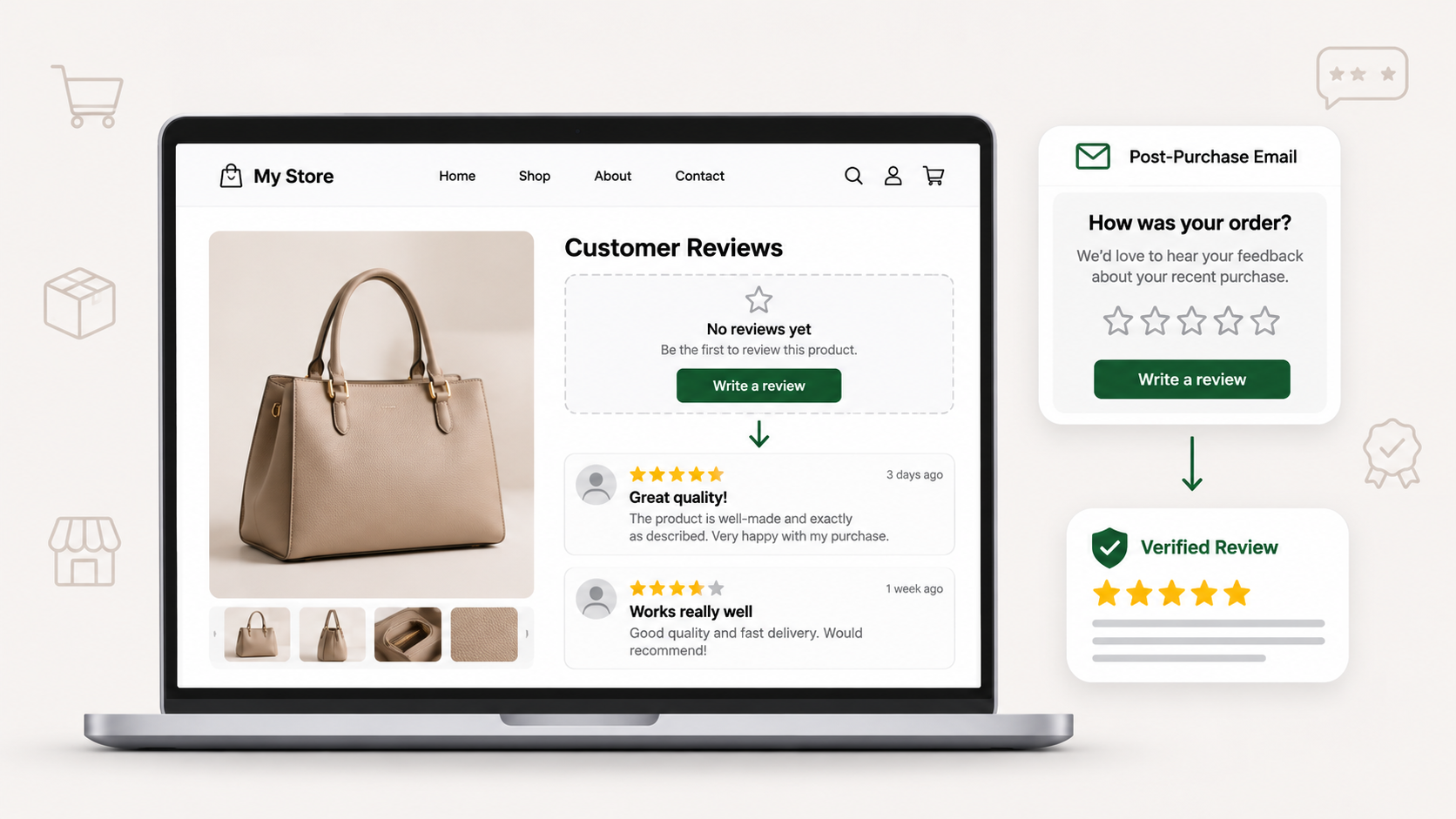
Launching a new ecommerce store without customer reviews is a common challenge. Even if your products are high quality, shoppers often hesitate to buy because they have no proof that others have had a positive experience.
This leads many store owners to consider shortcuts like buying reviews or publishing fake testimonials, practices that can violate platform policies and damage customer trust.
The good news is that there are ethical ways to get product reviews from genuine customers. In this guide, you’ll learn how to get product reviews for a new ecommerce store, build credibility, and create a sustainable review strategy for long-term growth.
How to Get Product Reviews Ethically for a New Store
If you’re launching a new store with zero reviews, focus on proven strategies that encourage genuine customer feedback instead of shortcuts. The table below summarizes the most effective and ethical ways to start building product reviews.
| Ethical Way | Quick Tip |
|---|---|
| Deliver a great product | A positive customer experience is the foundation of genuine reviews. |
| Ask at the right time | Send review requests after customers have had time to use the product. |
| Make reviewing easy | Use a simple, mobile-friendly review process with minimal steps. |
| Automate post-purchase emails | Send timely review requests after every completed order. |
| Follow up once | A polite reminder can increase review response rates without being intrusive. |
| Provide excellent customer support | Resolving issues professionally encourages honest customer feedback. |
| Encourage user-generated content | Invite customers to share photos, videos, or detailed product experiences. |
| Learn from every review | Use both positive and negative feedback to improve your products and service. |
| Avoid fake reviews | Collect authentic reviews from real customers and never fabricate ratings. |
Why Product Reviews Matter More Than Ever
When shoppers can’t physically examine a product, they rely on the experiences of previous buyers to reduce uncertainty. A handful of authentic reviews can often influence purchasing decisions more than polished marketing copy.
Research consistently shows that online reviews play a major role in consumer behavior. According to the PowerReviews 2025 Consumer Survey, the vast majority of shoppers actively read reviews before making a purchase, and many specifically look for recent feedback to evaluate product quality and reliability.
For new businesses, reviews offer several important benefits:
- They increase buyer confidence.
- They provide social proof.
- They help shoppers make informed decisions.
- They reveal opportunities to improve products and customer experience.
- They contribute fresh user-generated content that can strengthen product pages.
The challenge isn’t deciding whether reviews matter, it’s understanding how to get product reviews without compromising trust or violating review policies.
Why New Stores Struggle to Get Their First Reviews
Every successful ecommerce brand started with zero reviews. The difference is that established businesses have already built a customer base, while new stores are still earning their first sales.
Several factors make it difficult to get first product reviews.
No Purchase History
Without previous buyers, there simply aren’t any customers available to leave feedback. This makes collecting your first customer reviews naturally slower.
Customers Need a Reason to Participate
Even satisfied buyers often forget to leave reviews unless they’re reminded. People are busy, and writing a review isn’t always their priority after receiving a product.
Trust Works Both Ways
Customers want evidence that your products are worth buying, while you need customers before you can build that evidence. Breaking this cycle requires patience and a deliberate review generation strategy.
Instead of looking for shortcuts, focus on creating positive buying experiences that naturally encourage customers to share their opinions.
What Counts as an Ethical Product Review?
Not every review collection method is created equal. Ethical review collection means gathering honest feedback from real customers without manipulating, filtering, or fabricating their experiences.
An ethical review should always be:
- Written by someone who actually purchased or used the product.
- Based on genuine personal experience.
- Free from misleading claims.
- Collected without forcing only positive feedback.
- Displayed transparently.
This approach benefits everyone involved. Customers receive trustworthy information, businesses gain valuable feedback, and review platforms maintain credibility.
What Doesn’t Count?
Many new businesses unknowingly cross ethical boundaries while trying to build credibility quickly. Examples include:
- Purchasing fake product reviews.
- Asking employees to pretend they’re customers.
- Creating reviews yourself.
- Copying reviews from another website.
- Publishing AI-generated customer testimonials as real experiences.
- Offering rewards only for five-star ratings.
These practices create misleading product information and can violate the policies of ecommerce marketplaces, search platforms, and review websites.
For example, the U.S. Federal Trade Commission (FTC) prohibits businesses from buying or selling fake reviews and offering incentives in exchange for reviews expressing a particular sentiment. Businesses must also follow applicable disclosure requirements when reviews involve incentives or other material connections.
9 Ethical Ways to Get Product Reviews for a New Ecommerce Store
Building authentic product reviews takes time, but the right approach helps you earn customer trust and long-term credibility. Here are nine ethical ways to collect genuine reviews without violating platform policies.
1. Start by Delivering a Product Worth Reviewing
The most effective product review strategy doesn’t begin with review requests. It begins with the product itself. Customers rarely leave positive reviews because they were asked. They leave reviews because something exceeded their expectations. Before focusing on review generation for ecommerce, ask yourself:
- Is the product accurately described?
- Does the packaging create a good first impression?
- Is shipping reliable?
- Are customers getting exactly what they expected?
If these fundamentals aren’t in place, even the best review request campaign won’t produce consistent positive feedback.
Think of reviews as a reflection of the overall customer experience rather than an isolated marketing tactic.
2. Ask for Reviews at the Right Time
Timing has a significant impact on review response rates. Request feedback too early, and customers may not have used the product yet.
Wait too long, and they may forget about the purchase altogether. A better approach is to send review requests after the customer has had enough time to experience the product.
For example:
| Product Type | Suggested Review Request Timing |
|---|---|
| Clothing | 7-10 days after delivery |
| Electronics | 10-14 days after delivery |
| Skincare | 2-4 weeks after delivery |
| Home products | 10-14 days after delivery |
Personalizing the timing based on the product category often produces better-quality reviews than sending every customer the same automated message.
3. Make Leaving a Review Effortless
One of the biggest reasons customers don’t leave reviews is simple, they encounter friction.
If writing a review requires logging into multiple accounts, navigating several pages, or filling out lengthy forms, many customers abandon the process. Instead, simplify every step.
A good review experience should:
- Link directly to the review page.
- Work smoothly on mobile devices.
- Require as few clicks as possible.
- Allow photo uploads when relevant.
- Clearly explain how long the process takes.
Even small usability improvements can increase participation because customers are more likely to complete tasks that feel quick and convenient.
4. Use Post-Purchase Email Automation
One of the most effective ways to get customer reviews is through automated post-purchase emails.
Unlike promotional emails, review requests arrive after customers have already experienced the product, making them feel timely and relevant.
Keep these emails short and personal. Instead of focusing on your business, focus on the customer’s experience.
For example:
How’s your new order working out?
We’d love to hear what you think. Your feedback helps other shoppers make informed decisions and helps us continue improving our products.
Avoid writing emails that pressure customers into leaving only positive reviews. Encourage honest feedback, regardless of whether it’s positive or negative.
Automation ensures every buyer receives the same opportunity to share their experience, creating a steady flow of authentic reviews over time.
5. Follow Up, But Don’t Spam
Not every customer will respond to the first review request, and that’s perfectly normal.
A single, polite reminder can improve response rates without making customers feel pressured. If someone doesn’t respond after one follow-up, it’s usually best to stop asking.
A simple sequence works well:
- First email: 7-14 days after delivery (depending on the product)
- Reminder: 5-7 days later if no review has been submitted
Respecting your customers’ inboxes is part of collecting reviews ethically. Sending repeated reminders or aggressive messages can create a poor experience and even lead customers to unsubscribe.
6. Make Customer Support Part of Your Review Strategy
Customers don’t always expect perfection, they expect businesses to respond when something goes wrong.
A fast, helpful support experience can turn an initially disappointed customer into a loyal one who leaves an honest, positive review after the issue is resolved.
For example, if a customer receives a damaged product, replacing it quickly and communicating clearly often leaves a stronger impression than if nothing had gone wrong at all.
Don’t ask customers to change or remove negative reviews in exchange for assistance. Instead, focus on solving the problem. Reviews that mention excellent customer service often carry significant weight with future buyers.
7. Encourage User-Generated Content
Some customers are more comfortable sharing photos or videos than writing lengthy reviews.
Encouraging user-generated content (UGC) gives shoppers additional context and makes product pages feel more authentic.
You can invite customers to:
- Share photos of the product in use.
- Upload short videos.
- Explain how they use the product.
- Describe what surprised them most after purchase.
Rich, experience-based reviews often help future customers understand the product better than star ratings alone.
8. Learn From Negative Reviews
Many businesses focus only on collecting five-star reviews. In reality, a mix of positive and constructive feedback often appears more trustworthy.
Negative reviews can reveal:
- Product quality issues
- Packaging problems
- Shipping delays
- Confusing product descriptions
- Common customer questions
Treat reviews as a source of customer research, not just marketing content.
Respond professionally, acknowledge concerns, and explain any improvements you’ve made where appropriate. This demonstrates that your business values customer feedback instead of trying to hide it.
9. Be Patient – Trust Takes Time
One of the biggest mistakes new businesses make is expecting dozens of reviews within the first few weeks. Authentic review growth is gradual.
Rather than chasing numbers, focus on consistently delivering great customer experiences. A store with 20 genuine reviews usually earns more trust than one with hundreds of suspicious-looking ratings.
If your review collection process is consistent, the number of reviews will naturally increase as your customer base grows. Think of reviews as a long-term business asset rather than a short-term marketing goal.
Mistakes to Avoid When Trying to Get Product Reviews
Knowing how to get product reviews also means knowing what not to do. These shortcuts may seem harmless, but they can damage your credibility and create compliance issues.
| Mistake | Why It’s a Problem |
|---|---|
| Buying fake product reviews | Misleads customers and may violate marketplace or consumer protection policies. |
| Writing reviews yourself | Creates false social proof and undermines trust. |
| Asking friends or employees to pose as customers | Doesn’t reflect genuine product experiences. |
| Copying reviews from another website | Can create copyright and authenticity issues. |
| Offering rewards only for positive reviews | Encourages biased feedback and may violate review platform policies. |
| Ignoring negative reviews | Misses opportunities to improve products and customer satisfaction. |
Customers are becoming increasingly skilled at spotting suspicious review patterns. Building trust honestly is always more sustainable than trying to manufacture it.
Build a Simple Review Collection Workflow
If you’re wondering how to get reviews for a new ecommerce store, don’t overcomplicate the process. A straightforward workflow is often enough to generate your first customer reviews consistently.
Step 1: Deliver a Great Customer Experience
Ensure your product, shipping, packaging, and communication meet customer expectations.
Step 2: Send an Automated Review Request
Follow up after the customer has had enough time to use the product.
Step 3: Make Reviewing Easy
Provide a direct review link and keep the process short.
Step 4: Respond to Every Review
Thank customers for positive feedback and address concerns professionally when reviews are less favorable.
Step 5: Improve Based on Feedback
Use customer insights to refine your products, descriptions, and overall buying experience.
Over time, this creates a sustainable system for review generation for ecommerce that supports long-term growth.
Product Reviews vs. Product Ratings: What’s the Difference?
Although people often use these terms interchangeably, they’re not exactly the same.
| Product Reviews | Product Ratings |
|---|---|
| Written customer feedback describing their experience. | A numerical or star-based score given by the customer. |
| Provides context and detailed opinions. | Offers a quick summary of customer satisfaction. |
| Helps shoppers understand strengths and weaknesses. | Helps shoppers compare products quickly. |
| Usually includes ratings alongside written comments. | May exist without written feedback, depending on the platform. |
The strongest product pages include both. Ratings provide an immediate trust signal, while reviews explain why customers gave those ratings.
How Review Schema Fits Into Ethical Review Collection
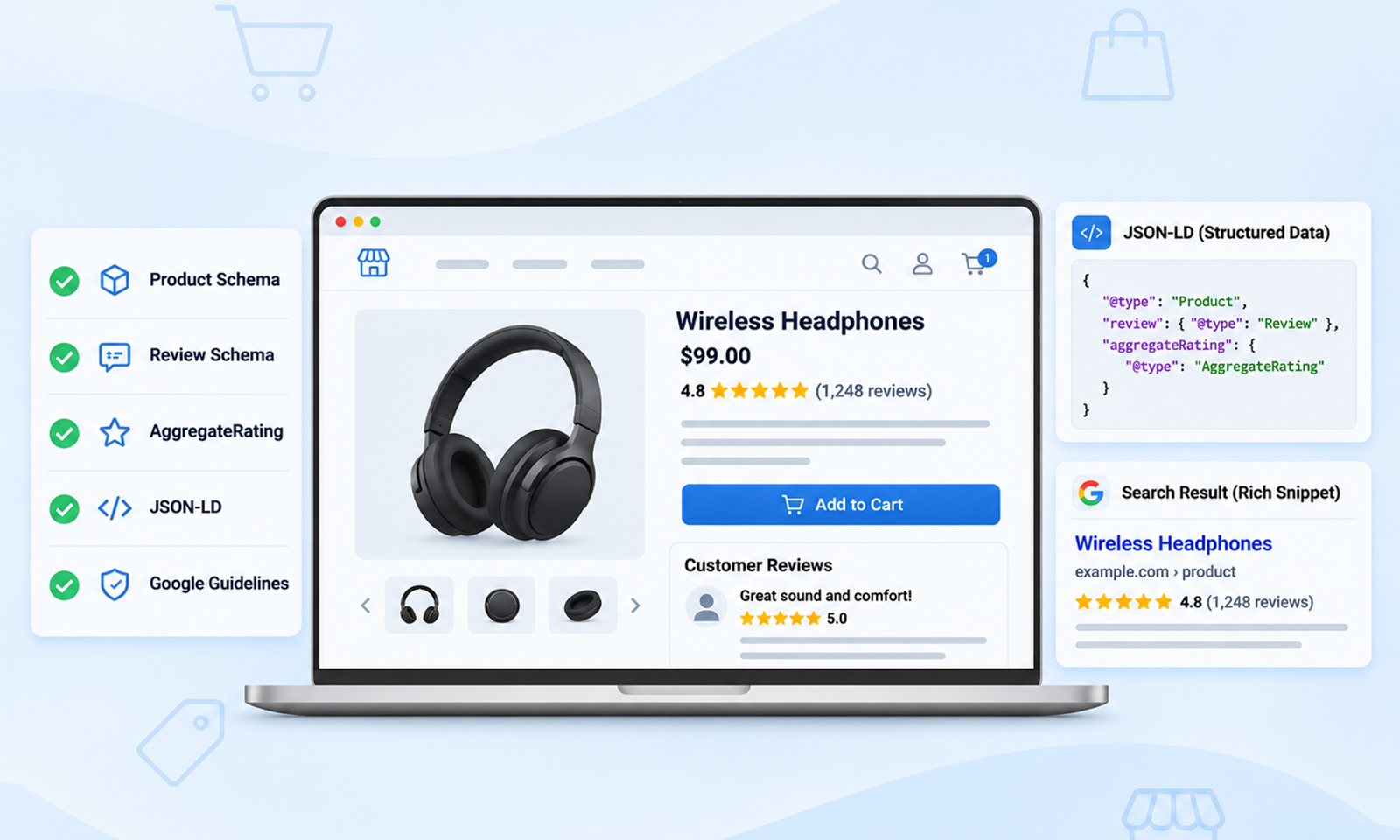
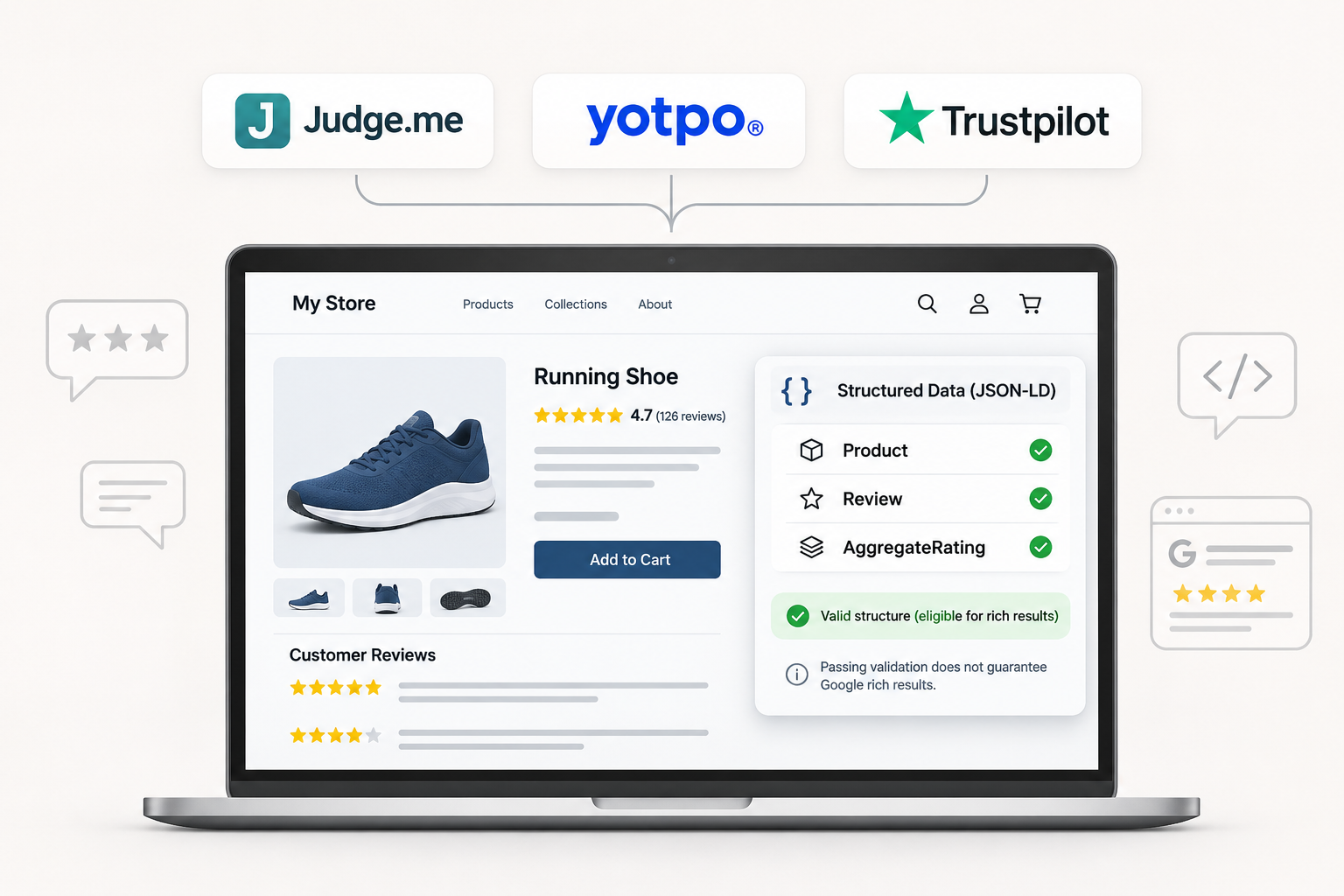
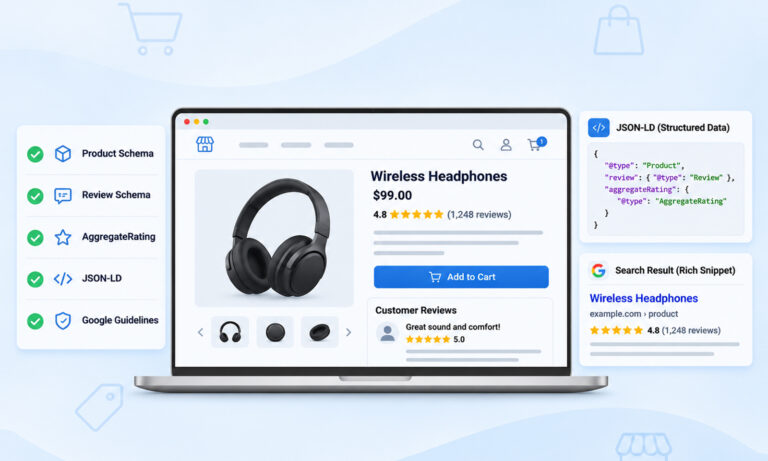
Once you begin collecting authentic customer feedback, you may consider adding Review or Product structured data to help search engines better understand your product pages.
Structured data doesn’t create reviews or guarantee star ratings in search results. Instead, it helps search engines interpret information that already exists on your page.
That means review schema should only represent reviews that are real, visible to users, and accurately reflect customer feedback.
If your products don’t have customer reviews yet, don’t add Review or AggregateRating markup. However, you can still use Product structured data for eligible product information, including offer details such as price and availability. Google has separate requirements for product snippets and merchant listings, so make sure your markup meets the requirements for the search feature you’re targeting.
Conclusion
Every successful ecommerce business starts with zero reviews. The key isn’t how quickly you collect ratings, but how ethically you earn them.
If you’re wondering how to get product reviews, focus on delivering a great customer experience, sending timely review requests, and encouraging honest feedback from real customers. Avoid shortcuts like fake product reviews, as they can harm trust and credibility.
Authentic reviews take time to build, but they create lasting customer confidence and support sustainable business growth.
Frequently Asked Questions
Q1: How do I get product reviews for a brand-new store?
Start by delivering a great customer experience, then send timely post-purchase review requests to verified buyers. Make the review process simple and encourage honest feedback rather than asking only for positive reviews.
Q2: Is it legal to buy product reviews?
Buying or fabricating reviews can violate marketplace policies and consumer protection regulations. It’s always better to collect authentic reviews from real customers through ethical review collection practices.
Q3: How long does it take to get first product reviews?
There isn’t a fixed timeline. It depends on your sales volume, customer engagement, and review request process. Most new stores begin receiving their first customer reviews after their initial successful orders and follow-up emails.
Q4: Should I publish negative reviews?
Yes. Genuine businesses naturally receive a mix of positive and negative feedback. Displaying authentic reviews helps build trust, and responding professionally demonstrates that you value customer satisfaction.
Q5: Can I offer discounts for reviews?
Yes, businesses can offer incentives for honest reviews under U.S. FTC rules, provided the incentive is not conditioned on leaving a positive or negative review. Any required disclosures about the incentive must also be made clearly. However, some marketplaces and review platforms prohibit incentivized reviews entirely, so check their policies before offering discounts or free products in exchange for feedback.
Q6. Can I use a review schema before collecting reviews?
No. Review schema should only represent genuine customer reviews that already exist on the page. Adding review markup without actual reviews can result in inaccurate structured data and may not comply with Google’s guidelines.






 Wix Schema
 Squarespace Schema
 BigCommerce Schema
 Shopify Schema
 Hubspot Schema
 Webflow Schema
 GoHighlevel Schema
 Duda Schema
 Weebly Schema
 ClickFunnel Schema