


Modern funnels are no longer just about copy, design, and conversion optimization. Search engines now rely heavily on structured data to understand what your pages represent. This is where ClickFunnels schema markup becomes a powerful advantage.
When properly implemented, ClickFunnels schema markup helps search engines interpret your funnel pages more accurately, leading to better indexing, improved visibility, and eligibility for ClickFunnels rich snippets in search results.
Whether you’re building sales funnels, landing pages, or lead capture pages, adding structured data for funnels is one of the most overlooked yet impactful parts of ClickFunnels SEO optimization.
In this guide, we’ll break down everything you need to know, from understanding ClickFunnels schema markup to real implementation steps, JSON-LD examples, schema types, validation, and troubleshooting.
Understanding ClickFunnels Schema Markup
At its core, ClickFunnels schema markup refers to structured data added to your funnel pages using standardized formats like JSON-LD. This helps search engines like Google understand:
- What your page is about
- Whether it is a product, service, or landing page
- What elements exist (FAQ, pricing, reviews, etc.)
- How it should appear in search results
This is part of broader ClickFunnels structured data practices and falls under technical SEO improvements.
According to Google’s official documentation on structured data, properly implemented schema can enhance search appearance through rich results.
Why ClickFunnels Schema Markup Is Important for SEO
Most ClickFunnels pages are built for conversions, not search visibility. However, without schema markup, search engines may struggle to understand page context fully.
Here’s what proper ClickFunnels schema markup implementation can do:
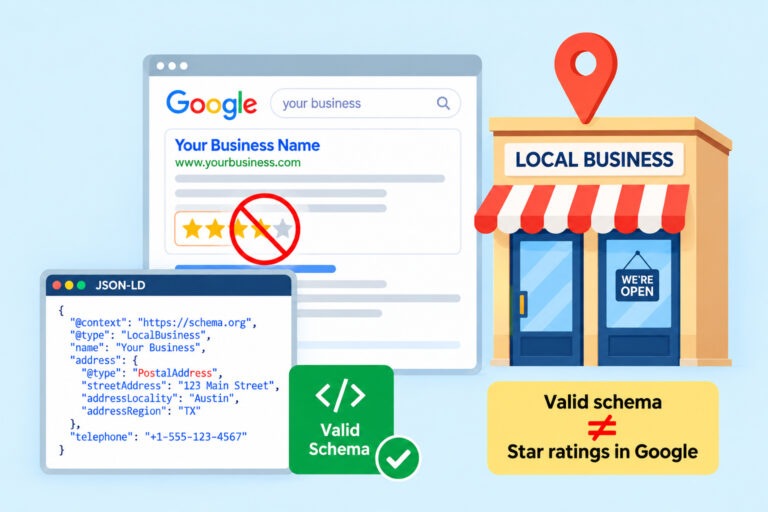
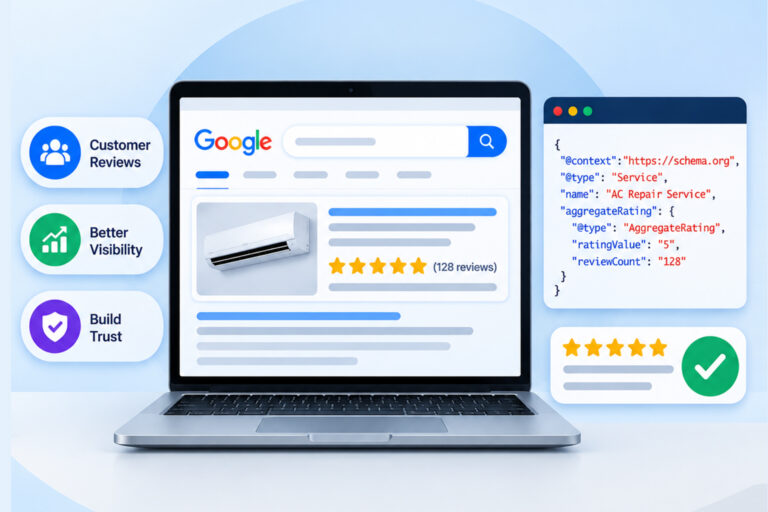
It improves your chances of earning rich snippets, such as star ratings, FAQs, and product details. It enhances indexing clarity, which supports better ranking signals. It also strengthens ClickFunnels technical SEO, making your funnel pages more machine-readable.
More importantly, it aligns your funnel with modern structured data for funnels, which is increasingly essential for AI-driven search systems and semantic ranking models.
Best Schema Types for ClickFunnels Funnels
Choosing the right schema type isn’t just a technical decision, it directly impacts how search engines interpret your funnel and whether your pages qualify for enhanced search results. Not every funnel page needs the same structured data, and using the wrong schema can dilute relevance or even prevent rich results from appearing.
Below are the best schema types for ClickFunnels funnels, along with when and how to use them effectively:
1. Product Schema (For Sales & Checkout Funnels)
If your funnel is selling a product, this is non-negotiable. A product schema helps search engines understand key commercial details such as pricing, availability, and brand information.
More importantly, it enables rich snippets such as price, stock status, and ratings directly in search results, critical for improving CTR on transactional queries.
Best used for:
- Sales pages
- Order forms
- One-product funnels
Pro tip: Always include offers, priceCurrency, and availability. Missing these fields is one of the most common reasons Product schema fails validation.
2. FAQ Schema (For Pre-Sell & Objection Handling Pages)
FAQ schema is one of the highest-impact additions for funnel pages because it aligns perfectly with user intent. It allows your content to appear in expandable FAQ sections in search results, increasing visibility and pushing competitors down.
Best used for:
- Landing pages
- Webinar registration pages
- Long-form sales pages
Pro tip: Only mark up questions that are visibly present on the page. Hidden or misleading FAQ schema can lead to penalties.
3. Organization Schema (For Brand Authority & Trust)
Organization schema builds trust signals by clearly defining your brand identity, name, logo, contact details, and social profiles.
While it doesn’t directly generate rich snippets for funnels, it strengthens your overall ClickFunnels SEO optimization by helping search engines connect your funnels to your brand entity.
Best used for:
- Homepage funnels
- Brand-level pages
- Footer-level global schema
4. WebPage Schema (For Context & Classification)
Many funnel pages lack a clear structure from a search engine perspective. WebPage schema helps define what the page actually is, a landing page, a checkout page, or informational content.
This improves indexing accuracy and ensures your funnel aligns with the correct search intent.
Best used for:
- All funnel pages as a base schema
- Lead generation pages
- Bridge pages
5. Review Schema (For Social Proof & CTR Boost)
If your funnel includes testimonials or ratings, the review schema can turn that social proof into visible search enhancements like star ratings.
This is especially powerful for competitive niches where trust signals directly impact click behavior.
Best used for:
- Product funnels
- Coaching or service funnels
- Testimonial-heavy pages
Pro tip: Ensure reviews are genuine and visible. Fake or hidden reviews can lead to manual penalties.
How to Add Schema Markup in ClickFunnels (Step-by-Step)
If you’re looking for how to add schema markup in ClickFunnels, the process is straightforward, but precision matters. A small mistake in formatting or placement can break your entire structured data setup.
Here’s a practical, real-world workflow:
Step 1: Identify the Right Schema Type
Start by mapping your funnel page to intent:
- Selling something → Product schema
- Answering objections → FAQ schema
- Building trust → Organization schema
This step is critical because a mismatched schema reduces effectiveness.
Step 2: Generate JSON-LD Schema
Use a schema markup generator or a dedicated ClickFunnels Schema Markup tool to create structured data. These tools simplify the process and reduce manual errors.
If you’re scaling funnels, consider dynamic schema generation to automate updates across multiple pages.
Step 3: Add Schema to ClickFunnels
In ClickFunnels, you can insert schema in:
- Page Settings → Tracking Code
- Header or Footer section
Paste your ClickFunnels JSON-LD script inside the <head> section for best results.
Step 4: Validate Before Publishing
Always test your schema using:
- Google Rich Results Test
- JSON-LD schema validator tools
Validation ensures your schema is eligible for rich results and free of errors.
Step 5: Monitor & Update
Schema is not a “set and forget” task. Update it when:
- Prices change
- Products go out of stock
- FAQs are updated
This keeps your ClickFunnels schema markup implementation accurate and effective over time.
ClickFunnels JSON-LD Implementation Example
Here’s a refined example of ClickFunnels JSON-LD for a product funnel page, following best practices:
{
"@context": "https://schema.org",
"@type": "Product",
"name": "Example Funnel Product",
"description": "High-converting product inside a ClickFunnels sales funnel.",
"brand": {
"@type": "Brand",
"name": "Your Brand Name"
},
"offers": {
"@type": "Offer",
"url": "https://yourfunnelurl.com",
"price": "49.00",
"priceCurrency": "USD",
"availability": "https://schema.org/InStock"
}
}
This type of schema markup for ClickFunnels improves how your product pages appear in search and increases eligibility for rich snippets.
How to Get Rich Snippets for ClickFunnels Pages
If your goal is to get rich snippets for ClickFunnels pages, you need more than just adding schema, you need the right combination of structure, content, and validation.
Here’s what actually drives results:
1. Use the Right Schema for Intent
Google prioritizes relevance. A product page with Product schema is far more likely to get rich results than a generic page with mismatched markup.
2. Include Required & Recommended Fields
For example:
- Product schema → price, availability, name
- FAQ schema → valid question-answer pairs
Missing fields reduce eligibility.
3. Align Content with Schema
Your structured data must match visible content. If your schema says “$49 product,” that price must be clearly visible on the page.
4. Validate Using Google Tools
Use the Google Rich Results Test to confirm eligibility. Even a valid schema won’t generate snippets if it’s not eligible for rich results.
5. Build Authority & Trust
Schema increases eligibility, but rankings and authority determine visibility. Combine structured data with strong content and backlinks.
Common ClickFunnels Schema Markup Implementation Issues (and How to Fix Them)
Even with a solid understanding of ClickFunnels schema markup, implementation errors are surprisingly common, and they can silently prevent your pages from qualifying for rich results. The challenge isn’t just adding structured data, but ensuring it’s clean, accurate, and aligned with search engine guidelines.
Let’s break down the most frequent issues in ClickFunnels schema markup implementation, along with practical fixes you can apply immediately:
Duplicate Schema Markup
One of the most overlooked problems is duplicate or conflicting schemas. This usually happens when multiple tools, plugins, or manual scripts inject structured data into the same page.
For example, you might add the Product schema manually while a third-party app also injects its own version. Search engines then receive mixed signals about which data to trust.
Why it matters: Duplicate schema can dilute relevance, cause validation warnings, or even make your page ineligible for rich snippets.
How to fix it:
Audit your page source and identify all schema instances. Keep only one clean, authoritative version that fully represents the page content. If you’re using a ClickFunnels Schema Markup tool, disable any overlapping schema from other integrations.
Missing Required Fields
Every schema type, especially Product and FAQ, comes with required and recommended properties. Missing even one critical field (like price in Product schema or acceptedAnswer in FAQ schema) can invalidate your markup.
Why it matters: An incomplete schema may still be “valid” but won’t qualify for rich results, which defeats the purpose of implementation.
How to fix it:
Use a reliable schema markup validator to identify missing fields. Tools like Google Rich Results Test highlight errors and provide actionable suggestions. Always aim to include both required and recommended properties for maximum visibility.
JSON Formatting Errors
JSON-LD is strict. A single missing comma, incorrect quotation mark, or misplaced bracket can break your entire schema.
Why it matters: Unlike visible content, a broken schema won’t show obvious errors on your page, but search engines will ignore it completely.
How to fix it:
Before publishing, run your code through a json ld schema validator. If you’re editing manually, use formatting tools or linters to catch syntax issues early. When possible, rely on a schema markup generator to reduce human error.
Plugin or Script Conflicts
ClickFunnels pages often include multiple scripts, analytics tools, tracking pixels, and optimization apps, which can interfere with schema execution.
For instance, a script might delay rendering or overwrite structured data dynamically, causing inconsistencies.
Why it matters: Conflicts can prevent the schema from being detected or processed correctly by search engines.
How to fix it:
Test your funnel pages in isolation. Temporarily disable non-essential scripts and revalidate your schema. Reintroduce scripts one by one to identify the source of the conflict.
Mismatch Between Schema and Page Content
This is a subtle but critical issue. Your structured data must accurately reflect what users see on the page.
Why it matters: If your schema claims a product price or FAQ that isn’t visible on the page, it violates search engine guidelines and may lead to manual actions.
How to fix it:
Ensure complete alignment between your ClickFunnels structured data and on-page content. If you update pricing, FAQs, or product details, update your schema accordingly.
Best Practices for ClickFunnels Structured Data
Building a scalable and reliable ClickFunnels structured data strategy requires more than just correct implementation, it demands consistency, maintenance, and alignment with SEO goals.
Here are proven best practices used in high-performing funnels:
Use JSON-LD Format (Preferred Standard)
Search engines, including Google, recommend JSON-LD because it’s clean, easy to implement, and doesn’t interfere with page design. It’s also the most widely supported format for ClickFunnels JSON-LD implementation.
Match Schema Type with Funnel Intent
Every funnel page serves a different purpose. Your schema should reflect that intent clearly.
For example, a sales page should use Product schema, while a lead generation page may benefit more from FAQ or WebPage schema. Misaligned schema reduces effectiveness and can confuse search engines.
Avoid Overloading Pages with Schema
More schema doesn’t mean better results. Adding multiple unrelated schema types to a single page can dilute relevance.
Focus on one primary schema type, and only add supporting schema if it genuinely enhances context.
Keep Schema Updated with Real-Time Data
An outdated schema is a hidden SEO risk. If your product price, availability, or FAQs change, your structured data must reflect those updates.
Regular audits ensure your ClickFunnels schema markup implementation remains accurate and trustworthy.
Validate Every Change Before Publishing
Never assume your schema is correct. Even small updates can introduce errors.
Always test using tools like Google Rich Results Test or a dedicated json ld schema validator before pushing changes live.
Conclusion
A well-executed ClickFunnels schema markup strategy goes beyond simply adding structured data, it ensures accuracy, consistency, and alignment with search intent. When implemented correctly, it helps search engines interpret your funnel pages more effectively, unlocking eligibility for rich results and improving overall visibility.
By avoiding common pitfalls, following best practices, and continuously validating your markup, you create a strong technical foundation for sustainable ClickFunnels SEO optimization.
FAQs
Q1: What is ClickFunnels schema markup?
ClickFunnels schema markup is structured data added to funnel pages using formats like JSON-LD to help search engines better understand content and improve visibility in search results.
Q2: How do I add schema markup in ClickFunnels?
You can add schema by placing JSON-LD code in the header or tracking section of your funnel page settings. This allows search engines to crawl and interpret the data without affecting the page design.
Q3: Does ClickFunnels support structured data natively?
ClickFunnels does not fully automate structured data. While you can manually add schema, most users rely on tools or generators to streamline the process.
Q4: What is the best schema type for ClickFunnels funnels?
The most effective schema types include Product, FAQ, Organization, and WebPage. The right choice depends on your funnel’s purpose and content.
Q5: How do I validate ClickFunnels JSON-LD?
You can validate your schema using tools like the Google Rich Results Test or other JSON-LD validators to ensure it meets search engine requirements.
Q6: Can schema improve ClickFunnels SEO?
Yes. Schema improves how search engines interpret your pages, increases eligibility for rich snippets, and can significantly boost click-through rates.
Q7: What tools can generate a schema for ClickFunnels?
You can use a schema markup generator, JSON-LD builder, or a dedicated ClickFunnels Schema Markup tool to automate structured data creation and reduce manual errors.
Q8: Why is my ClickFunnels schema not working?
Common reasons include duplicate schema, missing required properties, JSON syntax errors, or mismatches between schema and visible content.







 Wix Schema
 Squarespace Schema
 BigCommerce Schema
 Shopify Schema
 Hubspot Schema
 Webflow Schema
 GoHighlevel Schema
 Duda Schema
 Weebly Schema