

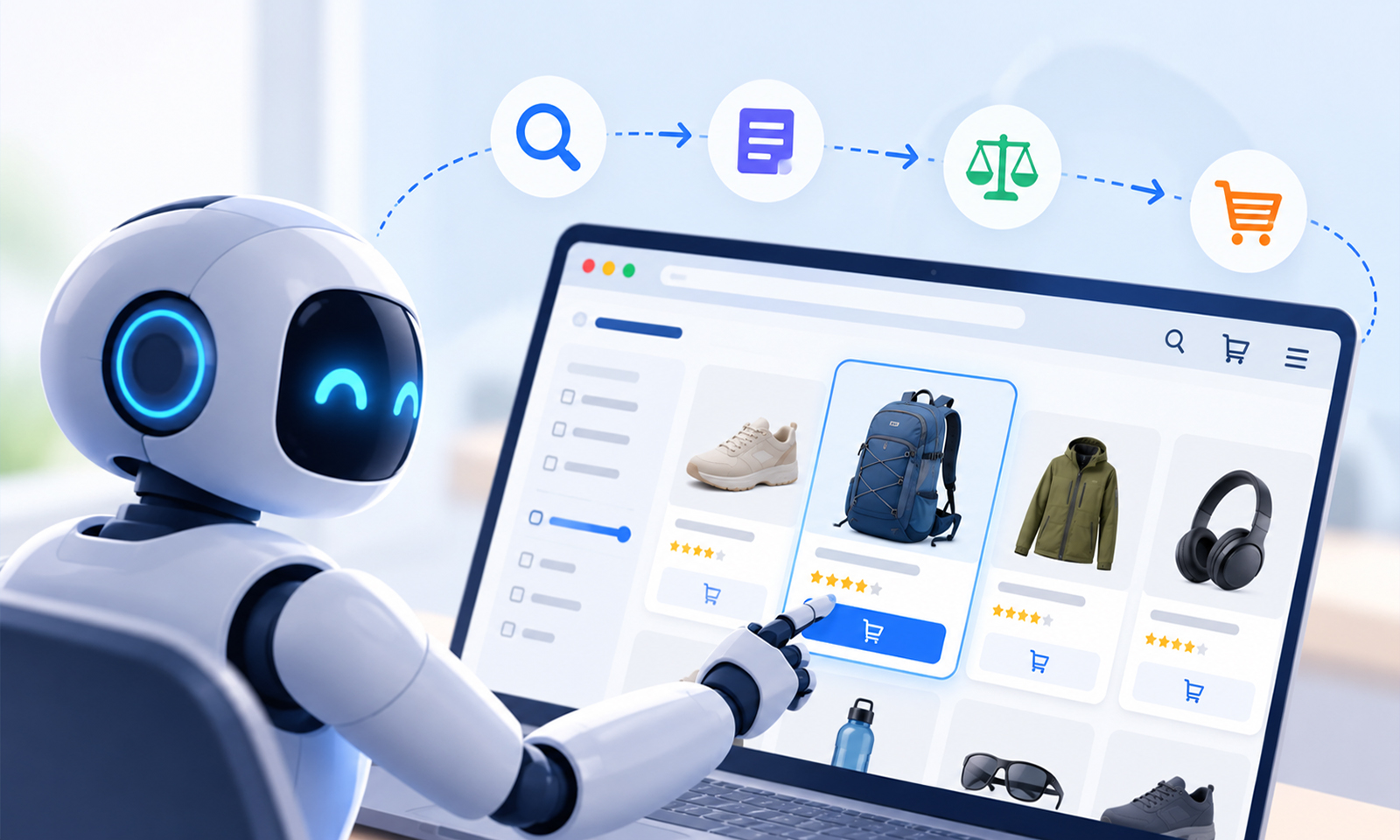
Shopping online usually means doing the research yourself: finding products, opening multiple pages, comparing prices and features, checking availability, and deciding what fits your needs. Agentic browsing for ecommerce changes that workflow by allowing AI agents to handle parts of this process on a shopper’s behalf.
Agentic browsing allows an AI agent to navigate websites, understand information, work through a user’s requirements, and potentially take actions on the user’s behalf. In ecommerce, that can include discovering products, comparing options, checking availability, selecting variants, and moving toward a purchase.
The technology is still developing, but the direction is clear: ecommerce websites increasingly need to provide information that both people and AI systems can understand and use.
Agentic Browsing for Ecommerce: Key Takeaways
- Agentic browsing for ecommerce is when AI agents navigate online stores and take actions on a shopper’s behalf.
- AI agents can discover products, understand product information, compare options, and check prices and availability.
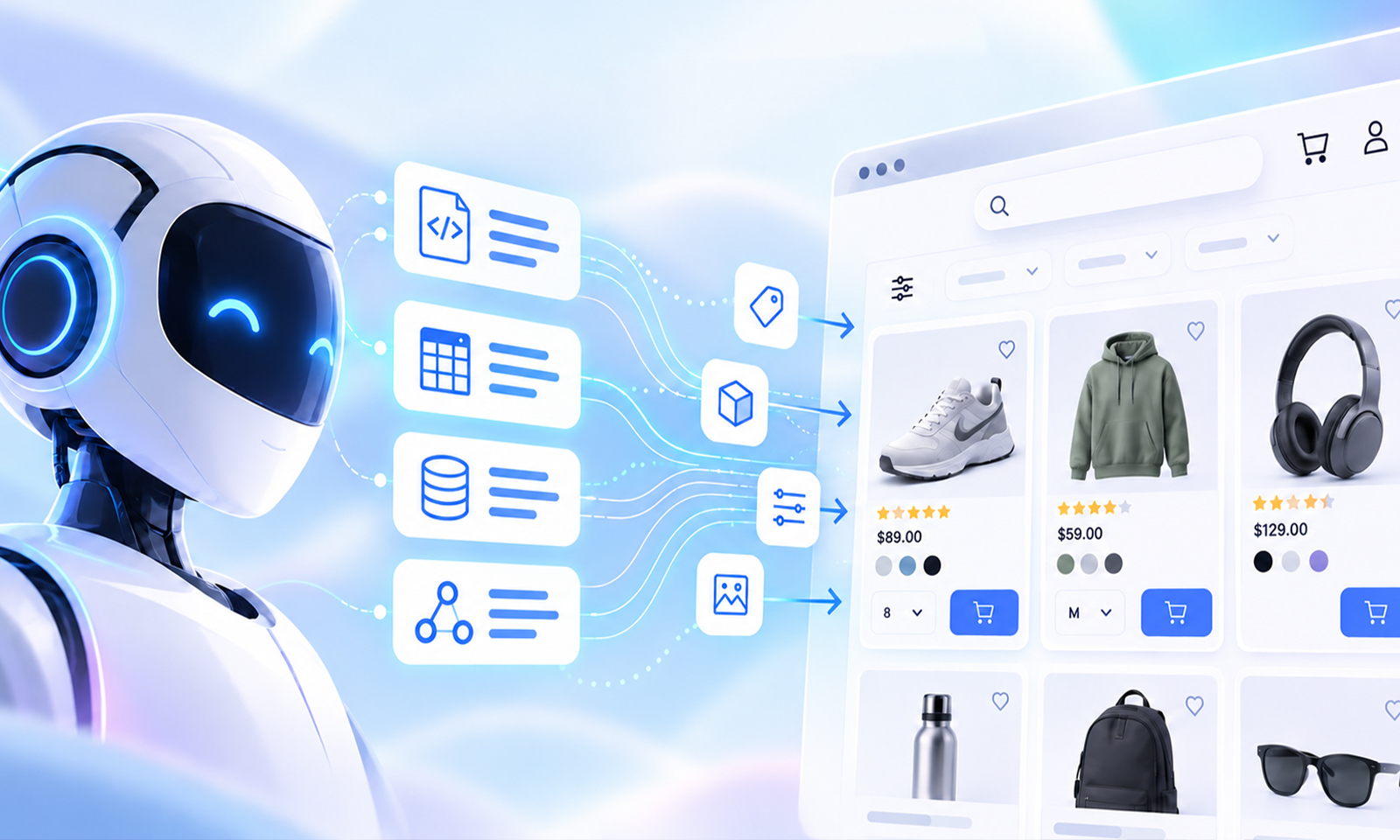
- They can use page content, structured data, product feeds, and other machine-readable information to understand an ecommerce website.
- For AI visibility, ecommerce sites should provide accurate, current, and clearly structured product information.
- Schema markup supports machine-readable product data, but it does not by itself make a website agent-ready.
- To prepare, merchants should keep product details, variants, pricing, inventory, shipping, and purchasing functions clear and accessible.
What Is Agentic Browsing?
Agentic browsing is when an AI system navigates and interacts with websites as part of completing a user’s task, rather than simply returning information about that task.
Traditional search generally works like this:
Search → Click → Read → Compare → Decide
Agentic browsing can shift the workflow toward:
Ask → Discover → Evaluate → Act
For example, a shopper could ask:
“Find me a waterproof running jacket under $150, available in medium, with free returns.”
An AI agent may need to visit product pages, interpret prices and availability, compare product attributes, and identify options that satisfy those requirements.
That makes agentic browsing ecommerce different from simply adding an AI chatbot to a store. The focus is the agent completing a multi-step objective.
AI search and agentic browsing are related but not identical. AI search can answer questions, summarize information, and help shoppers discover products, while agentic browsing involves an AI system navigating or interacting with websites or commerce systems to complete a task.
The exact capabilities vary between AI systems. Google’s Universal Commerce Protocol (UCP) is an open standard for enabling agentic commerce across Google AI surfaces, with capabilities including product discovery, cart building, checkout, and order management.
How Does Agentic Browsing Work for Ecommerce?
Agentic browsing for ecommerce works by combining a shopper’s goal with accessible product information and website functionality that an AI system can interpret and act on.
Consider a shopper looking for a laptop backpack:
“Find a laptop backpack under $100 that fits a 16-inch laptop, is water resistant, and can be delivered this week.”
The agent needs to identify information such as:
- Product name and description
- Price and currency
- Availability
- Product specifications
- Variants
- Shipping information
- Return conditions
- Product identifiers
It can then use those details to compare products against the shopper’s requirements.
This is why AI agents understand ecommerce websites more reliably when important information is explicit and consistent. A page can look perfectly clear to a person while still being difficult for a machine to interpret if key details are hidden, inconsistent, outdated, or dependent on inaccessible interactions.
What Can AI Shopping Agents Do?
AI shopping agents can potentially help with product discovery, comparison, and parts of the shopping journey, although their capabilities depend on the specific platform and integration.
Product discovery
AI agents can interpret natural-language requirements instead of relying only on exact product keywords.
For example:
“I need lightweight hiking shoes for rainy weather under $120.”
The request contains several attributes: product type, use case, weather suitability, weight, and price. Product pages that clearly communicate these attributes give an agent more usable information to work with.
Product comparison
AI agents compare products by collecting relevant product attributes and evaluating them against the shopper’s requirements.
A comparison might look like this:
| Attribute | Product A | Product B |
|---|---|---|
| Price | $89 | $109 |
| Weight | 650g | 720g |
| Waterproof | Yes | Yes |
| Warranty | 2 years | 1 year |
| Availability | In stock | Out of stock |
The important point for merchants is that these details need to be clear and current rather than buried in inconsistent page content.
Website interaction
Some AI agents can go beyond reading pages and interact with ecommerce functionality, but the level of interaction varies by system.
Depending on the platform and implementation, an agent may be able to select a variant, add an item to a cart, or continue into a checkout workflow.
Google’s Universal Commerce Protocol (UCP) illustrates this direction, with documented capabilities for product discovery, cart building, and checkout across Google AI surfaces.
That does not mean every ecommerce website currently supports autonomous purchasing. Browsing, product discovery, and transactional capabilities are separate levels of agent interaction.
What Information Do AI Agents Need From an Ecommerce Website?
AI agents need reliable product, commercial, and website information that can be accessed and interpreted consistently.
The most important information includes:
Product identity
Clear product names, descriptions, brands, categories, identifiers, images, and variant relationships help establish exactly what a product is.
Price and availability
Price and availability need to be accurate and current because outdated commercial information can lead to incorrect product recommendations. This becomes particularly important for stores where inventory and prices change frequently.
Product variants
Variants should have clear relationships to the underlying product so an agent can distinguish options such as size, color, capacity, or configuration. This matters when a shopper asks for something specific, such as “the black version in size 9.”
Shipping, returns, reviews, and ratings
Shipping, return, review, and rating information can provide additional context when an agent evaluates whether a product meets a shopper’s requirements.
Schema.org provides standardized types and properties for ecommerce information such as Product, Offer, AggregateRating, shipping details, and returns-related information.
Where Does Structured Data Fit Into Agentic Browsing?
Structured data helps machines interpret ecommerce information, but it does not make a website agentic.
For example, a Product object can describe a product and its offer:
{
"@context": "https://schema.org",
"@type": "Product",
"name": "Waterproof Running Jacket",
"brand": {
"@type": "Brand",
"name": "Example Brand"
},
"offers": {
"@type": "Offer",
"price": "129.00",
"priceCurrency": "USD",
"availability": "https://schema.org/InStock"
}
}
Schema.org defines Product and Offer for representing products and offers, including information such as availability and pricing.
For merchants thinking about ecommerce websites for AI agents, the useful principle is simple:
Make important product facts explicit, consistent, accessible, and current instead of relying on visual presentation alone.
Structured data is one part of that foundation. It works alongside visible content, crawlability, product feeds, semantic HTML, and functional website experiences.
It is also important not to overstate what schema can do. Structured data can support eligible search experiences, but it is not a special “AI agent markup” and does not guarantee that an AI agent will crawl, understand, or use your site.
How Can You Prepare an Ecommerce Website for AI Agents?
To prepare an ecommerce website for AI agents, focus first on accurate product data, machine-readable information, crawlability, clear product relationships, and usable shopping functionality.
1. Keep product information accurate
Product names, descriptions, prices, availability, specifications, variants, and other commercial details should agree across the page and relevant product feeds.
This matters for traditional search as well as emerging AI shopping experiences.
2. Make important information machine-readable
Use appropriate structured data where supported and relevant.
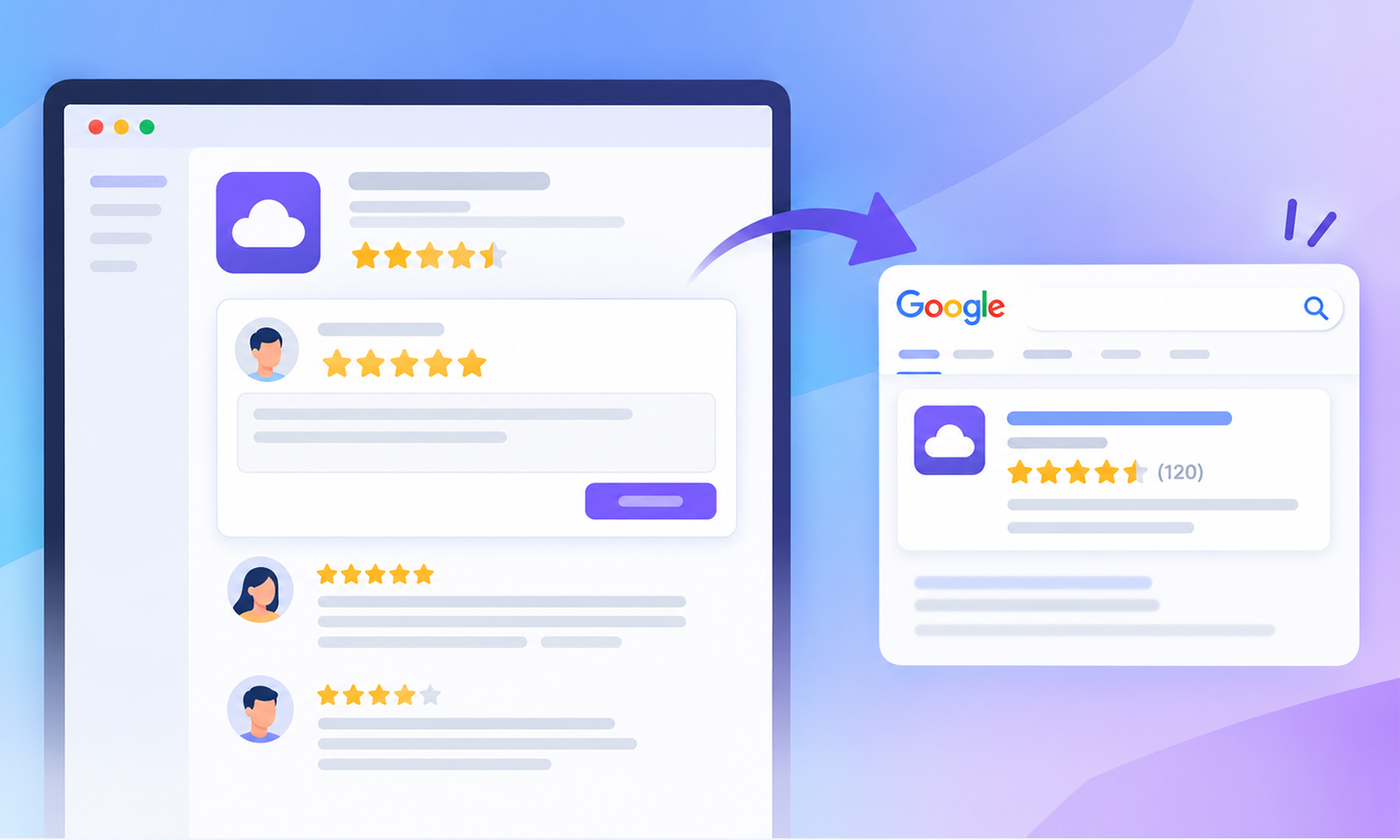
For ecommerce, this commonly includes Product, Offer, Review, AggregateRating, and related types. Schema.org defines AggregateRating as the overall rating based on a collection of reviews or ratings.
Google supports Product structured data for supported product search experiences, subject to its applicable requirements.
3. Keep pages crawlable and technically accessible
AI systems cannot reliably use information they cannot access.
Maintain crawlable product pages, sensible internal linking, accessible content, and sound technical SEO. Google’s guidance for AI features continues to emphasize established fundamentals such as crawlability, indexing, and technical accessibility.
The key point is that preparing for AI does not mean abandoning SEO fundamentals. A technically inaccessible product page is still a problem regardless of whether the visitor is a person, search crawler, or AI system.
4. Make variant and inventory relationships clear
Clear variant relationships and current inventory help an AI system distinguish exactly which product option satisfies a shopper’s request.
For example, “running shoes” is not enough when the shopper wants a specific size and color.
Make the relationship between the main product, individual variants, identifiers, prices, and availability clear.
5. Keep transactional functionality usable
If an AI system is expected to interact with an ecommerce website, the website needs usable functionality beyond readable product information.
A product page may be easy to understand but still difficult to interact with if important actions depend on inaccessible controls, confusing navigation, or unnecessarily complicated workflows.
This is why making an ecommerce website AI agent-friendly is broader than simply adding schema. It involves content, structured data, accessibility, site architecture, product feeds, and commerce functionality.
Agentic Browsing vs. AI Crawling: What’s the Difference?
Agentic browsing focuses on completing a user’s task, while AI crawling primarily focuses on discovering and retrieving information.
| Agentic browsing | AI crawling |
|---|---|
| Task-oriented | Information-oriented |
| Can involve navigation and interaction | Primarily involves accessing content |
| May use multiple pages or sites | May crawl pages for processing |
| Can potentially take actions | Does not inherently represent a transaction |
| User goal is central | Content discovery is central |
An AI crawler might access a product page to process its content. An agentic system may use that information as one step toward completing a shopper’s request.
Is Agentic Browsing the Same as Agentic Commerce?
No. Agentic browsing is one part of the broader concept of agentic commerce.
Agentic browsing concerns how an AI agent navigates and uses information or functionality on websites.
Agentic commerce can extend further into product discovery, decision-making, cart actions, identity, payments, checkout, and post-purchase workflows.
Google’s UCP provides a standardized way for AI-driven shopping experiences to connect with merchants and support commerce activities such as product discovery, cart management, and checkout.
So, browsing can be an important step without being the entire transaction.
What Should Ecommerce Businesses Focus on Now?
Ecommerce businesses should focus on making their product information dependable rather than searching for a single “agentic SEO” tactic.
Start by checking whether each important product page clearly answers:
- What is this product?
- How much does it cost?
- Is it available?
- Which variants exist?
- What are its important attributes?
- What are the shipping and return conditions?
- Can the page and its important information be crawled and understood?
Then validate the structured data and keep it synchronized when product information changes.
The practical foundation is the same one that supports good ecommerce search visibility: accurate, accessible, structured, and current information.
Conclusion
Agentic browsing for ecommerce allows AI systems to move beyond simply finding product pages and toward navigating information, comparing options, and potentially taking actions on a shopper’s behalf.
For ecommerce businesses, preparation starts with fundamentals: make products easy to identify, keep prices and availability current, represent variants clearly, maintain crawlable pages, use relevant structured data, and keep shopping functionality usable.
There is no single markup that guarantees an AI agent will understand or recommend a store. The stronger foundation is clear, accurate, accessible ecommerce information that works for shoppers, search engines, and emerging AI shopping systems.
FAQs
Q1: What is agentic browsing for ecommerce?
Agentic browsing for ecommerce is the use of AI agents to navigate, interpret, compare, and potentially interact with ecommerce websites while completing a shopper’s task. It goes beyond simply returning search results.
Q2: How do AI shopping agents understand products?
AI shopping agents can use information from ecommerce pages, product feeds, structured data, and other accessible sources. Clear product information, accurate pricing and availability, and well-defined variants make product data easier to interpret.
Q3: Does schema markup help with agentic browsing?
Schema markup can make product information more structured and machine-readable, but it does not automatically make a website compatible with every AI agent. It should be treated as one part of a broader ecommerce data and technical strategy.
Q4: How can I make my ecommerce website AI agent friendly?
Start with accurate product information, crawlable pages, clear product and variant relationships, current price and availability, useful structured data, accessible content, and functional shopping experiences.
Q5: Can AI agents buy products from ecommerce websites?
Some emerging agentic commerce systems are designed to support shopping actions beyond discovery, including cart and checkout workflows, but capabilities vary by platform, merchant, and integration. Google’s Universal Commerce Protocol (UCP), for example, supports agentic commerce capabilities such as product discovery, cart building, and checkout, although availability depends on the specific platform and integration.
Q6: Is agentic browsing the future of ecommerce?
Agentic shopping capabilities are developing rapidly, but the exact role AI agents will play in ecommerce is still evolving. Merchants can prepare without relying on speculation by keeping product data accurate, accessible, structured, and current.






 Wix Schema
 Squarespace Schema
 BigCommerce Schema
 Shopify Schema
 Hubspot Schema
 Webflow Schema
 GoHighlevel Schema
 Duda Schema
 Weebly Schema
 ClickFunnel Schema