
There is a strange experience many site owners have had over the past year. A guide that has ranked on page one for months, and still brings in clicks every day, does not appear anywhere when the same question is typed into ChatGPT or Perplexity.
The answer comes back confident and detailed, and the sources it lists belong to someone else. Ranking and being cited turned out to be two different contests.
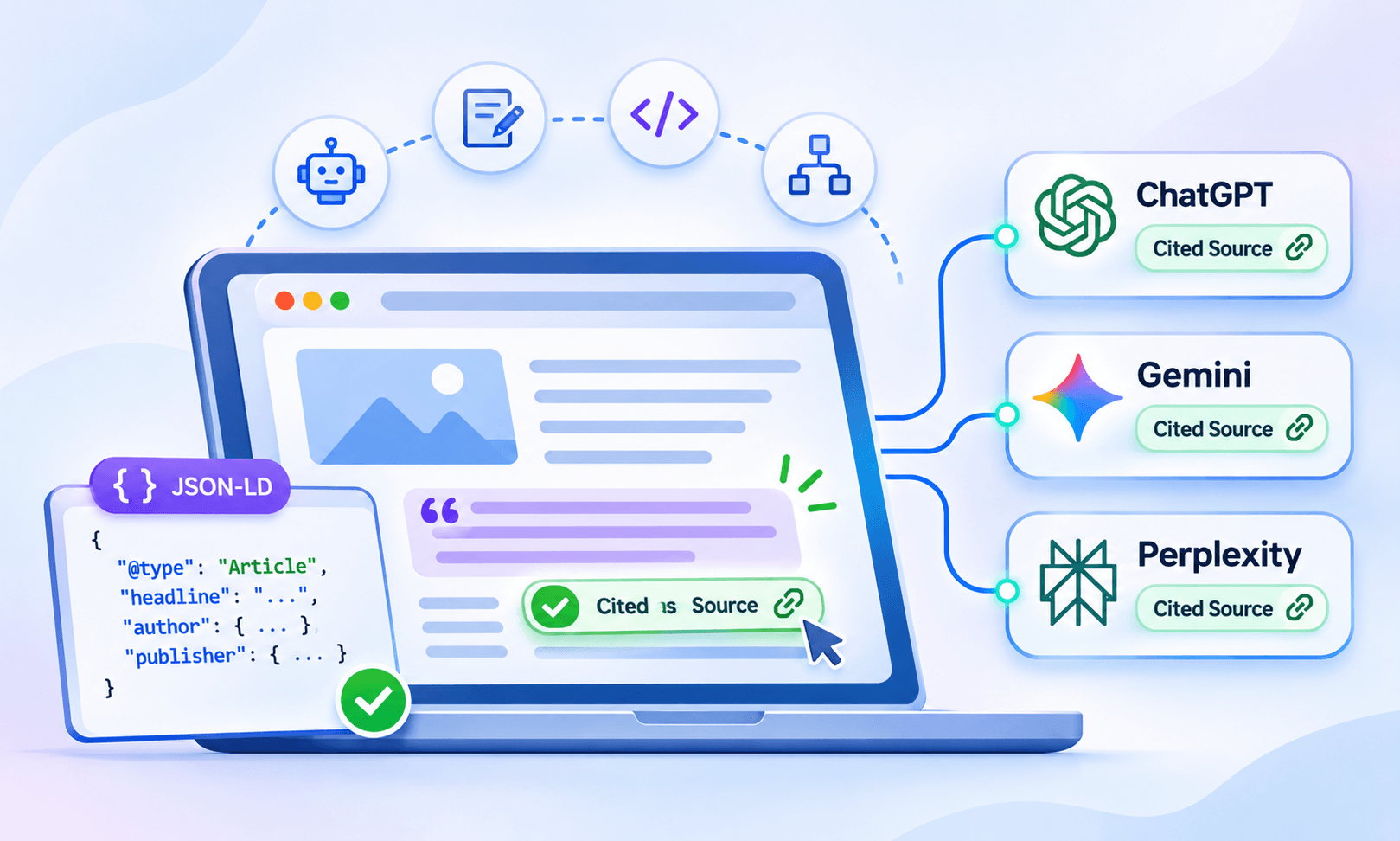
This guide covers how to get cited in ChatGPT, Gemini, and Perplexity, starting with how each one chooses its sources. From there it works through crawler access, the way content needs to be written so a machine can extract it, the entity and schema work that earns trust, and the practical ways to measure whether any of it is paying off.
What Counts as an AI Citation?
An AI citation is a visible reference inside a generated answer, usually a link or a numbered footnote, pointing to the page the assistant used.
A mention is not the same thing. A mention is the brand name showing up in the answer text with nothing to click. Mentions are nice for awareness. Citations send traffic and confirm the model treated the page as evidence rather than background.
The distinction matters because the two are won differently. Mentions tend to follow reputation across the wider web. Citations follow retrieval, which means the page has to be crawlable, indexed, and written so that a system can lift a single claim out of it and stand behind it. That second part is what a publisher can actually control, so it gets most of the attention here.
How Do ChatGPT, Gemini, and Perplexity Choose Their Sources?
The biggest mistake in this space is treating the three platforms as one target. They run separate retrieval systems, weigh signals differently, and end up citing different pages for the same question.
| Platform | Where sources come from | Citations per answer | What tends to win |
|---|---|---|---|
| ChatGPT (search mode) | OpenAI's own index, built by OAI-SearchBot | Low, usually 2 to 5 | Direct answers, scoped claims, trusted domains |
| Gemini and AI Overviews | Google Search index | Moderate | Indexed pages that answer one sub-question cleanly |
| Perplexity | PerplexityBot index plus live fetches | High, often 10 or more | Fresh, well-structured pages, community sources |
Note: The number of sources displayed varies by query and response; none of these platforms publishes a universal citation-count threshold.
ChatGPT Cites Sparingly and Chooses Carefully
When ChatGPT uses Search, it can retrieve relevant webpages and include citations in its response. It pulls a small set of pages, reads them, and links the ones that supported its answer. ChatGPT has added a utm_source=chatgpt.com parameter to its outbound links, so that traffic is easy to isolate in analytics.
Gemini Is Only as Wide as Google's Index
Google AI Overviews and AI Mode rely on Google Search systems, while Gemini Apps are a separate experience that can use Google Search grounding. Ranking still counts, but the layer that picks sources is separate from the layer that ranks results. Pages in the top ten are regularly passed over for a page that answers a narrower question with less noise around it.
Perplexity Cites Widely and Rewards Freshness
Perplexity emphasizes source attribution by displaying references alongside its answers, although the number of sources varies depending on the query and response. That makes it the easiest place to earn a first citation, and a good early test of whether a page is extractable at all. It also leans on Reddit threads and forum discussions much more than ChatGPT does, which matters later when platform-specific tactics come up.
Start With Crawler Access, Because Nothing Else Matters Without It
A large share of sites that never get cited are blocking the bots that would cite them, and most have no idea. The confusion comes from how the major providers split their crawlers. Each one now runs separate agents for training and for search. Blocking a training agent keeps content out of future models, which is a legitimate choice. Blocking a search agent removes the site from citation eligibility completely, which is rarely what anyone intended.
OpenAI documents three agents in its bot documentation. GPTBot gathers training data, OAI-SearchBot builds the index ChatGPT cites from, and ChatGPT-User fetches a page when someone shares a link in a conversation. Perplexity runs PerplexityBot for indexing and Perplexity-User for live fetches, both covered in its crawler guide.
Google-Extended is a training-only token; blocking it has no effect on Search indexing or AI Overview eligibility, which depend on ordinary Googlebot access.
A site that wants AI search visibility but does not want to feed model training can allow OAI-SearchBot and PerplexityBot while disallowing GPTBot and Google-Extended. That is an increasingly common setup, and it works.
The Blocks That Never Show Up in robots.txt
Checking robots.txt is the first step. CDN and firewall products from Cloudflare, Sucuri, and others frequently classify AI crawlers as scrapers and return 403 responses that robots.txt knows nothing about. Rate limiting and geo rules do the same.
The only reliable check is the server log: search for the user agent strings above and confirm they are receiving 200 responses on the pages that matter.
The usual indexing hygiene still applies underneath all of this. Noindex tags can prevent indexing, and canonical tags can influence which URL is selected as the representative version. JavaScript-rendered content is not automatically excluded from Google Search, although other AI crawlers may have different rendering capabilities.
Write So a Machine Can Lift the Answer Out
When an assistant takes a question like "is schema markup worth it for a small store," it breaks it into smaller questions, searches for each, and looks for a chunk of text that answers one of them without needing the rest of the page for context.
Long, winding paragraphs that only make sense in sequence lose to short, self-contained ones every time.
Give the Answer Before the Explanation
Under any heading that poses a question, the first 40 to 60 words should answer it outright. Detail, examples, and caveats come after. This is the same structure that wins featured snippets and rich snippets on Google, and that is not a coincidence. Both systems reward text that already looks like an answer.
Definitions follow the same rule. "X is a Y that does Z" gives the model a clean unit to extract and attribute. Openers that circle the topic for two sentences before committing to anything are skipped, because the system has to work too hard to figure out what the page is claiming.
Keep the Claim and Its Evidence in One Place
When a page states a figure, a comparison, or a recommendation, the context that supports it should sit in the same paragraph. If the number lives in one section and the method lives three sections down, an extraction system may grab the number, fail to confirm the scope, and cite a competitor who kept both together. The passage that survives paraphrasing intact is the one that gets cited.
Headings That Sound Like Questions People Ask
Headings should read the way people phrase questions to an assistant, because that phrasing is roughly what the retrieval query looks like. Plain, concrete nouns beat wordplay. "How long does schema validation take" is far more retrievable than "The waiting game." As a bonus, this is the same phrasing that matches People Also Ask boxes in traditional search.
Tables and Numbered Steps Where They Belong
A comparison table is about the most machine-readable content a page can contain, because it encodes relationships between entities in a shape a system can parse instantly. Tables get cited far more often than the same facts spread across prose, and numbered steps do the same job for how-to content. The caveat is to use them where the content is naturally tabular or sequential rather than forcing every section into a list.
Become an Entity the Models Recognize
Language models think in entities: people, companies, products, and concepts with attributes and relationships attached.
A brand that the model recognizes as a distinct entity with a clear specialty gets cited for questions in that specialty far more than a brand it has only encountered in passing.
This is entity recognition, and it is the least understood part of AI discoverability.
It begins with boring consistency. The company name, description, founders, location, and product names should match across the website. Every conflicting fact chips away at the model's confidence, and low confidence means fewer citations.
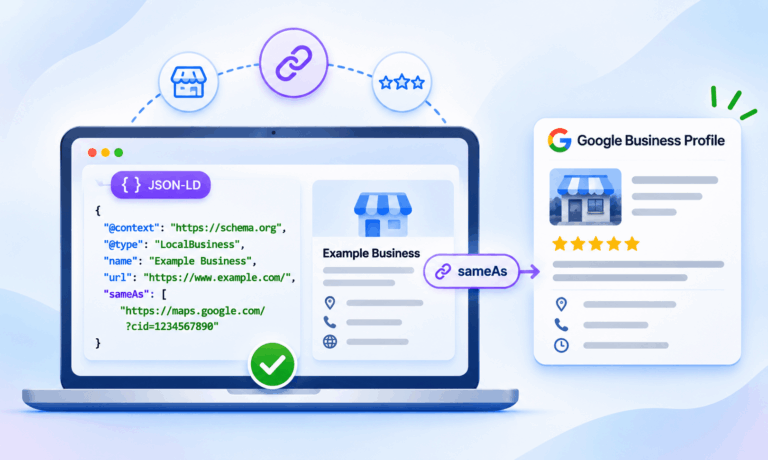
Knowledge Graph and Wikidata are the reference databases most systems use for entity linking, which is the process of tying a name on a page to a known entity. Few small businesses will qualify for a Wikipedia article, but a Wikidata entry with accurate properties, a Google Business Profile, and sameAs links in Organization schema all give systems a stable identifier to attach content to.
Then comes depth. Topical authority is how the engines decide which entity to trust on a subject, and it is built by coverage, not volume. Ten thorough, interlinked articles on one topic do more for AI search citations than fifty shallow posts scattered across unrelated subjects.
Use Structured Data to Take the Guesswork Away
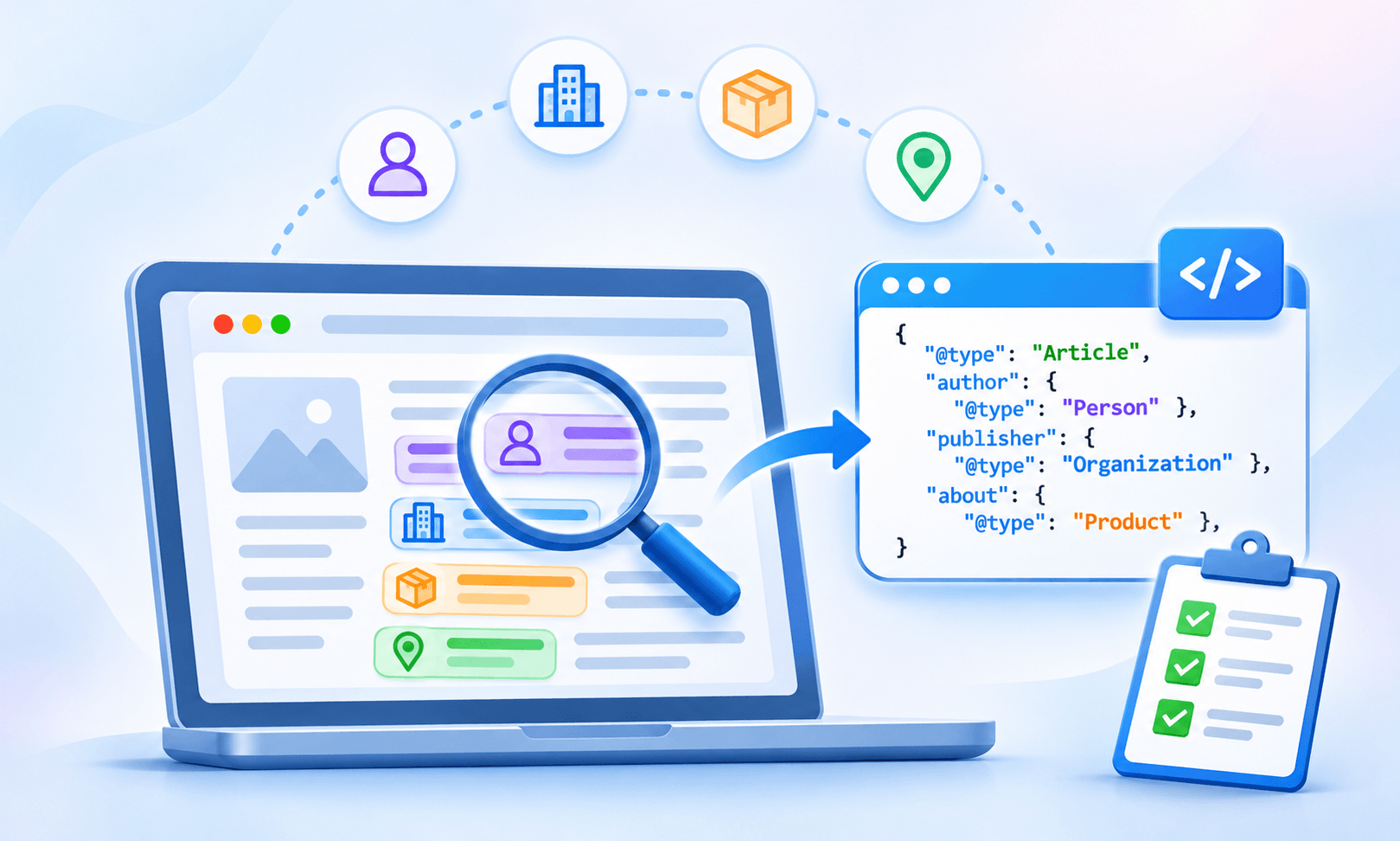
Structured data is the closest thing to speaking the machine's language directly. Schema markup written in JSON-LD tells a crawler what the page is, who wrote it, which organization stands behind it, and what the key facts are, so nothing has to be inferred from prose. It is not a citation switch. No platform promises a placement for adding it. It provides a consistent, machine-readable description of the page and its associated entities, helping explicitly define information such as authors, organizations, products, and relationships.
| Schema type | What it tells the system | Best used on |
|---|---|---|
| Organization | Who the brand is and where to verify it | Homepage, about page |
| Article / BlogPosting | Authorship, publish and update dates | Every editorial page |
| Person | Who the author is and their credentials | Author bio pages |
| FAQPage | Discrete question and answer pairs | Support and guide pages |
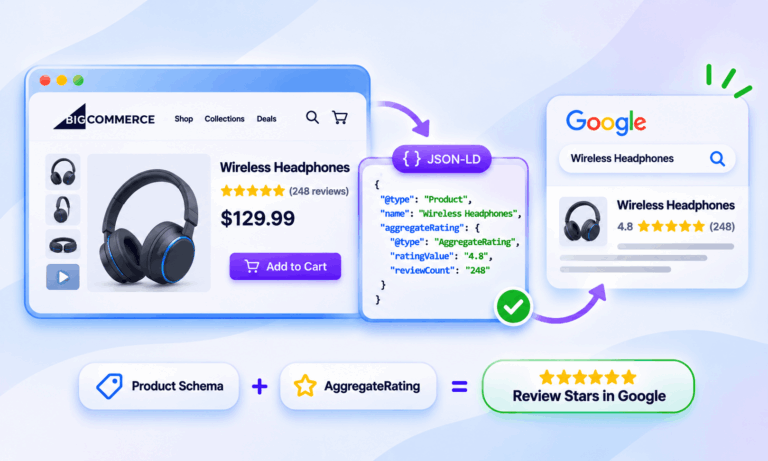
| Product / Review | Specs, pricing, ratings | Commerce and comparison pages |
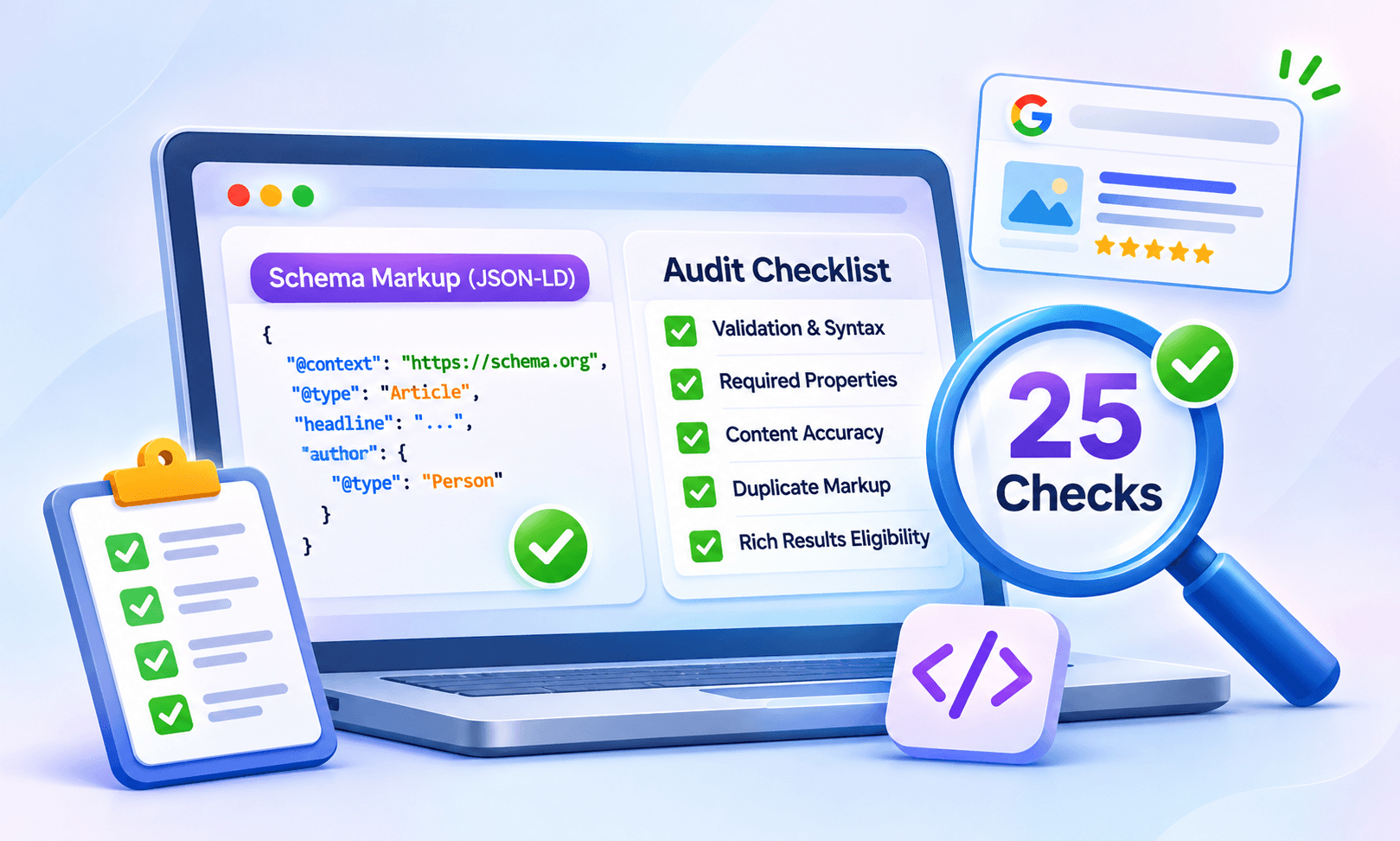
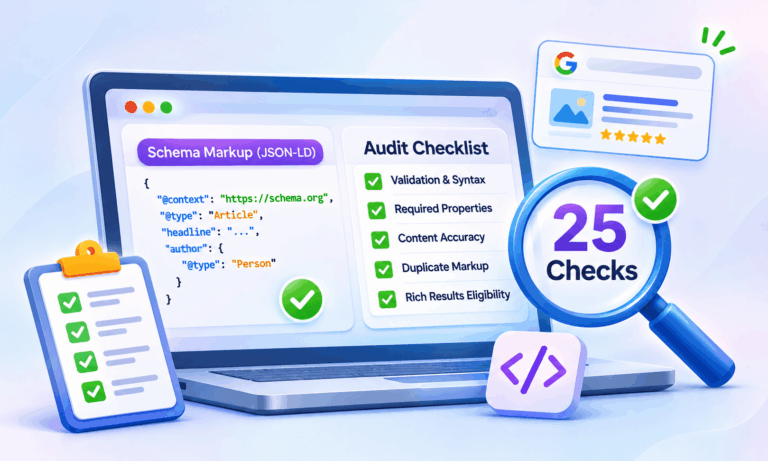
Every type is defined at schema.org, and Google's Rich Results Test remains the fastest way to confirm the code is well formed. What no validator can check is whether the values are true. Markup must describe what is visible on the page, and it must stay current, because stale markup does more damage once an AI tool starts repeating it.
Adjustments for Each Platform
Everything above covers how to get cited in AI search in general. Each platform rewards a few specific things on top of that.
How to Get Cited in Perplexity
Perplexity favors recently updated pages, so a truthful dateModified value and a real refresh cadence pay off quickly. Community presence counts more here than anywhere else. Being the brand people recommend in Reddit and forum threads, without astroturfing, has a direct line to citation.
How to Get Cited in Gemini
The page has to be indexed, has to pass the normal quality bar, and has to answer a narrow question cleanly enough that the grounding layer prefers it over a broader page that ranks higher. Accurate structured data, verifiable authorship, and good website performance support a well-maintained website, but Google does not identify them as special citation requirements for AI Overviews or AI Mode.
How to Get Cited in ChatGPT
The priorities are OAI-SearchBot access and passage clarity. ChatGPT cites so few sources that a page has to be the best available answer to a sub-question. Original data, first-hand testing, and clearly scoped claims are what separate cited pages from the rest, and earned mentions on established publications feed the domain trust ChatGPT leans on.
Measuring Whether Any of It Is Working
Three layers of measurement cover it, and none require expensive tooling to start.
Prompt logs – Write 20 to 30 questions a real customer would ask, from early research through purchase. Run them monthly in each assistant and record whether the brand was mentioned, whether it was linked, which page was cited, and who was cited instead. Keep the prompts fixed so changes reflect the content rather than the wording.
Referral traffic – ChatGPT's utm parameter isolates its referrals cleanly. A referrer filter for perplexity.ai and gemini.google.com catches most of the rest. Volume is usually small, intent is usually high, and the trend line is the clearest sign that AI search visibility is moving.
Server logs – Hits from OAI-SearchBot, PerplexityBot, and Googlebot reveal which pages are being fetched and how often. A page that is crawled repeatedly but never cited has a structure problem. A page that is never crawled has an access problem. Telling those apart saves weeks.
Why Good Content Still Goes Uncited
The same handful of problems appear again and again when auditing sites that publish solid work and earn no AI citations. Anyone wondering how to get your website cited by AI after months of publishing should run through this list before writing anything new.
The most common is a CDN-level crawler block that robots.txt never reveals. Next is content published on Medium or LinkedIn rather than the brand's own domain, which hands the citation credit to the platform.
Stale pages that refer to the current year as if it were still coming lose trust fast. Pages that bury the answer under a long preamble get skipped in favor of pages that lead with it. And thin author information, with no Person schema and no bio, weakens the accountability signal that every platform now looks for.
Fixing these is almost always faster than producing new content, and the effect shows within weeks, because retrieval updates far faster than rankings.
Frequently Asked Questions
How long does it take to get cited by AI search engines?
Perplexity can cite a page within days of a crawl if it answers a question cleanly. ChatGPT and Gemini take longer because their indexes refresh less often and they cite fewer sources. Expect movement within a few weeks of fixing access and structure.
Does schema markup guarantee an AI citation?
No. Schema lowers the cost of understanding a page, which improves retrieval odds, but no platform promises placement for adding it. It works best alongside answer-first content and strong entity signals.
Should GPTBot be blocked to protect content?
That is a business decision, but it should be made separately from search access. Blocking GPTBot affects training only. Blocking OAI-SearchBot removes the site from ChatGPT citations altogether.
Why does Perplexity cite a site but ChatGPT does not?
Perplexity cites many more sources per answer, so its bar is lower. ChatGPT picks only a few and favors original data and strong domain trust. The gap usually points to authority and claim quality rather than access.



 Wix Schema
 Squarespace Schema
 BigCommerce Schema
 Shopify Schema
 Hubspot Schema
 Webflow Schema
 GoHighlevel Schema
 Duda Schema
 Weebly Schema
 ClickFunnel Schema