

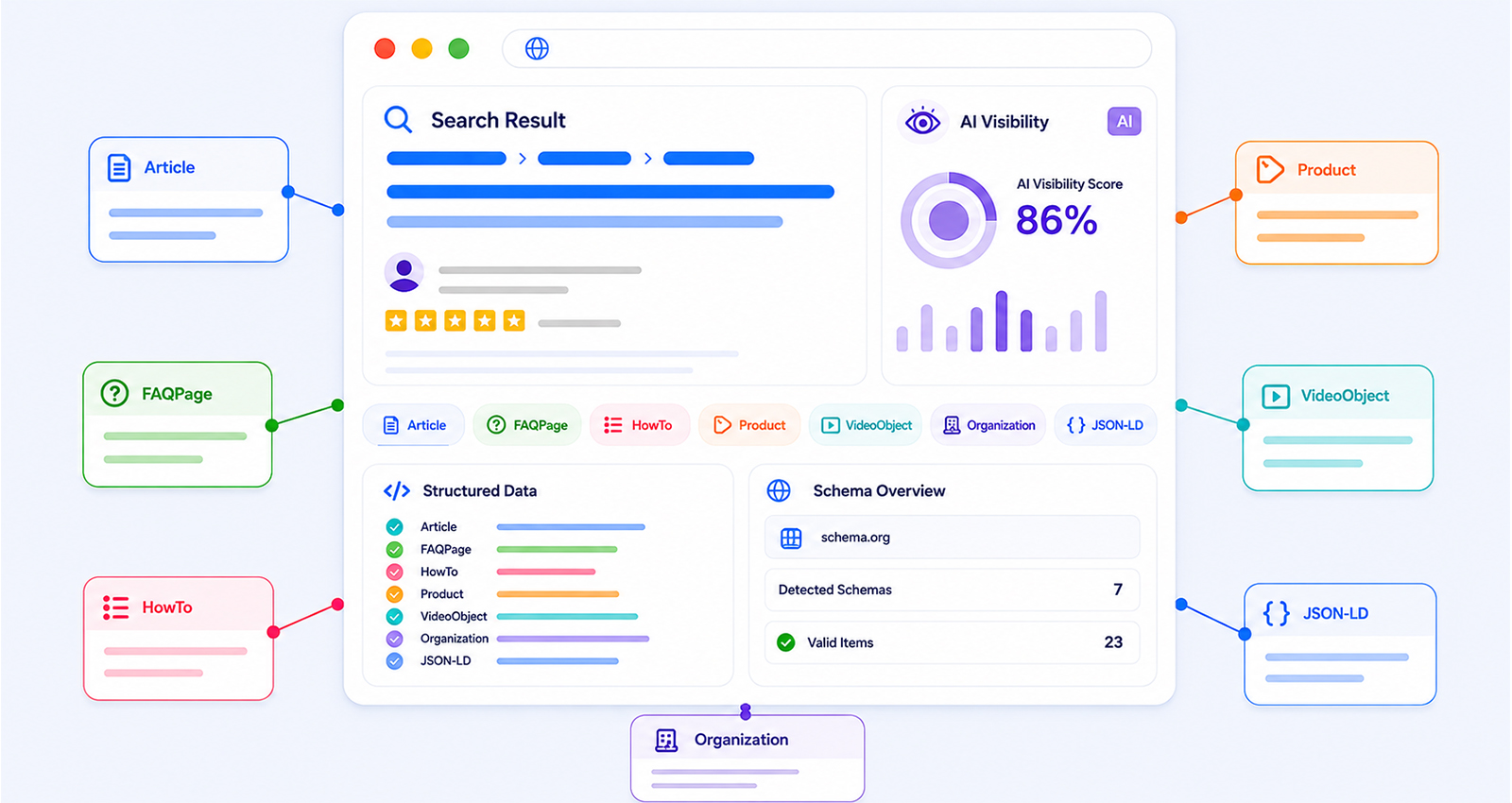
Picture two identical blog posts. Same topic, same word count, same backlink profile, published the same week. One shows up in Google with the author’s name, a publish date, and a clean breadcrumb trail. The other is just a blue link and a meta description. The first one earns 40% more clicks because Google understands it better. That understanding comes from schema markup.
Schema markup is structured data based on Schema.org, a shared vocabulary created by Google, Microsoft, Yahoo, and Yandex that helps websites communicate clearly with search engines and AI systems.
This guide covers all 25 types of schema markup, what each one does, which pages it belongs on, and how to implement it in JSON-LD, so every page on a website gets the treatment it deserves in search results.
Most Important Schema Types
For most websites, these schema types provide the biggest SEO and AI visibility impact:
- Organization schema
- Article or BlogPosting schema
- Product schema
- LocalBusiness schema
- BreadcrumbList schema
- FAQ schema
- Review schema
How to Choose the Right Schema Markup Type
Schema.org lists over 800 types of structured data. That number sounds overwhelming, but in practice, the 25 types covered in this guide account for the vast majority of real-world rich result opportunities and AI visibility gains.
Some schema types, like Product, Recipe, and Event, directly generate visually rich results with images, ratings, and pricing that stand out on the page. Others, like Organization and Person, don’t create a flashy SERP feature, but they build the entity-level trust that underpins AI search recommendations and Knowledge Panels. And a few, like FAQ and HowTo, had their Google rich results restricted in 2023–2024 but remain structurally valuable for voice search and AI crawlers.
The smartest way to approach schema implementation is by matching the type to the page’s primary purpose, then building outward. A product page gets the Product schema first. A blog post gets an Article schema. A local business homepage gets the LocalBusiness schema. From there, supporting types, BreadcrumbList, Review, Organization, layer in to build a connected, machine-readable picture of the entire site.
Both Google and Microsoft publicly confirmed that structured data is critical for their generative AI features because it’s efficient, precise, and easy for machines to process.
25 Schema Markup Types for SEO and AI Visibility
Knowing which schema types matter most helps improve SEO, topical authority, Google rich results, and AI search visibility.
1. Article Schema
Article schema is the foundation of structured data for any website that publishes written content, i.e., blogs, news sites, editorial platforms, or knowledge bases. It tells Google that a page is an article, establishes who wrote it, when it was published, when it was last updated, and what organization stands behind it.
Google’s E-E-A-T framework (Experience, Expertise, Authoritativeness, Trustworthiness) depends heavily on understanding who is responsible for content. Article schema creates a direct, machine-readable link between a piece of content and its author and publisher, which is exactly the signal Google is looking for when deciding how much to trust a page.
Article schema enables rich results like author display, article date information, and contributes to sitelinks features. It’s also one of the primary schema types that AI platforms reference when deciding whether content comes from a credible, identifiable source.
Key properties to include: headline, author (with @type: Person), datePublished, dateModified, publisher (with @type: Organization and logo), image, url.
{
  "@context": "https://schema.org",
  "@type": "Article",
  "headline": "Your Article Title Goes Here",
  "author": {
    "@type": "Person",
    "name": "Author Name",
    "url": "https://www.example.com/author/author-name"
  },
  "datePublished": "2025-01-15",
  "dateModified": "2025-03-20",
  "publisher": {
    "@type": "Organization",
    "name": "Your Website Name",
    "logo": {
      "@type": "ImageObject",
      "url": "https://www.example.com/logo.png",
      "width": 200,
      "height": 60
    }
  },
  "image": {
    "@type": "ImageObject",
    "url": "https://www.example.com/images/article-cover.jpg",
    "width": 1200,
    "height": 630
  },
  "url": "https://www.example.com/blog/your-article-slug",
  "description": "A brief description of what this article covers and why it's useful to the reader.",
  "mainEntityOfPage": {
    "@type": "WebPage",
    "@id": "https://www.example.com/blog/your-article-slug"
  }
}
2. BlogPosting Schema
BlogPosting schema is a subtype of Article, specifically designed to mark up informal blog content. A blog post tells search engines this is a blog-style post rather than a formal news article or academic piece. In practical terms, the properties are nearly identical to the Article schema, but the @type is BlogPosting.
For most business blogs, BlogPosting is actually the more accurate choice over the generic Article type. It sets appropriate content expectations and ensures the markup matches the nature of the page.
3. NewsArticle Schema
The NewsArticle schema is reserved for time-sensitive journalism and editorial news coverage. It follows the same base structure as Article but carries additional signals that qualify content for Google News indexing and the Top Stories carousel, the row of news cards that appears above standard organic results on news-related queries.
NewsArticle schema helps Google better understand news-oriented content and improves eligibility for features like Google News and the Top Stories carousel. For publishers covering current events, product launches, or industry news, this is a high-priority schema type.
Additional properties for news: dateline, printEdition, printPage, printSection.
4. FAQ Schema
FAQ schema marks up question-and-answer content. Historically, it generated one of the most visually impressive rich results in Google Search, expandable Q&A panels that displayed directly below a search listing.
Google restricted FAQ rich results in 2023, limiting them to established government and health websites. The schema type remains valid JSON-LD; at the crawler layer, it is parsed as machine-readable structured content by Bingbot, PerplexityBot, voice-assistant indexers, and RAG crawlers.
While the visual SERP feature is no longer available for most sites, the structured Q&A format is still parseable by Bingbot, voice-assistant crawlers, and RAG-based AI systems. The machine-readable structure remains valuable even without a visible SERP feature.
{
  "@context": "https://schema.org",
  "@type": "FAQPage",
  "mainEntity": [
    {
      "@type": "Question",
      "name": "What is schema markup?",
      "acceptedAnswer": {
        "@type": "Answer",
        "text": "Schema markup is structured data added to a web page's HTML that helps search engines understand the meaning and context of that content, making it eligible for rich results."
      }
    },
    {
      "@type": "Question",
      "name": "Does schema markup improve SEO rankings?",
      "acceptedAnswer": {
        "@type": "Answer",
        "text": "Schema markup is not a direct ranking factor, but it improves CTR through rich snippets and helps search engines and AI tools better understand and trust your content."
      }
    }
  ]
}
5. How-To Schema
HowTo schema marks up step-by-step instructional content with structured steps, estimated time, required tools, and supply lists. It’s purpose-built for tutorial pages, DIY guides, recipe-adjacent instructional content, and any page that walks a reader through a process.
Like FAQ schema, Google restricted HowTo rich results in 2023–2024, limiting visual display to authoritative government and health websites. But the structural value remains real, AI answer engines heavily favor well-structured instructional content, and the HowTo schema makes that structure machine-readable in a way plain HTML headings cannot.
Key properties: name, step (array of HowToStep with name and text), totalTime, estimatedCost, supply, tool.
6. Organization Schema
Organization schema is the starting point for establishing a brand’s identity on the internet. It defines who a business is at the entity level, not just the company name, but everything that makes it a real, verifiable entity on the web. This schema type is what typically populates the Google Knowledge Panel that appears when someone searches directly for a brand name.
It connects the dots between a company’s official website, its social media profiles, its logo, its founding date, its location, and its contact information, all in one structured block. For AI search platforms like ChatGPT and Gemini, the organization schema is how they verify that a website belongs to a real, identifiable business entity.
{
  "@context": "https://schema.org",
  "@type": "Organization",
  "name": "Your Company Name",
  "url": "https://www.example.com",
  "logo": "https://www.example.com/logo.png",
  "foundingDate": "2020",
  "description": "A short description of what your company does and who it serves.",
  "sameAs": [
    "https://twitter.com/yourhandle",
    "https://www.linkedin.com/company/your-company",
    "https://www.facebook.com/yourpage"
  ],
  "contactPoint": {
    "@type": "ContactPoint",
    "contactType": "Customer Support",
    "email": "support@example.com"
  }
}
7. Local Business Schema
LocalBusiness schema is an Organization schema specifically tailored for businesses with a physical presence. It adds location-specific properties, street address, city, state, ZIP, geo-coordinates, operating hours, price range, and accepted payment methods that feed directly into Google Maps, local pack results, and voice search responses.
When someone asks a voice assistant, “What are the best coffee shops near me?” or searches for “plumber open now Austin TX,” LocalBusiness schema helps search engines and voice assistants better understand location-based business information, which can support visibility in local and voice search results.
{
  "@context": "https://schema.org",
  "@type": "LocalBusiness",
  "name": "Your Business Name",
  "image": "https://www.example.com/storefront.jpg",
  "telephone": "+1-800-000-0000",
  "address": {
    "@type": "PostalAddress",
    "streetAddress": "123 Main Street",
    "addressLocality": "Your City",
    "addressRegion": "CA",
    "postalCode": "90001",
    "addressCountry": "US"
  },
  "geo": {
    "@type": "GeoCoordinates",
    "latitude": 34.0522,
    "longitude": -118.2437
  },
  "openingHours": ["Mo-Fr 09:00-18:00", "Sa 10:00-15:00"],
  "priceRange": "$$",
  "url": "https://www.example.com"
}
8. Service Schema
Service schema fills a gap that Organization schema doesn’t cover: the specific things a business offers. While the Organization schema says who a business is, the Service schema says what it does. It can carry properties like service type, area served, provider, service output, and even an aggregate rating.
For professional services firms like agencies, consultants, law firms, and IT companies, Service schema allows Google to understand the distinct offerings on service pages rather than treating them as generic web pages. It also feeds AI tools that are increasingly being used to compare service providers across the web.
Key properties: @type: Service, name, provider (linking to Organization), areaServed, serviceType, description, offers.
9. Person Schema
Person schema establishes the digital identity of an individual, their name, job title, employer, credentials, social profiles, and areas of expertise. Person schema on author bio pages is one of the most direct ways to tell Google that real, qualified humans are producing a website’s content.
For content-heavy websites, implementing Person schema on every author profile page creates a verifiable chain from individual article to credentialed author to authoritative organization.
{
  "@context": "https://schema.org",
  "@type": "Person",
  "name": "Author Full Name",
  "jobTitle": "Your Job Title",
  "url": "https://www.example.com/author/author-name",
  "sameAs": [
    "https://twitter.com/yourhandle",
    "https://www.linkedin.com/in/yourprofile"
  ],
  "worksFor": {
    "@type": "Organization",
    "name": "Your Company Name"
  },
  "knowsAbout": ["Your Area of Expertise", "Related Topic", "Another Skill"]
}
10. Product Schema
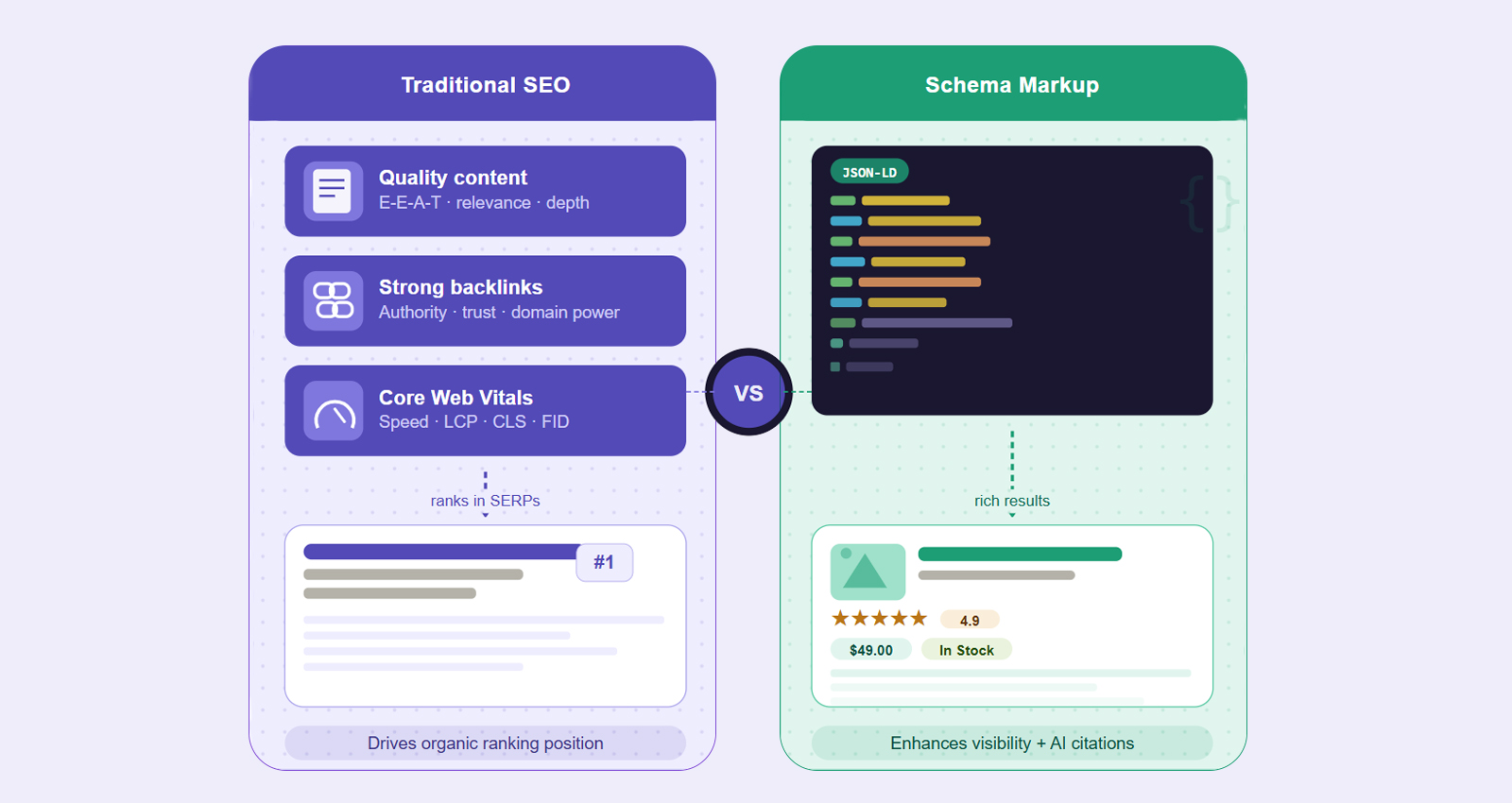
Product schema is the single highest-value schema type for any e-commerce website. A fully implemented Product schema, combining the base type with Offer and AggregateRating sub-schemas, generates rich results that display price, availability status, and star ratings directly in Google Search results, before the user even clicks.
That kind of upfront information dramatically changes user behavior. A shopper scanning search results who sees a product at $49.99 with 4.7 stars and “In Stock” is far more likely to click than someone looking at a plain blue link.
{
  "@context": "https://schema.org",
  "@type": "Product",
  "name": "Your Product Name",
  "image": [
    "https://www.example.com/images/product-front.jpg",
    "https://www.example.com/images/product-side.jpg"
  ],
  "description": "A clear description of your product, its key features, and what problem it solves.",
  "sku": "PRODUCT-SKU-001",
  "brand": {
    "@type": "Brand",
    "name": "Your Brand Name"
  },
  "offers": {
    "@type": "Offer",
    "priceCurrency": "USD",
    "price": "49.99",
    "availability": "https://schema.org/InStock",
    "url": "https://www.example.com/products/your-product",
    "priceValidUntil": "2025-12-31"
  },
  "aggregateRating": {
    "@type": "AggregateRating",
    "ratingValue": "4.6",
    "reviewCount": "218"
  }
}
11. Review Schema
Review schema marks up individual customer or expert reviews of products, businesses, or services. It’s typically used nested inside the Product or LocalBusiness schema to power the star rating display in search results.
The reviewRating, author, reviewBody, and itemReviewed properties tell Google exactly what was reviewed and how it was rated.
{
  "@context": "https://schema.org",
  "@type": "Review",
  "itemReviewed": {
    "@type": "Product",
    "name": "Name of the Product Being Reviewed"
  },
  "reviewRating": {
    "@type": "Rating",
    "ratingValue": "4",
    "bestRating": "5",
    "worstRating": "1"
  },
  "name": "Great value for the price",
  "reviewBody": "This product exceeded my expectations. The build quality is solid, setup was straightforward, and it has been working flawlessly for three months.",
  "author": {
    "@type": "Person",
    "name": "Reviewer Full Name"
  },
  "datePublished": "2025-04-18",
  "publisher": {
    "@type": "Organization",
    "name": "Your Website Name"
  }
}
12. Offer Schema
Offer schema is used to communicate the commercial terms of a product or service, price, currency, availability, valid date range, and seller information. It’s most commonly seen nested inside the Product schema. Offer schema can also stand alone on service pricing pages or be used in MerchantReturnPolicy contexts for eCommerce eligibility.
For seasonal promotions or limited-time pricing, the priceValidUntil property is particularly useful, as it tells Google when a price expires, which keeps search results accurate and prevents stale pricing data from appearing.
13. ItemList Schema
ItemList schema marks up any grouped collection of items, product category pages, “best of” listicles, blog archives, or top-ten recommendation posts. It tells Google that a page is a curated list with individual items, each of which can optionally link to a separate detailed page.
For eCommerce category pages, ItemList schema helps Google understand that the page is a collection rather than a single product, which can improve how it’s indexed and displayed. For editorial “best of” posts, ItemList combined with individual item schema creates a powerful semantic layer that AI tools use when generating comparison answers.
{
  "@context": "https://schema.org",
  "@type": "ItemList",
  "name": "Best Project Management Tools for Small Teams",
  "description": "A curated list of the top project management tools reviewed and ranked for small business use.",
  "url": "https://www.example.com/blog/best-project-management-tools",
  "numberOfItems": 3,
  "itemListElement": [
    {
      "@type": "ListItem",
      "position": 1,
      "name": "Tool Name One",
      "url": "https://www.example.com/reviews/tool-one"
    },
    {
      "@type": "ListItem",
      "position": 2,
      "name": "Tool Name Two",
      "url": "https://www.example.com/reviews/tool-two"
    },
    {
      "@type": "ListItem",
      "position": 3,
      "name": "Tool Name Three",
      "url": "https://www.example.com/reviews/tool-three"
    }
  ]
}
14. Video Schema
Video schema marks up video content with structured metadata: the video title, description, thumbnail, upload date, duration, and optionally a transcript or key moments (timestamps). Pages with valid Video schema are eligible for video-rich results in Google Search and the video carousel.
The clip and hasPart properties allow webmasters to define key moments within a video with timestamps, which can appear as labeled chapters directly in the search result. This is especially valuable for long-form tutorial or educational videos.
{
  "@context": "https://schema.org",
  "@type": "VideoObject",
  "name": "Your Video Title Goes Here",
  "description": "A clear description of what this video covers and what viewers will learn.",
  "thumbnailUrl": "https://www.example.com/thumbnails/video-cover.jpg",
  "uploadDate": "2025-04-10",
  "duration": "PT14M22S",
  "contentUrl": "https://www.example.com/videos/your-video-slug",
  "embedUrl": "https://www.youtube.com/embed/your-video-id"
}
15. Recipe Schema
Recipe schema is one of the most visually impressive schema types in all of Google Search. A fully implemented Recipe schema generates a rich card with a photo, star rating, cook time, prep time, calorie count, and ingredient list, all visible in the SERP before the user clicks. On mobile, these cards dominate the screen.
Rakuten increased time on site by 1.5 times after implementing Recipe schema, while also recording a 3.6x higher interaction rate. For food bloggers and culinary brands, this schema type is essentially mandatory.
{
  "@context": "https://schema.org",
  "@type": "Recipe",
  "name": "Your Recipe Name",
  "image": "https://www.example.com/images/recipe-photo.jpg",
  "author": { "@type": "Person", "name": "Author Name" },
  "datePublished": "2025-02-20",
  "description": "A brief description of this recipe - flavor profile, occasion, or what makes it special.",
  "prepTime": "PT20M",
  "cookTime": "PT40M",
  "totalTime": "PT60M",
  "recipeYield": "4 servings",
  "recipeIngredient": [
    "Ingredient one with quantity",
    "Ingredient two with quantity",
    "Ingredient three with quantity"
  ],
  "nutrition": {
    "@type": "NutritionInformation",
    "calories": "350 calories per serving"
  },
  "aggregateRating": {
    "@type": "AggregateRating",
    "ratingValue": "4.8",
    "reviewCount": "540"
  }
}
16. Book Schema
Book schema marks up book listings with structured metadata: title, author, ISBN, publisher, publication date, number of pages, genre, and book edition. For online bookstores and library catalogs, it enables richer book-related search results and can qualify pages for the Read button action in Google Search.
Book schema is valuable for author websites – it connects a person’s identity (via Person schema) to their published works, building a semantic entity graph that reinforces author authority in Google’s eyes.
Key properties: name, author, isbn, publisher, numberOfPages, datePublished, bookEdition, genre.
17. Music Schema
Music schema covers a broad range of music-related content. MusicRecording marks individual songs, MusicAlbum marks full albums, and MusicGroup marks artists and bands. These types help music publishers, streaming platforms, and artist websites ensure their content is accurately categorized and surfaced in music-related searches.
Music schema also supports the byArtist relationship, linking a recording to its artist entity, which builds a connected knowledge graph of musical content that Google can use to populate knowledge panels and music carousels.
18. Event Schema
Event schema is among the highest-impact schema types for any website that organizes or promotes scheduled gatherings – conferences, concerts, webinars, workshops, sports matches, or community events. A valid Event schema can generate the Google Events carousel, which appears prominently above standard organic results on event-related queries and displays event name, date, location, and ticket availability.
Eventbrite doubled its traffic after implementing Event schema. For event organizers, that kind of visibility at zero incremental content cost is exactly what structured data is designed to deliver.
{
  "@context": "https://schema.org",
  "@type": "Event",
  "name": "Your Event Name",
  "startDate": "2025-10-10T09:00:00",
  "endDate": "2025-10-10T17:00:00",
  "eventStatus": "https://schema.org/EventScheduled",
  "eventAttendanceMode": "https://schema.org/OfflineEventAttendanceMode",
  "location": {
    "@type": "Place",
    "name": "Venue Name",
    "address": {
      "@type": "PostalAddress",
      "streetAddress": "123 Event Blvd",
      "addressLocality": "Your City",
      "addressRegion": "CA",
      "postalCode": "90001"
    }
  },
  "organizer": {
    "@type": "Organization",
    "name": "Your Organization Name",
    "url": "https://www.example.com"
  },
  "offers": {
    "@type": "Offer",
    "price": "99",
    "priceCurrency": "USD",
    "availability": "https://schema.org/InStock",
    "validFrom": "2025-07-01"
  }
}
19. Job Posting Schema
Job Posting schema marks up open job listings with structured data about the role – job title, employment type (full-time, part-time, contract), salary range, location, application deadline, and employer details. Pages with a valid Job Posting schema appear in Google for Jobs, a dedicated job search feature embedded within Google Search that surfaces listings above regular organic results.
For recruitment agencies, corporate career pages, and HR teams, this schema type is essentially free premium placement in Google Search. The application deadline property is especially important, it signals Google to stop showing a listing once the role is filled.
Key properties: title, hiringOrganization, jobLocation, employmentType, baseSalary, datePosted, validThrough, description.
{
  "@context": "https://schema.org",
  "@type": "JobPosting",
  "title": "Senior Frontend Developer",
  "description": "We are looking for an experienced Frontend Developer to join our product team. You will be responsible for building responsive web interfaces, collaborating with designers, and optimizing application performance.",
  "datePosted": "2025-05-01",
  "validThrough": "2025-07-01T00:00:00",
  "employmentType": "FULL_TIME",
  "hiringOrganization": {
    "@type": "Organization",
    "name": "Your Company Name",
    "sameAs": "https://www.example.com",
    "logo": "https://www.example.com/logo.png"
  },
  "jobLocation": {
    "@type": "Place",
    "address": {
      "@type": "PostalAddress",
      "streetAddress": "123 Business Ave",
      "addressLocality": "Your City",
      "addressRegion": "CA",
      "postalCode": "90001",
      "addressCountry": "US"
    }
  },
  "jobLocationType": "TELECOMMUTE",
  "baseSalary": {
    "@type": "MonetaryAmount",
    "currency": "USD",
    "value": {
      "@type": "QuantitativeValue",
      "minValue": 90000,
      "maxValue": 120000,
      "unitText": "YEAR"
    }
  },
  "experienceRequirements": "Minimum 3 years of experience with React or Vue.js",
  "educationRequirements": "Bachelor's degree in Computer Science or related field",
  "skills": "React, TypeScript, CSS, REST APIs, Git"
}
20. Course Schema
Course schema marks up educational content, online courses, professional certifications, classroom training, or workshop series with structured information about the course name, description, provider, instructor, and details like duration, skill level, and whether it’s free or paid.
Course Info rich results appear in Google Search and help learners discover the right programs directly from the SERP without having to navigate through multiple pages. For edtech platforms and training companies, this schema type increases discoverability among high-intent learners who are actively searching for skill development.
Key properties: name, description, provider, hasCourseInstance (with startDate, endDate, courseMode), offers.
21. BreadcrumbList Schema
BreadcrumbList schema marks up the navigational hierarchy of a page, showing the path from the homepage through categories down to the specific page being viewed. In Google Search, this replaces the raw URL below a page’s title with a clean, human-readable breadcrumb trail like: Home › Blog › SEO › Schema Markup Guide.
BreadcrumbList schema is one of the highest-ROI structured data implementations for content sites. It replaces the raw URL displayed in search results with a human-readable path hierarchy, communicates site structure, improves perceived trustworthiness, and increases CTR by showing users that content is part of a well-organized site.
{
  "@context": "https://schema.org",
  "@type": "BreadcrumbList",
  "itemListElement": [
    {
      "@type": "ListItem",
      "position": 1,
      "name": "Home",
      "item": "https://www.example.com"
    },
    {
      "@type": "ListItem",
      "position": 2,
      "name": "Blog",
      "item": "https://www.example.com/blog"
    },
    {
      "@type": "ListItem",
      "position": 3,
      "name": "Your Page Title",
      "item": "https://www.example.com/blog/your-page-slug"
    }
  ]
}
22. Speakable Schema
As voice search and AI assistants become a primary way people consume information, Speakable schema is becoming one of the more forward-looking schema types to implement. It marks up specific sections of a page, typically a summary, key takeaways, or a short intro paragraph, that are most suitable for being read aloud by a text-to-speech engine or cited by an AI assistant.
When Google Assistant or another voice-enabled tool pulls an answer from a webpage, Speakable schema tells it exactly which portion of that page to read rather than letting the system guess. This is particularly valuable for news publishers and informational content sites where a concise, quotable summary already exists on the page.
Speakable schema uses cssSelector to point to specific HTML elements by their class or ID.
{
  "@context": "https://schema.org",
  "@type": "WebPage",
  "name": "Your Page Title",
  "url": "https://www.example.com/blog/your-page-slug",
  "speakable": {
    "@type": "SpeakableSpecification",
    "cssSelector": [
      ".article-summary",
      ".key-takeaways",
      "h1"
    ]
  }
}
23. WebPage Schema
WebPage is the base schema type for any individual web page. It’s rarely implemented as a standalone type, but it establishes page-level metadata, name, URL, description, date modified, and the primary image, which contributes to the overall semantic layer of a website.
Its subtypes are more commonly used in practice: AboutPage for the About section, ContactPage for contact pages, SearchResultsPage for internal search pages. Each subtype communicates a specific page purpose to search engines and AI crawlers, which helps with indexing accuracy.
24. Claim Review Schema
ClaimReview schema is specifically designed for fact-checking organizations. It marks up a verified claim – the statement being checked, who made it, when, the verdict (true, false, mostly true, misleading, etc.), and the URL of the fact-check article. Pages with a valid ClaimReview schema can earn the fact-check label in Google News and Search results.
25. Software Application Schema
SoftwareApplication schema marks up software products – web apps, mobile apps, desktop software, browser extensions, SaaS tools – with structured information about the product name, operating system, application category, pricing model, and aggregate rating.
For SaaS companies and app developers, this schema type is particularly valuable for appearing in “best software for X” queries and comparison-style searches.
{
  "@context": "https://schema.org",
  "@type": "SoftwareApplication",
  "name": "Your App or Tool Name",
  "operatingSystem": "Web, iOS, Android",
  "applicationCategory": "Your App Category",
  "description": "A concise description of what your software does and who it's built for.",
  "url": "https://www.example.com",
  "offers": {
    "@type": "Offer",
    "price": "0",
    "priceCurrency": "USD",
    "description": "Free plan available"
  },
  "aggregateRating": {
    "@type": "AggregateRating",
    "ratingValue": "4.7",
    "reviewCount": "312"
  },
  "featureList": [
    "Key feature one",
    "Key feature two",
    "Key feature three"
  ]
}
Best Schema Types by Website Category
| Website Type | Must-Have Schema Types | High-Value Additions |
|---|---|---|
| E-commerce store | Product, Offer, Review, Organization | BreadcrumbList, ItemList, FAQ |
| Local business | LocalBusiness, Review, Organization | Service, Event, FAQ |
| Blog / Publisher | Article, Person, Organization | BreadcrumbList, NewsArticle, Video |
| SaaS / Software | SoftwareApplication, Organization, Service | FAQ, Person, BreadcrumbList |
| Restaurant | LocalBusiness, Review | Event, Menu, Organization |
| Recruiter / HR | JobPosting, Organization | LocalBusiness, Person |
| Online education | Course, Organization | Person, Video, Article |
| Food / Recipe blog | Recipe, Person, Organization | Review, Video, BreadcrumbList |
How Schema Markup Improves AI Search Visibility
The conversation around best schema types for SEO has shifted significantly since AI Overviews, ChatGPT Search, Perplexity, and Google Gemini became mainstream search tools. These platforms build knowledge graphs connecting entities, facts, and relationships. Schema markup is the most direct way to feed those graphs.
Practically speaking, certain schema types carry disproportionate weight for AI visibility:
- Organization schema establishes that a website belongs to a real, named business entity. AI tools use this to verify sources before citing them. Without it, a website is an anonymous URL, but with it, it’s a known entity with a name, description, and verifiable social presence.
- Person schema with knowsAbout properties tells AI systems what a creator’s areas of expertise are. This directly influences whether AI tools consider a source authoritative for a given topic.
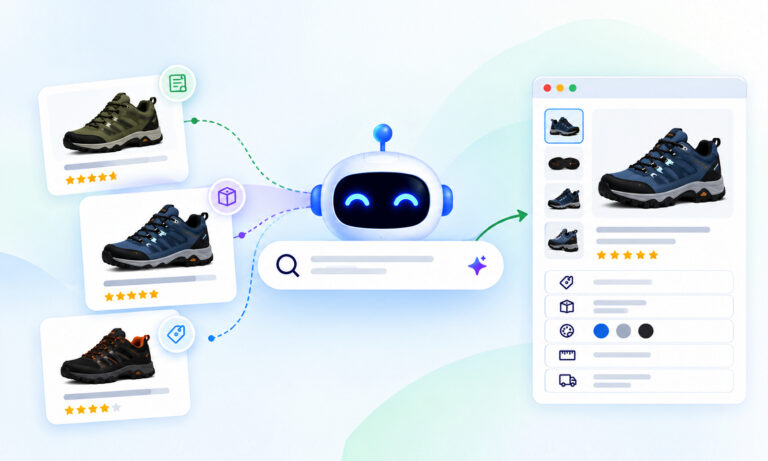
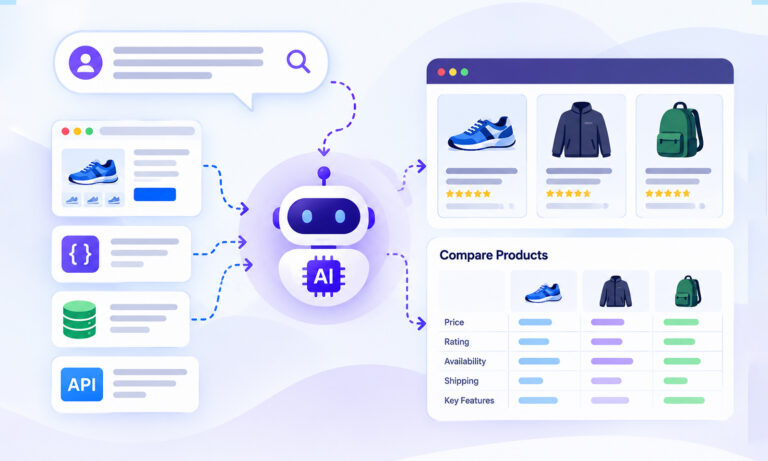
- Service and Product schema give AI comparison engines the structured data they need to answer “what does X company offer?” queries accurately. If those properties aren’t in schema form, the AI has to infer them from unstructured text and inference is less reliable.
- FAQ schema, despite losing its Google rich result, remains structurally valuable because its Q&A format mirrors exactly how AI answer engines retrieve and present information.
Building a complete Knowledge Graph connecting Organization, Person, Product, Service, Article, and other schema types together through @id references is the foundational strategy for both traditional SEO and AI search visibility.
Common Schema Markup Mistakes
The effectiveness of structured data depends heavily on implementation quality.
One of the most common mistakes is using schema types that do not accurately match the content of the page. Product schema on service pages, misleading Review markup, or FAQ schema attached to content without visible questions can all reduce trust in the structured data itself.
Another common issue is incomplete implementation. Missing required properties, outdated pricing, incorrect business details, or broken JSON-LD syntax can prevent rich results from appearing altogether.
Schema markup should reflect the visible content of the page accurately and remain updated as content changes over time.
Conclusion
Each of the 25 schema markup types covered here serves a distinct purpose, and together they make a website fully readable to both search engines and the AI platforms now mediating search results. The opportunity is real, the technical barrier is low, and 70% of the web still hasn’t acted on it.
The only question worth asking is which schema types are missing from a website today.
Frequently Asked Questions
Q1: What are the most important types of schema markup for SEO?
For most websites, the highest-priority schema types are Organization (for brand entity), Product or Service (for offerings), LocalBusiness (if a physical location exists), Article (for content), and BreadcrumbList (for site structure). These five types together cover the majority of rich result opportunities and AI visibility signals for most websites.
Q2: Can a single page use multiple schema types at the same time?
Yes, it’s often best practice to do so. A product page might combine Product, Offer, Review, and BreadcrumbList schema simultaneously. A blog post might combine Article, Person, and Organization schema. Each type communicates a different dimension of the page’s content and context.
Q3: What is the difference between the Article and BlogPosting schema?
Both are subtypes of the same base type, but BlogPosting is semantically more accurate for informal blog content, while Article is better suited for formal editorial or journalistic pieces. In practice, the properties are nearly identical, the choice comes down to matching the schema type to the nature of the content.
Q4: Does schema markup guarantee rich results in Google Search?
No. Valid schema markup makes a page eligible for rich results, but Google determines independently whether to display them based on content quality, page authority, and relevance. Without schema, rich results are impossible, but with schema, they’re still not guaranteed.
Q5: What format should schema markup be written in?
Google recommends JSON-LD as the preferred format for structured data. It sits in a <script> tag separate from the page’s HTML content, making it easy to add, maintain, and update without touching the visual design. Microdata and RDFa are still supported but are more error-prone and harder to manage.
Q6: How often should schema markup be reviewed and updated?
The schema should be reviewed whenever page content changes significantly – new product pricing, updated business hours, published articles, and event date changes. An outdated schema (showing old prices or sold-out events) can lead to Google displaying inaccurate rich results, which damages trust and can result in rich result penalties.







 Wix Schema
 Squarespace Schema
 BigCommerce Schema
 Shopify Schema
 Hubspot Schema
 Webflow Schema
 GoHighlevel Schema
 Duda Schema
 Weebly Schema
 ClickFunnel Schema