


Scaling an online store today isn’t just about running ads or publishing more content, it’s about earning visibility where buying decisions actually happen: in organic search. With search results becoming more competitive and feature-rich, brands that rely only on traditional SEO tactics often struggle to stand out.
That’s where e-commerce schema markup strategies create a measurable edge. Schema markup, also known as structured data, is a standardized framework that helps search engines interpret your products, pricing, reviews, and brand details with precision. When implemented correctly, it makes your pages eligible for enhanced search features like star ratings, availability labels, FAQs, and other rich results that capture attention and build trust before a user even clicks.
In this guide, we’ll break down practical, scalable approaches to structured data for e-commerce brands and show how the right implementation can strengthen visibility, credibility, and long-term growth.
What Is E‑Commerce Schema Markup?
At its core, schema markup for ecommerce is a type of structured data, machine‑readable code that labels your e-commerce content so search engines understand it more precisely.
For e-commerce sites, structured data enhances listings with rich information such as:
- Product prices and availability
- Star ratings and review counts
- Brand details
- Offer and discount data
- Breadcrumb paths
- FAQs and how‑to content
When implemented correctly, these annotations feed directly into rich results, replacing plain blue links with eye‑catching search features.
Why Schema Matters for Scaling Ecommerce Brands
Schema matters for scaling ecommerce brands because it makes your products eligible for rich results like prices, ratings, and availability, boosting visibility and trust instantly.
Take a look at these key points below to understand how it drives measurable growth.
Enhanced SERP Presence with Rich Results
Structured data enables rich results, search features that display extra information like star ratings, prices, and product availability. These make e-commerce listings stand out in crowded SERPs and entice users to click.
Search metrics consistently show strong performance lifts from schema‑enabled rich results:
- 67% of schema-enabled websites are indexed faster by Google
- Listings with reviews and prices can see engagement improvements because users instantly see key purchasing signals.
Even if rankings don’t change, rich elements can expand your SERP footprint, which correlates with better overall visibility.
Core E‑Commerce Schema Markup Types & How to Use Them
To build effective e-commerce schema markup strategies, you need to understand the core schema types that drive rich results, and how to implement each one correctly for maximum search visibility.
1. Product Schema – Your Foundation
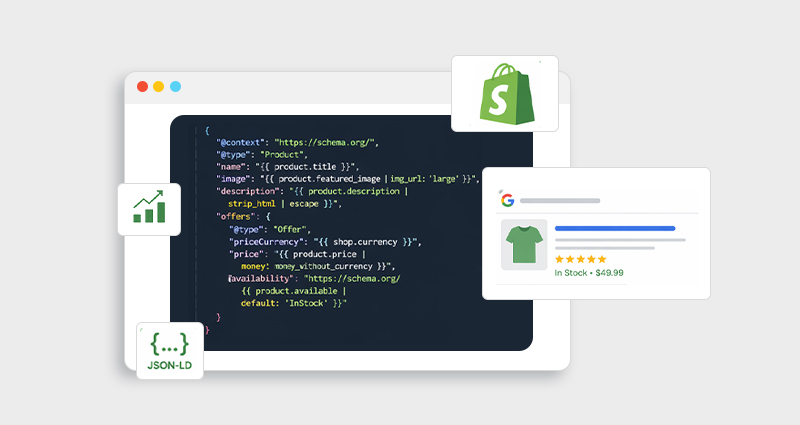
Product schema is the core of strong e-commerce schema markup strategies. It clearly tells search engines what you’re selling by defining key details such as product name, description, images, brand, SKU, price, availability, and offer information in a structured format.
When implemented correctly, Product schema makes your pages eligible for rich product results that display pricing, stock status, and ratings directly in search. These enhanced listings improve transparency, attract high-intent shoppers, and strengthen overall visibility.
To maximize the impact of Product schema within your e-commerce schema markup strategies, follow these best practices:
- Mark up every individual product page separately (not category pages).
- Ensure schema data matches the visible on-page content exactly (price, availability, SKU, etc.).
- Include essential properties such as name, image, description, brand, and offers.
- Keep pricing and stock status dynamically updated to avoid mismatches.
- Add AggregateRating and Review schema only if genuine reviews are displayed on the page.
- Use JSON-LD format, as it’s the recommended implementation method for structured data.
Following these guidelines ensures your online store schema markup remains accurate, compliant, and eligible for rich results.
2. Review & AggregateRating Schema
Shoppers trust social proof. Adding Review and AggregateRating schema gives search engines the confidence to display star ratings directly in search results, boosting credibility and CTR.
Best practices include:
- Only mark up visible reviews on the page
- Include both positive and negative ratings for authenticity
- Never use synthetic or fake reviews (Google penalties apply)
3. Offer & PriceSpecification Schema
For promotions, seasonal discounts, or dynamic pricing, the Offer and PriceSpecification schema provides machines with precise commercial context.
Example capabilities include:
- Displaying sale price vs regular price
- Showing discount end dates
- Clarifying shipping options
These snippets often trigger more engaging rich results like “Sale ends soon” or price comparisons.
4. Breadcrumb Schema
BreadcrumbList schema helps search engines map site structure and gives users clickable navigation paths in SERPs. This impacts both crawl efficiency and user experience.
Breadcrumb snippets reinforce context and can reduce bounce rates by setting clearer expectations for where a user lands on your site.
5. FAQ & Q&A Page Schema
On category or product pages with common questions, FAQPage schema allows answers to appear directly below your listing in Google results. This boosts visibility and answers queries before users even click through. 97% of consumers read reviews of local businesses.
Use the FAQ schema for questions like:
- “What payment methods are accepted?”
- “Does this include a warranty?”
These appear as clickable drop‑downs in SERPs and improve real estate share.
Advanced E-Commerce Schema Techniques (Expanded)
Once you’ve implemented the basics, Product, Offer, and Review schema, truly impactful e-commerce structured data strategies go beyond single schema types to create a network of semantic signals that improve visibility, trust, and user experience across the customer journey. The goal of advanced schema isn’t just eligibility for rich results, it’s building a structured framework that lets search engines understand your site holistically and surface it in richer formats.
Semantic Layering: Multiple Schema Types in Harmony
Leading brands don’t just use Product or Review schema in isolation, they combine vocabulary types to convey richer context. For example:
- Organization and Brand schema reinforce your company identity, helping search engines associate product pages with a credible seller.
- Offer and PriceSpecification provide real-time pricing and promotions, which can trigger enhanced snippets showing sale prices or discount timelines.
- BreadcrumbList schema clarifies website hierarchy, helping both users and search engines navigate complex catalog structures.
- Contextual schema, like VideoObject for product demos, FAQPage or HowTo for user questions, and even Speakable markup for audio-readable content, improve how voice assistants and AI search agents interpret your content.
Layering schema types like this creates a semantic ecosystem rather than isolated signals, increasing the likelihood of rich results for e-commerce websites and improved comprehension of user intent.
Real-World Trust Signals: Reviews and Ratings at Scale
Customer feedback is one of the strongest trust indicators online. In fact, 99% of consumers say reviews influence their buying decisions, and structured review data makes those signals visible right in search results.
To maximize the impact of the review schema:
- Encourage reviews at key touchpoints (post-purchase email, SMS, onsite prompts).
- Mark up visible and genuine customer reviews only, Google penalizes hidden or fabricated data.
- Include the AggregateRating property alongside individual review snippets so Google can display star ratings and review counts in SERPs.
A well-implemented review schema not only makes your product listings more eye-catching but also reinforces credibility for both search engines and shoppers.
Product Availability & Dynamic Offers
Users are increasingly impatient with outdated stock data. Incorporating the Product Availability schema tied to real-time inventory and Offer dates ensures that search engines can display accurate stock and promotional information. This reduces frustrated clicks and can improve conversions later in the funnel, especially during peak shopping periods.
Where possible, inject this data dynamically (e.g., through server-side JSON-LD generation) so Googlebot reads current availability without needing client-side rendering.
Voice & Conversational Search Optimization
Voice search and generative AI agents (like Google Assistant, Siri, or AI shopping assistants) increasingly rely on structured data to answer queries. Integrating schema types like Speakable and ensuring FAQ/HowTo sections are marked up enables richer, voice-friendly responses, especially for queries like “show me vegan backpacks under $150 with good reviews” or “what’s the shipping policy for this item?”
90% of users found voice search easier than to type the query. Structured responses lead to voice CPC features and broader reach in non-traditional search experiences.
Automated Schema Generation and Scale
For brands with thousands of SKUs, manual schema becomes error-prone. Use automated solutions or CMS-integrated tools to:
- Generate JSON-LD at scale based on your catalog data.
- Ensure consistency between visible on-page content and schema output.
- Update structured data when prices, stock, or offers change.
This ensures that your online store schema markup stays fresh and aligned with real-world inventory, which is critical for accurate SERP representation.
Structured Data Monitoring & Validation
Implementing a schema is only the first step, monitoring it is what ensures long-term success. Regularly run structured data reports in Google Search Console and use Rich Results Tests to catch errors and track enhancements. Automated monitoring alerts help ensure that issues like mismatched prices or missing properties are caught before they impact rich result eligibility.
By combining multiple schema types, scaling implementations with automated tooling, and prioritizing credible consumer signals like reviews, brands can create advanced schema strategies that enhance visibility, trust, and engagement across search and AI discovery environments.
Common Pitfalls to Avoid
Even the best e-commerce schema markup strategies can fail if implemented incorrectly, so it’s essential to understand and avoid the most common structured data mistakes. Here are some common mistakes to avoid:
Schema Mismatch
If structured data and on‑page content conflict (e.g., different price), Google may ignore your markup.
Inflated or Fake Reviews
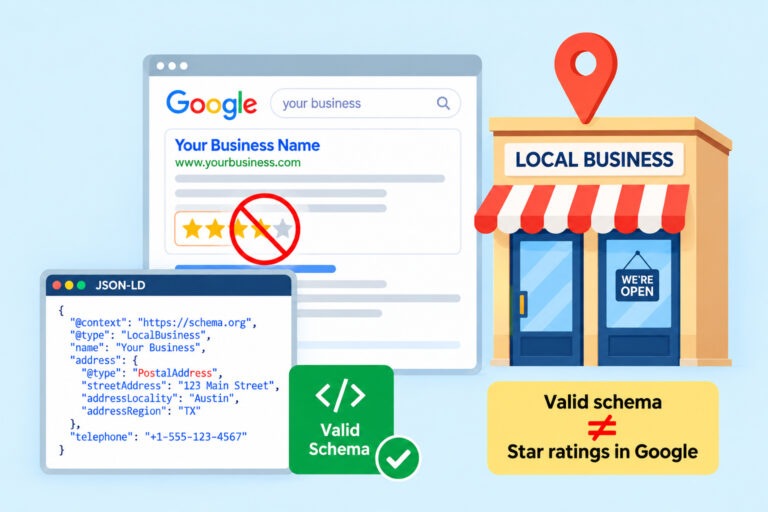
Google penalizes websites that misrepresent rating data and hides stars in SERPs when abuses are detected.
Improper Placement
Only use the Product schema on product pages and avoid misplaced types on irrelevant pages.
Conclusion
For scaling brands, e‑commerce schema markup strategies unlock richer search appearances, stronger user trust, and higher engagement from qualified shoppers. When structured data is implemented thoughtfully, to match on‑page content, layered with multiple schema types, and monitored through clean workflows, it becomes a core pillar of SEO and brand discoverability.
Smart schema strategies help bridge the gap between visibility and conversion, giving e-commerce businesses an enduring edge in competitive search landscapes.
FAQs
Q1: Does schema markup improve Google rankings?
Schema itself isn’t a direct ranking factor, but by enabling rich results that increase CTR and engagement, it indirectly supports better visibility.
Q2: Which schema formats does Google prefer?
Google favors JSON‑LD for its flexibility and non‑intrusive nature.
Q3: What happens if the schema doesn’t match page content?
Google may ignore it, strip rich results eligibility, or show warnings in Search Console.
Q4: Can e-commerce schema boost AI search visibility?
Yes, structured data aids AI and voice search platforms by clarifying product context for enhanced answers.
Q5: How often should I test schema markup?
Regularly, weekly at a minimum, because product catalogs and pricing change frequently.
Q6: Should I use a programmatic schema for large inventories?
Yes. Programmatic and automated approaches ensure scalability and accuracy for thousands of products.







 Wix Schema
 Squarespace Schema
 BigCommerce Schema
 Shopify Schema
 Hubspot Schema
 Webflow Schema
 GoHighlevel Schema
 Duda Schema
 Weebly Schema