


Schema markup only delivers SEO value when search engines can read and interpret it correctly. Whether you’re relying on Squarespace’s built-in structured data or adding your own JSON-LD, even minor issues like missing properties, invalid syntax, or conflicting schema can prevent your markup from working as intended.
That’s why it’s essential to check Squarespace schema markup regularly, not just after adding it, but whenever you publish new content, update existing pages, or make changes to your site’s structure. A quick validation can reveal problems that are otherwise invisible to visitors but significant for search engines.
In this guide, you’ll learn how to validate Squarespace schema markup using trusted tools, identify common structured data errors, understand what validation reports mean, and fix issues that could affect your site’s eligibility for rich results .
Quick Squarespace Schema Validation Checklist
- To check Squarespace schema markup, start with the live page URL and run it through Google’s Rich Results Test.
- Next, use the Schema Markup Validator to catch Schema.org issues that Google’s tool may not fully report.
- Inspect the JSON-LD for missing commas, brackets, duplicate schema blocks, or required properties that are left out.
- Check Google Search Console for structured data errors after the page has been crawled.
- Fix any Squarespace schema markup errors, republish the page, and test it again to confirm the issue is resolved.
- If you want rich snippets, make sure the schema type matches the page content exactly, such as Article, Product, FAQPage, or LocalBusiness.
Why You Should Check Squarespace Schema Markup
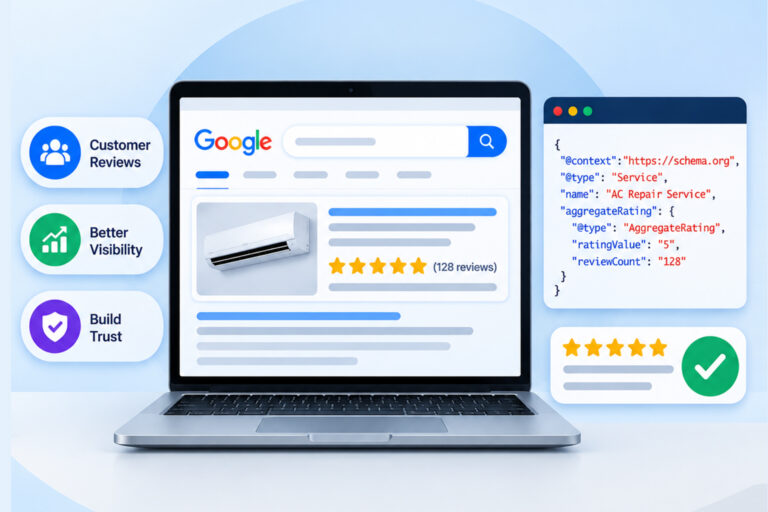
Schema markup doesn’t improve rankings directly, but it helps search engines understand your content. When implemented correctly, it can make your pages eligible for enhanced search features such as review stars, FAQs, breadcrumbs, product information, and other Squarespace rich snippets.
Unfortunately, adding schema isn’t enough. Your JSON-LD might contain syntax errors, required properties may be missing, or multiple schema blocks may conflict with one another. Without Squarespace schema validation, these problems often go unnoticed because the page still appears to work normally.
Validating your schema helps you:
- Detect invalid JSON-LD
- Find missing required properties
- Identify unsupported schema types
- Fix structured data before Google crawls your pages
- Improve eligibility for rich results
Google also recommends validating structured data after implementation to ensure it can be processed correctly.
Understanding Squarespace Schema Markup
Before you can effectively check Squarespace schema markup, it helps to understand how it works.
Schema markup is structured data that helps search engines interpret your content. Squarespace automatically generates Schema.org markup for pages like blogs, products, events, and business information, but it may not cover every schema type your site needs.
Many site owners also add custom JSON-LD through Code Injection or page settings to expand their SEO. This means a single page can contain multiple schema objects.
Your website may include:
- Built-in Squarespace schema markup
- Custom JSON-LD schema
- Multiple schema types on one page
Understanding Squarespace schema markup makes it easier to spot validation issues, choose the right schema type, and troubleshoot errors with a Squarespace schema checker.
Check Squarespace Schema Markup Step by Step
Checking schema is a straightforward process when you use the right validation tools. A reliable Squarespace schema markup checker can quickly identify syntax issues, missing required properties, unsupported schema types, and other structured data problems that may prevent your pages from qualifying for rich results. For the most accurate validation, it’s best to use more than one tool, as each checker evaluates different aspects of your schema markup.
Step 1: Open the Page You Want to Test
Choose the exact URL containing the schema markup. Examples include:
- Homepage
- Product page
- Blog article
- Service page
- FAQ page
Always validate the live URL rather than preview pages. If you’re unsure whether a page already contains schema markup, right-click the page, select View Page Source, then search for application/ld+json to locate the structured data. However, for most users, testing the live page URL with a validation tool is the fastest and most reliable approach.
Step 2: Run Google’s Rich Results Test
Google’s Rich Results Test is the best starting point for Squarespace structured data validation because it evaluates whether your markup qualifies for Google’s rich results.
Simply paste your page URL into the tool and run the test.
The report will show:
- Detected structured data
- Supported rich result types
- Errors
- Warnings
- Missing required properties
A page can contain valid schema markup and still not qualify for rich results if it doesn’t meet Google’s content and eligibility requirements. That’s why it’s important to review every error, warning, and recommendation shown in the validation report.
Step 3: Validate Using Schema Markup Validator
The Rich Results Test only checks schema types that Google supports. To validate against Schema.org standards, use a dedicated schema markup validator maintained by the Schema.org community.
This tool detects:
- Invalid properties
- Incorrect nesting
- Missing schema objects
- JSON-LD syntax problems
- Vocabulary issues
It provides a broader Squarespace JSON-LD validation than Google’s testing tool.
Step 4: Inspect Your JSON-LD
If you’re using a custom schema, verify the JSON-LD itself.
A simple example looks like:
{
"@context":"https://schema.org",
"@type":"Organization",
"name":"Example Business",
"url":"https://example.com"
}
Common JSON mistakes include:
- Missing commas
- Extra quotation marks
- Incorrect brackets
- Invalid property names
These errors prevent search engines from reading your structured data correctly.
Step 5: Verify Google Can Crawl the Page
Even a perfect schema won’t help if Google can’t access the page.
Use Google Search Console to confirm that:
- The page is indexed
- Crawling isn’t blocked
- Robots.txt allows access
- The page doesn’t return server errors
If Google can’t crawl the page, it also can’t process your schema.
Common Squarespace Schema Markup Errors
While performing Squarespace schema markup validation, you’ll frequently encounter a few recurring problems.
| Error | Cause | Solution |
|---|---|---|
| Missing required fields | Required properties omitted | Add missing Schema.org properties |
| Invalid JSON | Formatting mistakes | Validate JSON syntax |
| Unsupported schema | Google doesn’t support that type | Use appropriate schema where applicable |
| Duplicate schema | Multiple plugins or custom code | Remove duplicate markup |
| Wrong property values | Incorrect URLs, dates, or formats | Use Schema.org-compliant values |
These Squarespace structured data errors are usually easy to fix once identified.
Best Squarespace Schema Validation Tools
Using more than one Squarespace schema markup checker gives you a more complete picture than relying on a single validator. Since each tool validates different aspects of structured data, combining them helps uncover syntax issues, Schema.org errors, and rich result eligibility problems more effectively.
| Tool | Best For |
|---|---|
| Google Rich Results Test | Rich result eligibility |
| Schema Markup Validator | Full Schema.org validation |
| Google Search Console | Ongoing monitoring and indexing |
Using more than one Squarespace structured data checker gives a much more complete picture than relying on a single validator.
Best Schema Types for Squarespace Websites
Validation also ensures you’re using the right schema type. Depending on your website, these are among the best schema types for Squarespace websites::
| Schema Type | Purpose of the Schema Type |
|---|---|
| Organization | Identifies your business or brand and provides information such as name, logo, and website. |
| LocalBusiness | Helps search engines understand your physical business location, contact details, and operating hours. |
| Article / BlogPosting | Describes blog posts and articles, making them easier for search engines to interpret. |
| Product | Displays product details such as price, availability, reviews, and ratings for eCommerce pages. |
| Service | Explains the services your business offers and the areas they serve. |
| Event | Provides event information, including dates, locations, organizers, and ticket details. |
| FAQPage | Marks up frequently asked questions so they can be understood more clearly by search engines, where supported. |
| BreadcrumbList | Shows the page hierarchy to help search engines understand your website structure. |
Choosing the correct schema makes validation much easier and increases the chances of earning relevant rich results.
How Often Should You Validate Your Schema?
Schema validation shouldn’t be a one-time task. You should test Squarespace schema markup whenever you:
- Publish a new page
- Add custom JSON-LD
- Update products or services
- Redesign your website
- Change templates
- Install third-party integrations
- Notice rich results disappearing
Regular validation helps catch issues before they impact search visibility.
What Happens If Schema Fails Validation?
Not every validation error results in a ranking loss, but invalid structured data can reduce its effectiveness. Depending on the issue:
- Google may ignore part or all of the schema.
- Your page may become ineligible for rich results.
- Important business information may not appear correctly in search.
- Structured data reports in Search Console may show warnings or errors.
Fixing validation issues ensures search engines can reliably interpret your content and display eligible search enhancements.
Conclusion
Knowing how to check Squarespace schema markup is essential for maintaining healthy structured data and maximizing your site’s visibility in search.
By regularly validating your markup with trusted tools, reviewing JSON-LD for errors, and monitoring Search Console, you can catch issues early and ensure your schema remains accurate as your website evolves.
Consistent Squarespace schema validation helps search engines understand your content more effectively and keeps your pages eligible for valuable rich search features.
FAQs
Q1: Does Squarespace automatically add schema markup?
Yes. Squarespace automatically includes certain Schema.org markup for blogs, products, businesses, and other supported content types. Additional custom schema can also be added using JSON-LD.
Q2: How do I check Squarespace schema markup?
Use Google’s Rich Results Test, the Schema Markup Validator, and Google Search Console to validate your structured data and identify any errors.
Q3: What is the best Squarespace schema markup checker?
The best approach combines Google’s Rich Results Test with Schema Markup Validator. Together, they provide comprehensive validation.
Q4: Why isn’t my schema showing rich snippets?
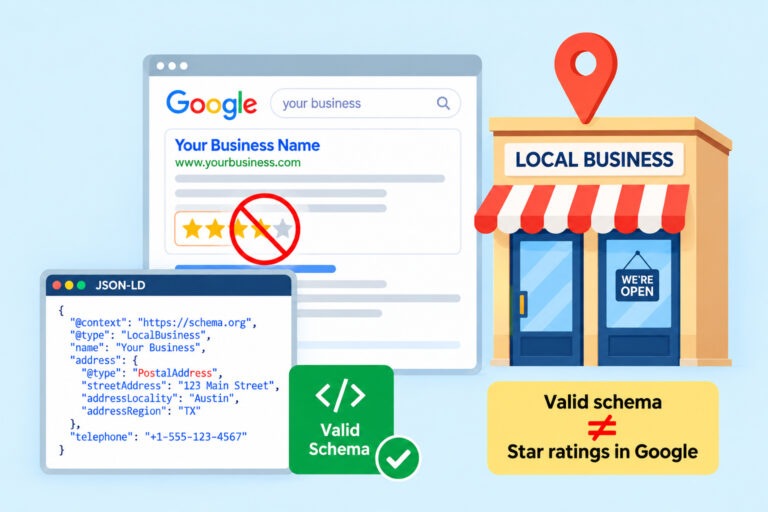
A valid schema does not guarantee rich results. Google also considers content quality, eligibility requirements, and search intent before displaying rich snippets. Additionally, some schema types, such as FAQPage, have limited rich result eligibility, even when the markup is valid.
Q5: Can I validate custom JSON-LD on Squarespace?
Yes. Any custom JSON-LD can be validated using the Schema Markup Validator and JSON-LD validation tools before publishing.
Q6: What causes Squarespace structured data errors?
The most common causes include invalid JSON formatting, missing required properties, duplicate schema, unsupported schema types, and incorrect property values.
Q7: How often should I validate Squarespace schema markup?
It’s a best practice to validate whenever you publish new content, edit existing schema, redesign your site, or notice changes in rich result performance.
Q8: Can schema markup improve SEO?
Schema markup doesn’t directly increase rankings, but it helps search engines understand your content and can improve eligibility for rich results, which may increase visibility and click-through rates.






 Wix Schema
 Squarespace Schema
 BigCommerce Schema
 Shopify Schema
 Hubspot Schema
 Webflow Schema
 GoHighlevel Schema
 Duda Schema
 Weebly Schema