


aggregateRating, Google’s current Review Snippet guidelines say not to aggregate reviews or ratings from other websites. That means SaaS companies should not use G2 or Capterra ratings as their own aggregateRating markup when seeking Google review snippets.
For most SaaS companies, platforms like G2 and Capterra are where potential customers look before making a buying decision. Naturally, many businesses wonder whether those same ratings can appear directly in Google Search through schema markup. The answer is more nuanced than a simple yes or no.
Google allows review snippets only under specific conditions, and eligibility depends not only on the source of the reviews but also on the schema type, the page where it’s implemented, and whether the markup follows Google’s review policies.
Understanding these rules is essential if you want to improve your chances of earning Google star ratings for software without risking invalid structured data.
G2 and Capterra Ratings for SaaS Companies: Quick Answer
- Yes. SaaS companies can use G2 ratings for SaaS schema or Capterra ratings for SaaS schema when the ratings accurately represent the software product and comply with Google’s review markup guidelines.
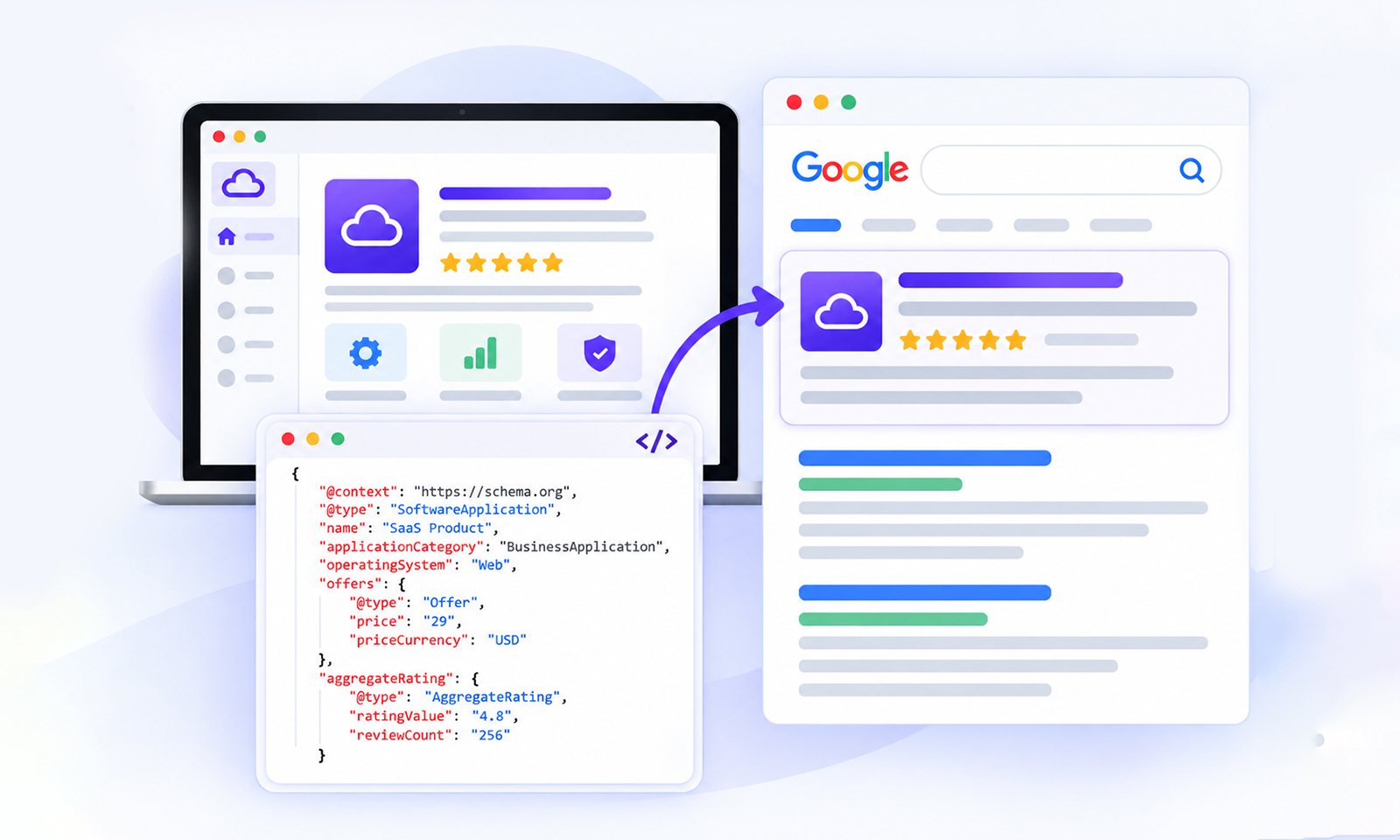
- Use SoftwareApplication schema with the aggregateRating property to mark up software ratings.
- Adding a review schema does not guarantee Google star ratings. It only makes your page eligible for review snippets.
- The ratings in your schema should match what’s visibly displayed on the page and be kept up to date.
- Avoid marking up ratings that aren’t shown on the page, using incorrect schema types, or misrepresenting third-party review data, as this can affect review snippet eligibility.
Why SaaS Companies Want G2 and Capterra Ratings in Search
G2 and Capterra have become trusted review platforms for software buyers. A high rating on either platform immediately signals credibility, making it understandable why SaaS companies want those ratings reflected in Google Search.
When implemented correctly, schema markup for SaaS reviews can make a product page eligible for Google Review Snippets, potentially displaying star ratings alongside search results. These rich results often improve visibility and can increase click-through rates because users instantly see social proof before visiting the website.
However, Google treats review snippets as an enhancement, not an entitlement. Even a perfectly valid schema doesn’t guarantee stars.
Which Schema Should SaaS Products Use?
For software products, Google expects review information to be associated with SoftwareApplication schema markup rather than generic organization markup.
The relevant properties typically include:
- aggregateRating
- review
- ratingValue
- reviewCount
This combination forms the basis of SoftwareApplication review schema and helps search engines understand how users have rated the software.
Why SoftwareApplication Matters
Google’s documentation lists SoftwareApplication among the schema types eligible for review snippets. That makes it the appropriate choice for SaaS products, whereas using unrelated schema types simply to display ratings may not qualify for rich results.
Using SoftwareApplication gives Google the appropriate schema context for software-related ratings and reviews. However, the schema type does not override Google’s Review Snippet guidelines, including the restriction against aggregating ratings from other websites.
Schema.org Support vs. Google Review Eligibility
SoftwareApplication and AggregateRating are valid Schema.org concepts for describing software ratings. However, Schema.org vocabulary support and Google’s eligibility requirements are not the same thing.
Google has additional guidelines for review snippets. For example, Google explicitly says not to aggregate reviews or ratings from other websites. Therefore, the fact that an external G2 or Capterra rating can technically be represented using Schema.org does not mean Google will consider that markup eligible for review stars.
Can You Use G2 Ratings for SaaS Schema?
Not for Google review snippets. You can display your G2 rating as third-party review information, but Google says not to aggregate ratings from other websites into your site’s
For example, you can display your G2 rating on your product page with clear attribution. However, displaying it on your site does not make it eligible for your own aggregateRating markup.
Google’s structured data systems focus on whether markup accurately represents page content rather than where every individual review originated.
That said, you should never:
- Invent ratings
- Inflate review counts
- Mark up ratings that aren’t actually shown on the page
- Misrepresent third-party data
Doing so may invalidate your structured data or prevent review snippets from appearing.
Can You Use Capterra Ratings for SaaS Schema?
Not for Google’s review snippet feature. Although SoftwareApplication supports aggregateRating, Google’s current guidelines say not to aggregate ratings from other websites. A Capterra rating can still be displayed on your page as third-party review information with appropriate attribution.
Remember that structured data is intended to help search engines understand page content, not create content that doesn’t exist.
Whether the source is G2, Capterra, TrustRadius, or another review platform, accuracy and compliance remain the deciding factors.
Third-Party Review Schema vs Self-Serving Reviews
This is where many SaaS companies become confused. Google has restrictions around self-serving reviews, particularly for organizations reviewing themselves.
Fortunately, software products are different from local businesses in many situations because SoftwareApplication schema is an eligible review type. The important distinction is between:
| Correct Practice | Incorrect Practice |
|---|---|
| Marking up genuine ratings displayed for the software product | Creating ratings that don’t exist |
| Using SoftwareApplication schema | Using Organization review markup to review yourself |
| Matching visible page content | Marking up hidden review data |
| Keeping ratings updated | Leaving outdated review counts in schema |
Understanding this difference is critical when implementing third-party review schema or external reviews schema.
Does Schema Guarantee Google Star Ratings?
No. This is probably the biggest misconception surrounding Google star ratings SaaS. Adding a SaaS review schema does not automatically produce rich snippets. Google evaluates numerous factors, including:
- Valid structured data
- Page quality
- Overall site trust
- Compliance with review markup guidelines
- Search intent
- Algorithmic eligibility
Even pages with flawless structured data may never receive star ratings because Google ultimately decides whether to display review snippets. Think of a schema as making your page eligible, not forcing Google to show stars.
Best Practices for Software Review Markup
If you’re implementing a review schema for software, following a few best practices will reduce the likelihood of problems later.
Keep Ratings Consistent
The rating shown in your structured data should always match the rating users see on the page.
Update Review Counts
G2 and Capterra ratings change over time. An outdated SoftwareApplication aggregateRating can create inconsistencies between page content and structured data.
Use the Correct Schema Type
Always use SoftwareApplication schema markup rather than trying to force ratings into Organization or Website schema.
Validate Before Publishing
Use Google’s Rich Results Test and Schema Markup Validator to check for syntax errors and missing required properties.
Common Mistakes SaaS Companies Make
Many implementations fail because of small but significant mistakes. The most common include:
- Using G2 review schema on pages that don’t display G2 ratings.
- Copying ratings without updating review counts.
- Using Capterra review schema while omitting required properties.
- Mixing multiple rating sources without clear attribution.
- Assuming a valid schema automatically produces Google stars.
Avoiding these issues makes your implementation cleaner, more trustworthy, and easier for search engines to interpret.
Conclusion
SaaS companies should not use G2 or Capterra ratings as their own aggregateRating markup for Google review snippets. Although SoftwareApplication supports review and aggregate-rating markup, Google says not to aggregate ratings from other websites.
You can still display G2 or Capterra ratings on your website as third-party review information with clear attribution.
The key is accuracy, transparency, and using the correct schema type. While structured data can improve eligibility for Google star ratings for software , it should never be viewed as a shortcut to rich results.
A compliant implementation, combined with high-quality product pages and trustworthy review data, gives your SaaS website the best opportunity to earn review snippets naturally.
Frequently Asked Questions
Q1: Can I use G2 ratings in schema markup?
Not for Google’s review snippet feature. Google says not to aggregate ratings from other websites into your site’s aggregateRating. You can still display your G2 rating as third-party review information.
Q2: Can I use Capterra ratings in SoftwareApplication schema?
Not for Google’s review snippet feature. Although SoftwareApplication supports aggregateRating, Google says not to aggregate ratings from other websites. You can still display your Capterra rating as third-party review information.
Q3: Will G2 review schema automatically generate Google star ratings?
No. G2 and Capterra ratings in schema markup only make a page eligible for review snippets. Google decides whether star ratings appear in search results.
Q4: Which schema type should SaaS companies use for reviews?
The recommended option is SoftwareApplication review schema, using properties such as aggregateRating and review where appropriate.
Q5: Can I add third-party ratings in the schema?
Yes, but third-party ratings in schema should accurately reflect the visible page content and follow Google’s structured data policies.
Q6: What’s the difference between aggregateRating and review?
The aggregateRating schema summarizes the combined rating from multiple reviews, while a review represents an individual user’s evaluation.








 Wix Schema
 Squarespace Schema
 BigCommerce Schema
 Shopify Schema
 Hubspot Schema
 Webflow Schema
 GoHighlevel Schema
 Duda Schema
 Weebly Schema