

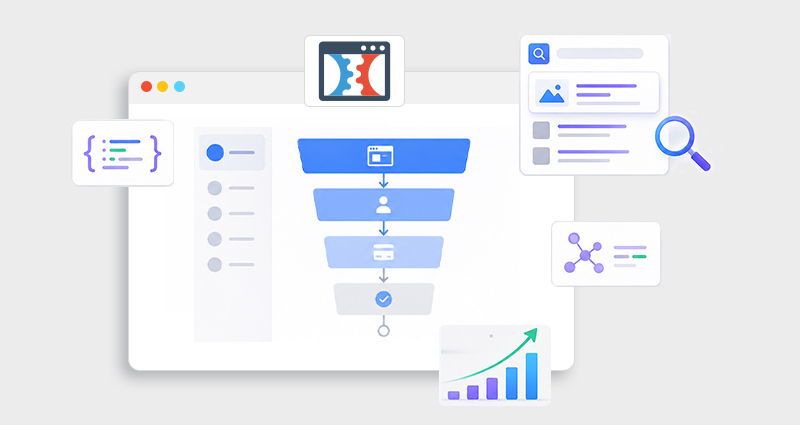
If you’re building funnels but not getting enough visibility in search results, you’re leaving traffic on the table. One of the simplest yet most overlooked ways to improve ClickFunnels SEO optimization is by adding structured data, specifically, the ClickFunnels FAQ schema .
The FAQ schema helps search engines understand your content better and can unlock FAQ rich results in ClickFunnels, making your pages more clickable and informative directly on Google.
In this guide, you’ll learn:
- What ClickFunnels schema markup is
- Why FAQ schema matters for funnels
- How to add FAQ schema in ClickFunnels funnels (step-by-step)
- Tools, examples, and validation methods
Whether you’re a beginner or optimizing existing funnels, this ClickFunnels JSON-LD implementation guide will walk you through everything clearly.
What Is ClickFunnels FAQ Schema?
ClickFunnels FAQ schema is a type of structured data (specifically FAQPage structured data) that tells search engines your page contains a list of questions and answers.
Instead of guessing your content, search engines like Google can clearly interpret:
- What questions are you answering
- What the exact answers are
- How to display them in search results
This is part of ClickFunnels structured data, typically implemented using JSON-LD format.
Example of FAQ Schema in JSON-LD
{
  "@context": "https://schema.org",
  "@type": "FAQPage",
  "mainEntity": [
    {
      "@type": "Question",
      "name": "What is ClickFunnels FAQ schema?",
      "acceptedAnswer": {
        "@type": "Answer",
        "text": "ClickFunnels FAQ schema is structured data that helps search engines understand FAQ content on funnel pages."
      }
    }
  ]
}
This is the foundation of the FAQ schema markup ClickFunnels pages need to qualify for rich results.
Why FAQ Schema Matters for ClickFunnels Pages
Adding ClickFunnels FAQ schema helps improve how your pages appear and perform in search results by making your content easier for search engines to understand.
1. Helps You Get Rich Snippets
FAQ schema increases your chances of earning ClickFunnels rich snippets, allowing your questions and answers to appear directly in search results and boosting visibility.
2. Improves Click-Through Rate (CTR)
Displaying answers in search builds trust and encourages more users to click, leading to higher engagement and better CTR.
3. Enhances Content Understanding
ClickFunnels structured data helps search engines accurately interpret your content, improving indexing and relevance for targeted queries.
4. Supports Voice Search & AI Results
Using FAQ schema markup ClickFunnels makes your content more accessible to voice assistants and AI-driven search experiences, expanding your reach.
Best Schema Types for ClickFunnels Funnels
While this guide focuses on FAQ schema, it’s important to understand the best schema types for ClickFunnels funnels:
| Schema Type | Use Case |
|---|---|
| FAQPage | Frequently asked questions |
| Product | Sales funnels with products |
| Organization | Brand identity |
| WebPage | Page classification |
| Review | Testimonials and ratings |
Combining multiple schema types is often part of an advanced ClickFunnels schema markup implementation.
Add ClickFunnels FAQ Schema: Step-by-Step Guide
Let’s walk through exactly how to add FAQ schema in ClickFunnels funnels.
Step 1: Create Your FAQ Content
Before adding schema, ensure your funnel page includes a visible FAQ section.
Best practices:
- Write clear, concise questions
- Provide direct answers
- Avoid promotional fluff
This ensures alignment between content and ClickFunnels JSON-LD FAQ markup.
Step 2: Generate FAQ Schema Markup
Instead of writing code manually, use a schema markup generator or the ClickFunnels Schema Markup tool.
Popular options:
- JSON-LD schema generator tools
- SEO platforms with structured data support
These tools help create clean ClickFunnels structured data without coding.
Step 3: Customize the JSON-LD Code
Make sure your generated code reflects your actual FAQ content.
Example:
{
  "@context": "https://schema.org",
  "@type": "FAQPage",
  "mainEntity": [
    {
      "@type": "Question",
      "name": "How to add FAQ schema in ClickFunnels?",
      "acceptedAnswer": {
        "@type": "Answer",
        "text": "You can add FAQ schema by inserting JSON-LD code into the page header or footer section in ClickFunnels."
      }
    }
  ]
}
Step 4: Add Schema Code to ClickFunnels
Now comes the actual ClickFunnels schema markup implementation.
Here’s how to do it:
- Open your funnel page in the ClickFunnels editor
- Go to Settings → Tracking Code
- Paste your JSON-LD code in the Header or Footer section
- Save and publish
This is the simplest way to add FAQ schema in ClickFunnels without external plugins.
Step 5: Validate Your Schema
After implementation, always test your code using a schema markup validator or json ld schema validator.
Recommended tools:
These tools ensure your FAQ schema markup on ClickFunnels pages are error-free and eligible for rich results.
Common Mistakes to Avoid While Implementing FAQ Schema in ClickFunnels
Even minor errors in your ClickFunnels schema markup implementation can prevent your FAQ schema from working or being eligible for rich results. Paying attention to these details is crucial for long-term success.
Avoid These Mistakes:
Mismatch Between Visible Content and Schema
Your FAQ schema must reflect exactly what users see on the page. If your structured data includes questions or answers that aren’t visible, it may be ignored or flagged by search engines.
Using Duplicate Schema Blocks
Adding multiple FAQ schemas for the same content can confuse search engines. Always ensure you have one clean, consolidated FAQPage structured data block per page.
Incorrect JSON Formatting
A small syntax error, like a missing comma or bracket, can break your entire schema. This is why validating your ClickFunnels JSON-LD FAQ code is essential.
Adding Hidden or Misleading FAQs
Avoid stuffing keywords or adding irrelevant questions just for SEO. Google prioritizes helpful, user-focused content, and misleading schema can negatively impact trust.
A clear understanding of ClickFunnels schema markup ensures your structured data works effectively without risking errors or penalties.
How to Get Rich Snippets for ClickFunnels Pages
- Focus on high-quality, user-first content with clear and helpful answers
- Ensure proper implementation of FAQPage structured data using JSON-LD format
- Follow a reliable ClickFunnels JSON-LD implementation guide to maintain accuracy
- Avoid keyword stuffing in schema content to prevent reduced eligibility for rich results
- Keep FAQ answers concise, relevant, and easy for search engines to extract
- Regularly test your structured data using a schema markup validator or json ld schema validator
- Fix errors promptly to ensure ongoing eligibility for ClickFunnels rich snippets
Advanced Tips for Better Results
- Combine FAQ schema markup ClickFunnels with other schema types like Product or Organization for stronger relevance
- Apply schema across multiple high-intent funnel pages, not just a single page
- Track performance using Google Search Console to monitor impressions, clicks, and rich result visibility
- Continuously refine FAQs based on real user queries, support tickets, and search behavior
- Update your ClickFunnels FAQ schema regularly to maintain accuracy and alignment with user intent
- Strengthen overall structured data for ClickFunnels funnels by aligning schema with actual funnel content and updates
Conclusion
Adding ClickFunnels FAQ schema is one of the most effective ways to enhance your funnel’s visibility without changing your core content. It bridges the gap between what users see and how search engines interpret your pages.
By following this step-by-step ClickFunnels FAQ schema guide, you can implement structured data confidently, improve your chances of earning rich snippets, and create a more search-friendly funnel experience.
The key is consistency, accurate schema, relevant FAQs, and ongoing validation which will ensure your ClickFunnels schema markup continues to deliver results over time.
FAQs
Q1: What is ClickFunnels FAQ schema?
ClickFunnels FAQ schema is structured data that helps search engines understand FAQ sections on funnel pages and display them as rich results.
Q2: How to add FAQ schema in ClickFunnels funnels?
You can add FAQ schema by generating JSON-LD code and inserting it into the tracking code section of your ClickFunnels page.
Q3: Does ClickFunnels support schema markup?
ClickFunnels does not natively generate schema but allows manual implementation through header/footer code injection.
Q4: What is JSON-LD in schema markup?
JSON-LD is a format used to structure data for search engines. It is the recommended format for implementing schema markup.
Q5: How to validate FAQ schema?
Use tools like Google Rich Results Test or a json ld schema validator to check for errors and eligibility.
Q6: Can FAQ schema improve rankings?
FAQ schema doesn’t directly boost rankings but improves visibility and CTR, which can indirectly impact performance.
Q7: What are the best schema types for ClickFunnels websites?
FAQPage, Product, Organization, and Review schemas are among the best schema types for ClickFunnels websites.
Q8: Is the FAQ schema still useful for SEO?
Yes, when used correctly and aligned with content, FAQ schema still enhances visibility and user experience.





 Wix Schema
 Squarespace Schema
 BigCommerce Schema
 Shopify Schema
 Hubspot Schema
 Webflow Schema
 GoHighlevel Schema
 Duda Schema
 Weebly Schema