

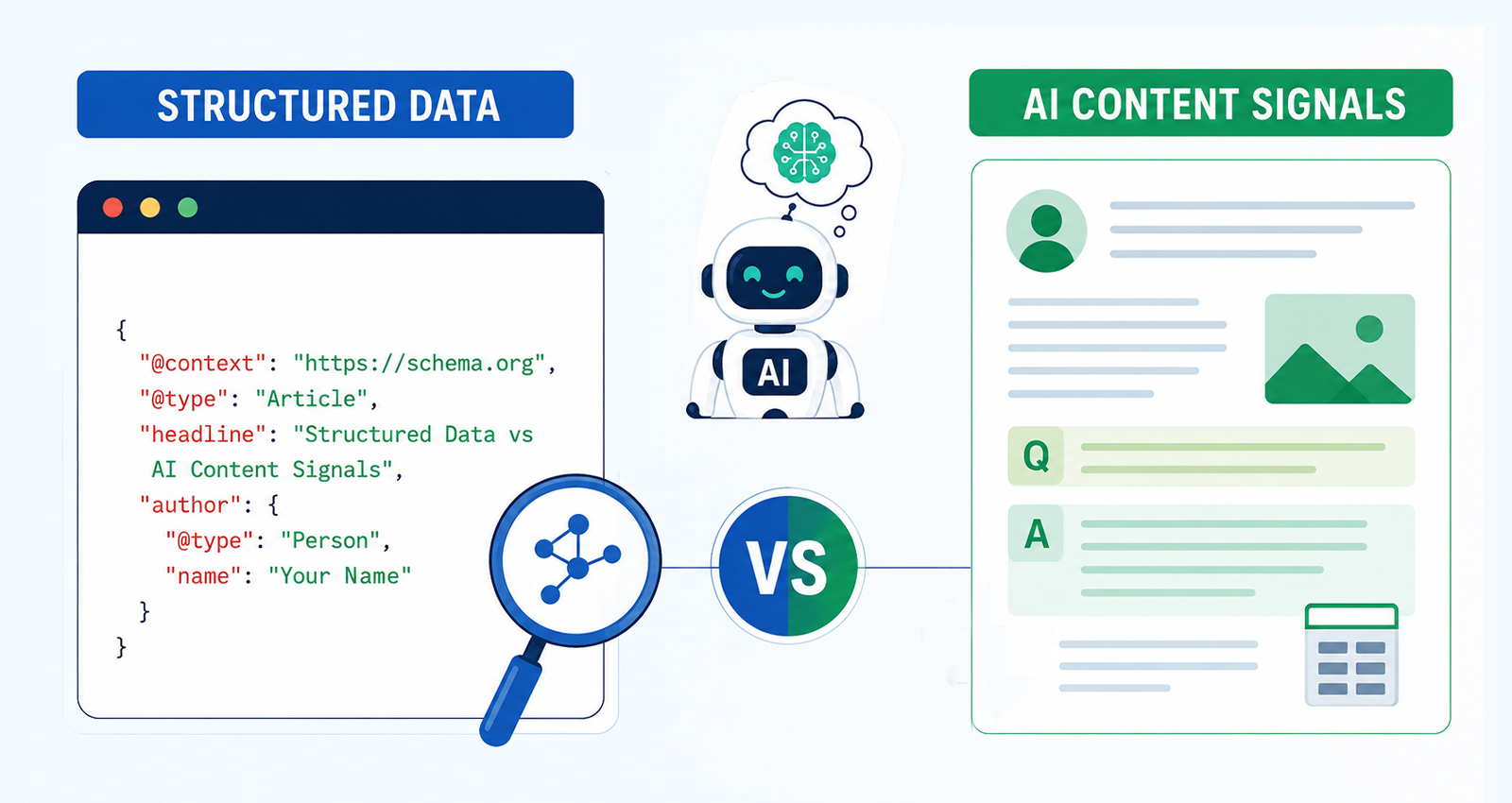
Search has fundamentally changed. Google AI Overviews now appear for over 13% of all searches, ChatGPT processes 2.5 billion prompts per day, and platforms like Perplexity and Bing Copilot are reshaping how people find information. For anyone invested in SEO, this raises one critical question: what actually helps you rank in AI-driven search?
The conversation usually splits into two camps: structured data (schema markup, JSON-LD) versus AI content signals (semantic completeness, E-E-A-T, freshness, content clarity). But treating them as competitors misses the point entirely.
Understanding how both work, and why they’re most powerful together, is what separates websites that get cited by AI from those that get skipped.
What Is Structured Data, and Why Does It Matter for AI Search?
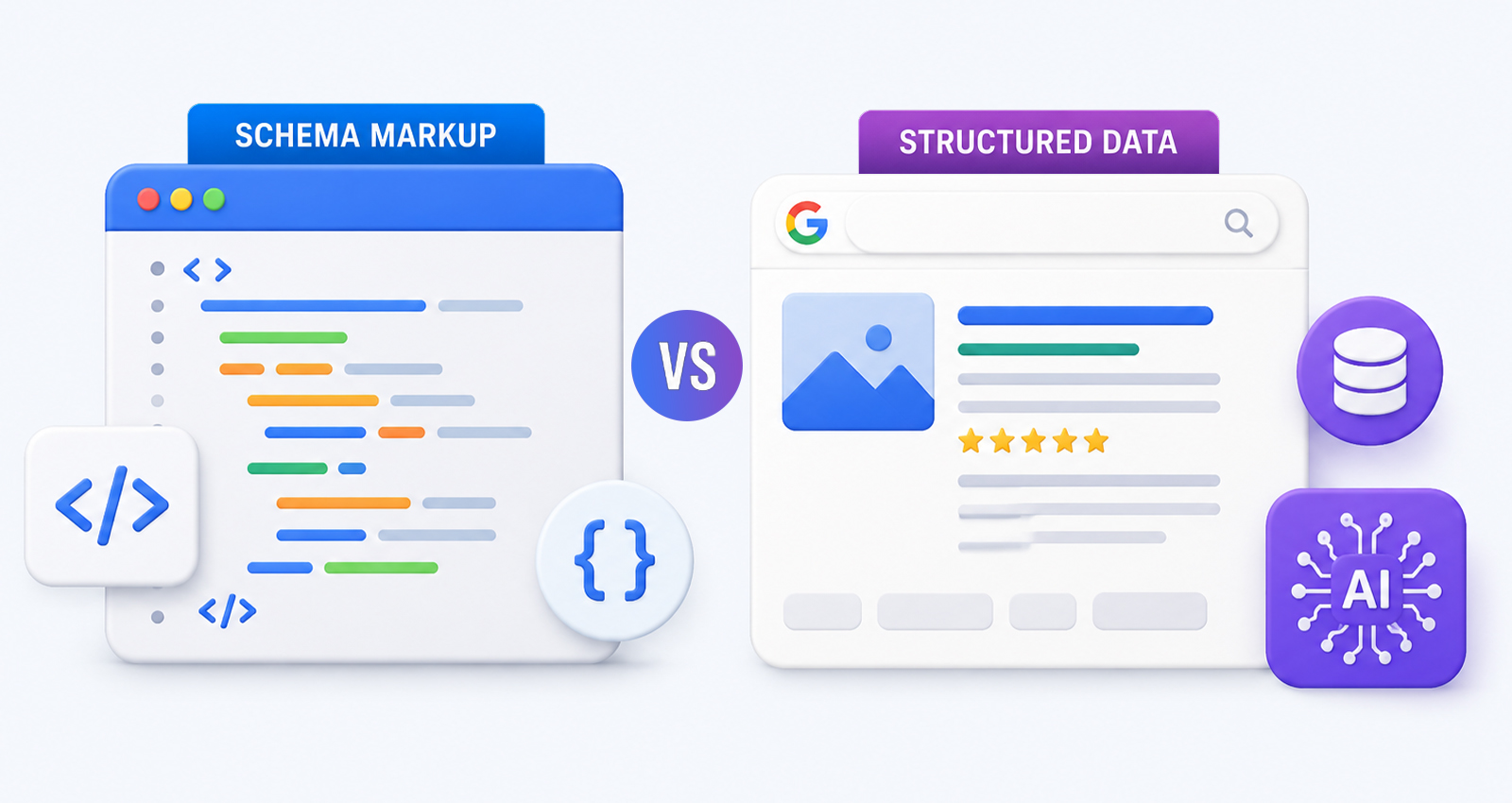
If you are new to this, understanding what schema markup is first is worth reading. In short, it’s a standardized way of labeling your content so machines can read it precisely, not just crawl it.
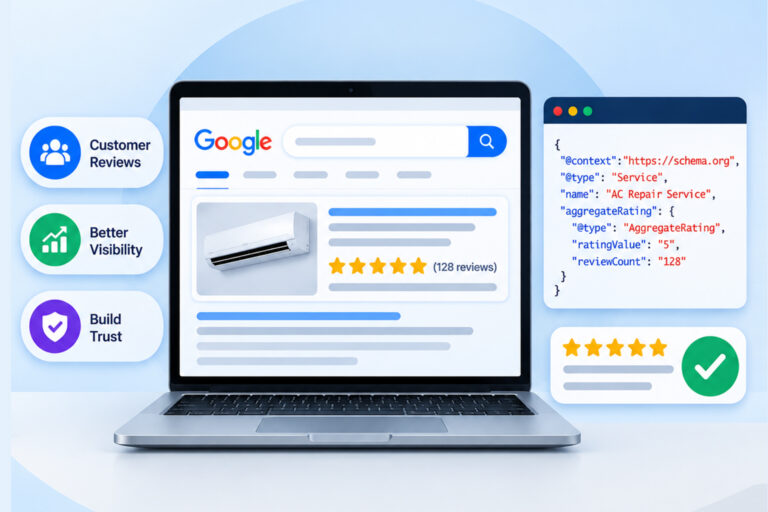
Using formats like JSON-LD and vocabulary from Schema.org, it tells search engines exactly what your page represents: an article, a product, a local business, an FAQ, or an event.
Think of it like this: your HTML gives AI crawlers the raw text, your structured data gives them a clean, verified summary. Instead of inferring that you sell products, schema markup explicitly says, “This is a Product, here is the price, here is the availability.”
The data is compelling. Rotten Tomatoes measured a 25% higher click-through rate for pages enhanced with structured data. And research cited by Data World shows GPT-4’s accuracy in extracting correct information jumped from 16% to 54% when content used structured data. That’s not marginal, that’s a fundamental shift in how reliably AI can use your content.
Why JSON-LD specifically?
Google explicitly recommends JSON-LD as the preferred format. Use a schema markup tool to generate clean JSON-LD without touching your HTML. It is preferred as it lives in a separate <script> tag, completely independent of your visible HTML, and is easier to implement, maintain, and parse by AI crawlers.
What Are AI Content Signals?
AI content signals are the qualitative factors that language models evaluate when deciding whether your content is worth citing. Unlike traditional SEO, which leans heavily on backlinks and keywords, AI systems assess content more holistically.
They’re looking for completeness, credibility, and clarity. These signals sit at the core of Generative Engine Optimization (GEO). The key signals that matter most right now are:
- Semantic completeness: Analysis of 15,847 AI Overview results found that content scoring 8.5/10+ on semantic completeness is 4.2× more likely to be cited. AI systems prioritize passages that fully answer a query in self-contained units of roughly 134–167 words.
- Freshness: AirOps’ 2026 State of AI Search found that pages not updated quarterly are 3× more likely to lose AI citations. Content updated within 30 days earns 3.2× more AI citations than stale pages.
- E-E-A-T signals: Google’s framework of Experience, Expertise, Authoritativeness, and Trustworthiness is directly relevant to AI citation behavior. Clear authorship, credentials, and source attribution matter more than ever.
- Content clarity and structure: Q&A formats, comparison tables, and sequential headings are among the best-performing formats for AI retrieval. Dense, unbroken paragraphs perform the worst.
- Entity density and authority: ChatGPT is more likely to cite content with high entity density, definite language (not vague), and a balanced mix of facts and opinions.
- External brand footprint: For platforms like ChatGPT specifically, community presence on Reddit and Quora, review platform coverage on G2 and Trustpilot, and earned media citations are strong signals, often more influential than on-page optimization alone.
Structured Data vs AI Content Signals: Which Influences AI Visibility More?
Structured data helps AI systems accurately identify and categorize your content, while AI content signals help determine its credibility, relevance, and likelihood of being cited. Here’s how they differ:
| Factor | Structured Data | AI Content Signals |
|---|---|---|
| What it does | Labels content for machine identification | Signals credibility and citation-worthiness |
| Format | JSON-LD, schema markup | Prose quality, structure, authority, and freshness |
| Direct ranking factor? | No (confirmed by Google, 2025) | Indirect, via trust, engagement, citations |
| AI impact | Improves extraction accuracy | Determines whether content gets cited |
| Works alone? | No, schema on thin content fails | Partially, good content gets cited, but less reliably |
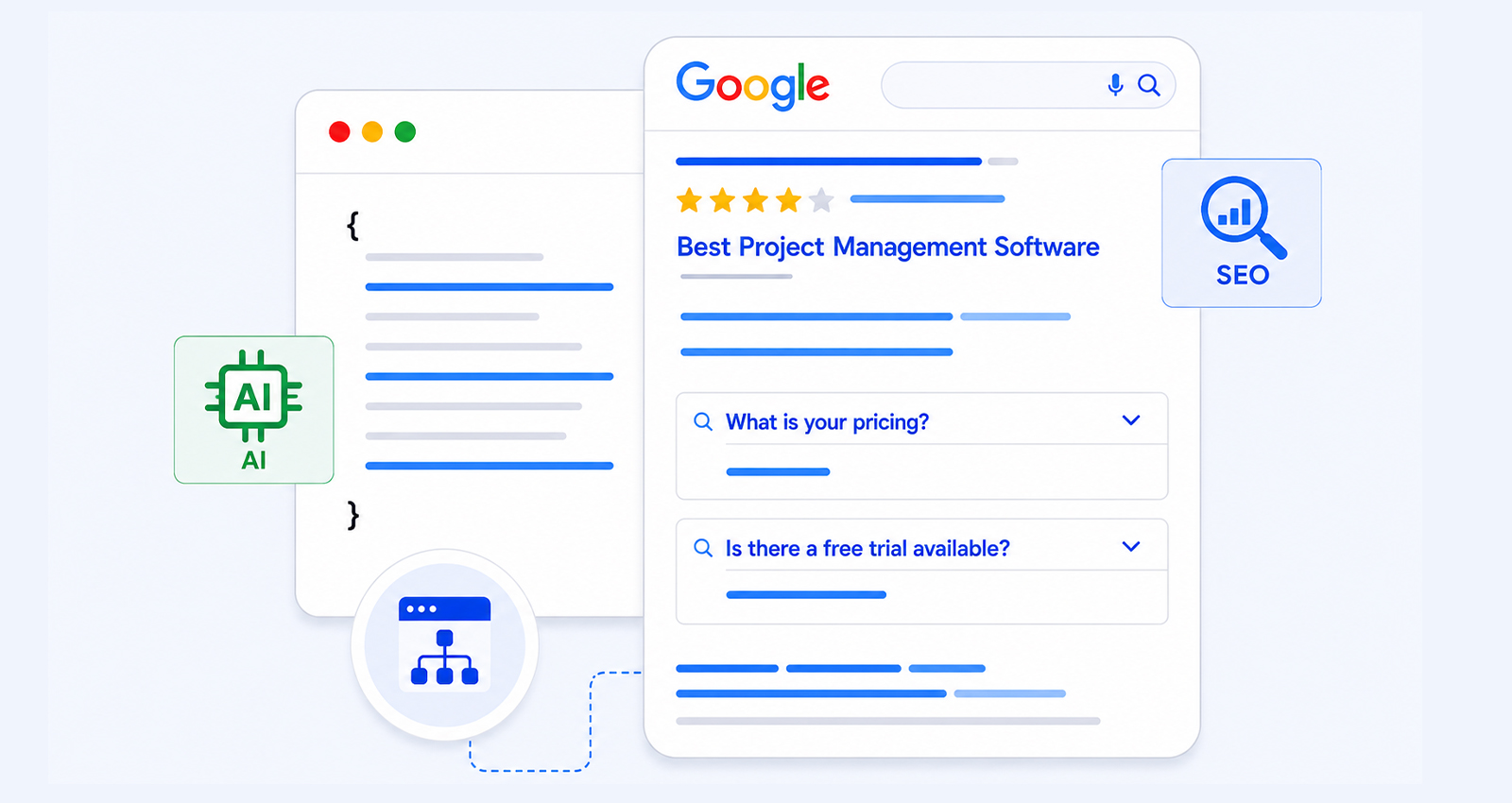
The FAQPage schema combined with high-quality answer-first content drives 200%+ more AI citations than either element alone. Schema on weak content won’t move the needle. Strong content without schema is harder for machines to extract accurately. The combination of both works well.
Schema Types That Matter Most for AI Visibility
Not all schema types perform equally in AI search. Based on current research:
| Schema Type | AI Benefit |
|---|---|
| FAQPage | Higher AI citation rate, directly matches how AI answers questions |
| Article / BlogPosting | Establishes author, publisher, and date, creates a verifiable trust graph |
| Organization | Defines brand as an entity; critical for Knowledge Graph recognition |
| Person | Supports E-E-A-T authorship signals |
| HowTo | Structured steps that AI can extract and reformat efficiently |
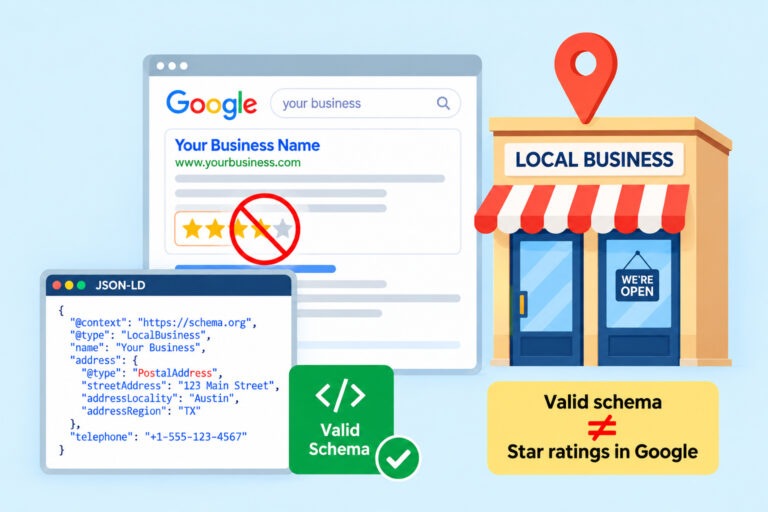
| LocalBusiness | Delivers location-specific data for local AI search results |
AI Search vs Traditional SEO: Which Signals Matter Now?
Traditional SEO gets you ranked. AI search gets you cited. The rules, metrics, and signals that drive each outcome are fundamentally different.
| Signal | Traditional SEO | AI Search (GEO) |
|---|---|---|
| Goal | Rank #1 in blue links | Be cited in AI-generated answers |
| Key metric | Rankings & organic traffic | AI mentions & citation frequency |
| Authority signals | Backlinks and domain authority | Entity authority and off-site mentions |
| Freshness | Helpful but not critical | Critical, stale pages lose citations fast |
| Schema | Enables rich snippets | Enables AI extraction and entity recognition |
Data says that only 38% of AI Overview citations come from top-10 ranking pages, down from 76% in earlier studies. You can earn AI visibility without dominating traditional rankings, but strong SEO fundamentals still help. These aren’t competing strategies; they’re complementary layers.
Conclusion
The answer to the structured data vs AI content signals debate is simple, both are essential for AI search visibility. Structured data helps AI understand your content, while AI content signals influence whether it gets trusted, cited, and surfaced in AI-generated answers.
If you had to prioritize one, strong content signals matter more because AI systems won’t cite content that lacks expertise, relevance, or credibility. However, the best results come from combining high-quality content with accurate schema markup. By strengthening both, you improve your chances of being understood, trusted, and referenced across AI-powered search experiences.
FAQs
Q1: Does schema markup directly improve rankings?
Not directly. Structured data is not a confirmed ranking factor. However, it helps search engines and AI systems better understand your content, which can improve visibility through rich results and AI-generated search experiences.
Q2: What schema types matter most for AI search?
The most useful schema types depend on your content. FAQPage, Article, Organization, Person, Product, and LocalBusiness schema are among the most commonly used for improving content understanding and entity recognition.
Q3: How is AI search different from traditional SEO?
Traditional SEO focuses on ranking webpages in search results. AI search focuses on identifying and citing trustworthy sources when generating answers. This makes content quality, clarity, authority, and structured data increasingly important.
Q4: How often should I update content for AI visibility?
Review and update important content regularly to keep it accurate and relevant. For topics that change frequently, more frequent updates may be beneficial.
Q5: How do I validate schema markup?
You can validate schema markup using Google’s Rich Results Test and Schema.org Validator. Checking your markup before publishing helps ensure it is correctly implemented and free of errors.
Q6: Can small businesses compete in AI search?
Yes. Small businesses can improve their visibility in AI search by publishing helpful content, demonstrating expertise, maintaining accurate business information, and implementing relevant structured data such as LocalBusiness schema.





 Wix Schema
 Squarespace Schema
 BigCommerce Schema
 Shopify Schema
 Hubspot Schema
 Webflow Schema
 GoHighlevel Schema
 Duda Schema
 Weebly Schema