


Adding review schema markup is often seen as the quickest way to earn eye-catching star ratings in Google Search. But many website owners discover that even after implementing valid structured data, their pages never display review stars.
The reason is simple: Google doesn’t support review rich results for every schema type. While Schema.org offers hundreds of structured data types, Google only considers a select group for review snippets.
Whether you’re managing an ecommerce store, a SaaS website, or a local business, knowing which review snippet schema types are actually eligible can save time, prevent implementation mistakes, and help you build a structured data strategy that aligns with Google’s guidelines.
In this article, we’ll cover the schema types eligible for review stars, explain why some types qualify while others don’t, and share practical tips to improve your review rich results eligibility.
Quick 2026 Checklist: Eligible Schema Types for Review Stars
Google only considers review rich results for specific schema types that represent a single reviewable entity. Even then, your page must comply with Google’s structured data and content guidelines.
| Schema Type | Eligible for Review Stars? |
|---|---|
| Product | Yes |
| SoftwareApplication | Yes |
| Book | Yes |
| Course | Yes |
| Recipe | Yes |
| Movie | Yes |
| Event | Limited |
| LocalBusiness | Limited (subject to Google’s review policies) |
| Service, WebPage, BlogPosting, Organization | No |
What Are Review Snippet Schema Types in Google Search?
Review snippet schema types are the specific Schema.org entity types that Google recognizes as eligible for displaying review stars in search results.
When you add Review or AggregateRating schema, you’re telling search engines that a specific item has been reviewed. However, Google only considers review markup when it’s applied to one of its supported review schema types, such as a Product or SoftwareApplication.
For example, a single product page can qualify for review stars, while a generic service page or homepage typically won’t, even if the structured data is technically valid
Key takeaway: Review schema markup helps Google understand what’s being reviewed, but only eligible schema types can qualify for review rich results.
How Google Determines Review Star Eligibility
Google doesn’t determine review star eligibility based only on valid structured data. It also checks whether the page uses a supported schema type, contains genuine visible reviews, accurately reflects the page content, and follows its Review Snippet Guidelines.
Even then, review stars aren’t guaranteed, they’re shown at Google’s discretion. , Instead, Google generally looks for:
- A supported schema type, such as Product or SoftwareApplication.
- Genuine, visible reviews that users can read on the page.
- Structured data that accurately reflects the page’s content.
- Compliance with Google’s spam and self-serving review policies.
Complete List of Schema Types Eligible for Review Stars (2026)
According to Google’s documentation, review rich results are only supported for a limited number of schema types that represent specific, reviewable entities. These are pages where ratings genuinely help users compare products, services, or content before making a decision.
The table below summarizes the most common review snippet schema types supported by Google.
| Schema Type | Eligible for Review Stars | Best For | Notes |
|---|---|---|---|
| Product | Yes | Ecommerce websites | Most common review rich result |
| SoftwareApplication | Yes | SaaS companies, mobile apps | Ideal for software product pages |
| Book | Yes | Publishers, bookstores | Individual book pages only |
| Course | Yes | Online learning platforms | Single course pages |
| Recipe | Yes | Food blogs, recipe websites | Often appears with other recipe rich results |
| Movie | Yes | Entertainment websites | Individual movie pages |
| LocalBusiness | Limited | Restaurants and local businesses | Subject to Google’s review policies |
| Event | Limited | Event listing websites | Must represent a single event |
Being on this list makes a page eligible for review stars, but it doesn’t guarantee they’ll appear in search results. Google ultimately decides whether to display review rich results.
Product Schema
For most ecommerce websites, Product is the most valuable and widely supported review schema type.
Google allows review stars for product pages because shoppers naturally compare products based on ratings before making a purchase. If your page focuses on one specific product, it can become eligible for review rich results when it includes authentic customer reviews and valid structured data.
Typical examples include:
- Running shoes
- Smartphones
- Coffee machines
- Office chairs
- Skincare products
However, not every ecommerce page qualifies.
Eligible:
- Individual product pages
- Pages with visible customer reviews
- Products with an AggregateRating or individual Review markup
Not eligible:
- Product category pages
- Collection pages
- Search result pages
- Brand landing pages
For most online stores, Product schema combined with AggregateRating provides the best opportunity to earn Google review stars.
SoftwareApplication Schema
For SaaS companies, SoftwareApplication is the equivalent of Product schema. If your page describes a specific software product, rather than your company as a whole, it may qualify for review stars.
Examples include:
- CRM software
- Project management platforms
- Image optimization tools
- SEO software
- Mobile applications
A common mistake is adding SoftwareApplication schema to a company’s homepage instead of a page dedicated to the software itself. The reviews should relate to the software itself, not the company behind it.
This makes SoftwareApplication one of the most important review-rich results schema types for software companies.
Book Schema
Individual book pages are another Google-supported review type. Bookstores, publishers, and review websites often use review schema to display reader ratings directly in search results.
For example, a page dedicated to a specific novel can include:
- Book schema
- Review
- AggregateRating
However, pages listing “Best Books of 2026” or book categories generally aren’t eligible because they don’t represent a single reviewed entity.
Course Schema
Online education platforms can use Course schema to mark up individual courses that include learner reviews. Examples include:
- Digital marketing certification
- Data science course
- Photography masterclass
- Language learning course
The important distinction is that the page should focus on one course , not an entire catalog of courses. If students have left genuine ratings and reviews, Course schema can improve your page’s eligibility for review rich results.
Recipe Schema
Recipe pages often display review stars alongside other recipe rich results, such as cooking time, images, and nutrition information.
Because recipes are naturally reviewed by home cooks, they’re one of Google’s strongest supported review types.
To qualify, the reviews should be visible on the recipe page and accurately reflected in the structured data.
Movie Schema
Movie pages can also display review stars when they represent a single film. These pages commonly include audience ratings, critic reviews, or aggregate scores to help users decide what to watch.
Examples include:
- Individual movie information pages
- Streaming platform movie pages
- Film review websites
As with other supported types, review markup should describe the movie itself, not a list of multiple movies.
LocalBusiness Schema (With Important Limitations)
LocalBusiness is one of the most misunderstood schema types when it comes to review stars.
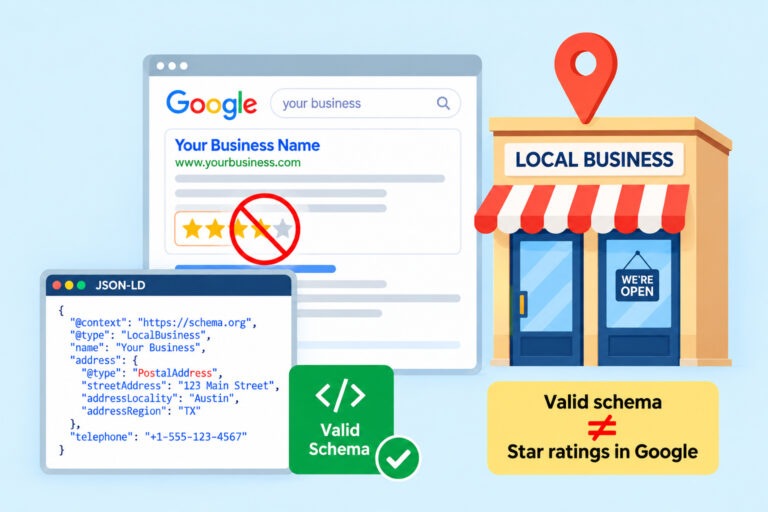
Many business owners assume that adding review schema markup to their homepage will automatically display star ratings in Google Search. That was once more common, but Google’s self-serving reviews update significantly changed how review markup is handled for local businesses and organizations.
Today, businesses generally cannot mark up their own reviews simply to earn organic review stars. This particularly affects:
- Law firms
- Marketing agencies
- Plumbing companies
- Dentists
- Consultants
- Most service-based businesses
Some business categories, such as restaurants, may still qualify under certain circumstances, but eligibility depends on Google’s current policies and the nature of the page.
If you run a service business, it’s important to understand these restrictions before investing time in review schema implementation.
Event Schema
Google also supports review markup for certain Event pages, although this is less common than Product or Recipe.
The page should describe a single event, such as:
- A concert
- A conference
- A workshop
- A sporting event
General event calendars or pages listing multiple events typically aren’t eligible because they don’t represent one reviewable entity.
Schema Types That Are Not Eligible for Review Stars
One of the biggest misconceptions about review schema markup is that it can generate star ratings on any page. In reality, Google ignores review markup on many schema types because they don’t represent a single reviewable entity.
Here’s a quick overview:
| Schema Type | Eligible for Review Stars? | Why |
|---|---|---|
| WebPage | No | Too generic to represent a reviewable item |
| Service | No | Services themselves aren’t supported review types |
| CollectionPage | No | Represents multiple items, not one entity |
| BlogPosting | No | The article isn’t the reviewed item |
| Organization | Generally No | Restricted by Google’s self-serving review policy |
| Homepage | No | Doesn’t represent a single entity |
For example, adding review markup to a digital marketing agency’s homepage or a “Our Services” page won’t make it eligible for Google review stars. While the structured data may be technically valid according to Schema.org, it doesn’t meet Google’s requirements for review rich results eligibility.
Understanding AggregateRating and itemReviewed
When implementing a review schema, two properties often cause confusion: AggregateRating and itemReviewed.
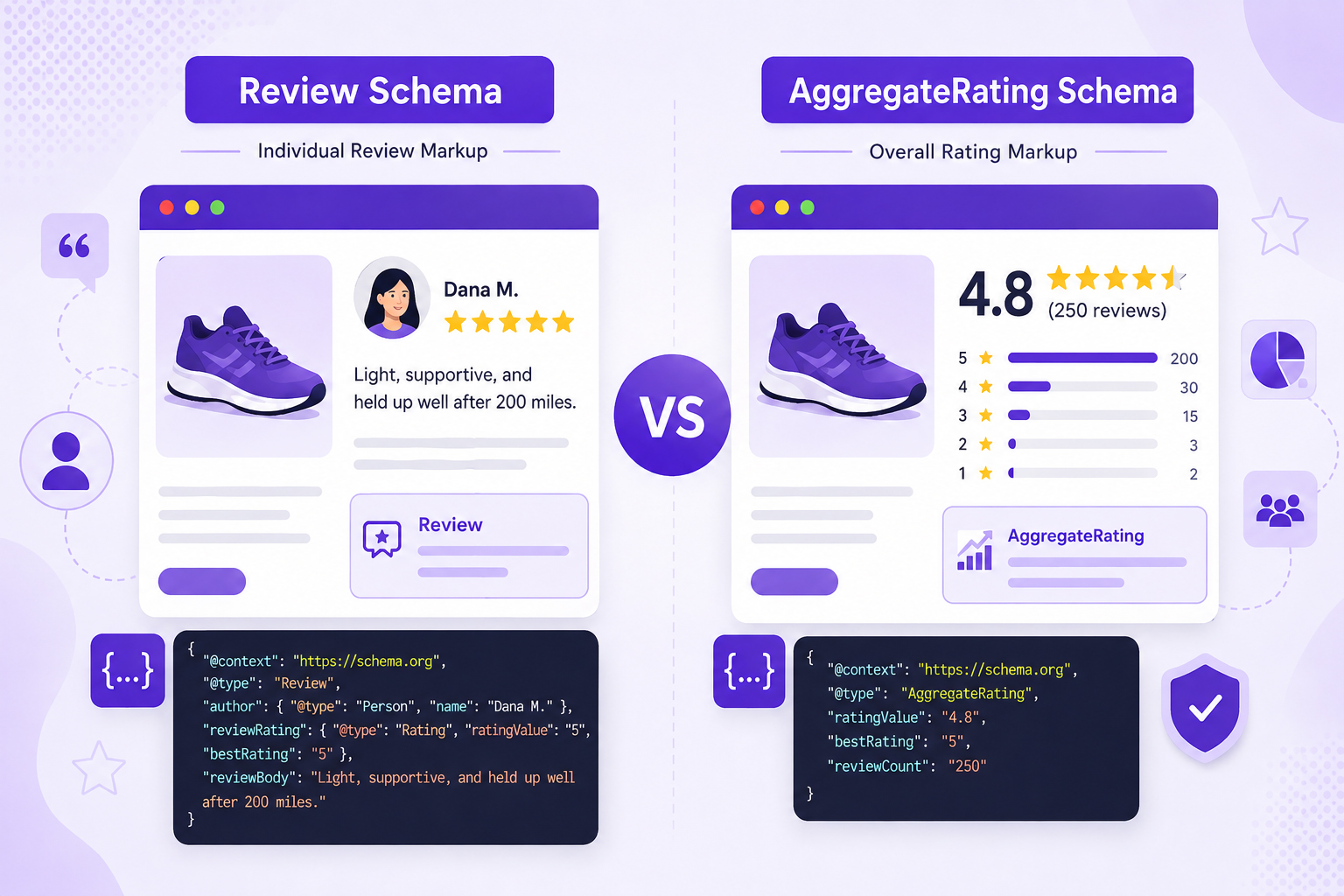
AggregateRating summarizes multiple reviews into an overall score (for example, 4.8 out of 5 based on 250 reviews).
ItemReviewed tells Google exactly what those reviews are about.
These properties don’t determine eligibility on their own, they simply provide additional information about a supported entity.
For example, this is an appropriate relationship:
- Schema Type: Product
- itemReviewed: Wireless Headphones
- AggregateRating AggregateRating: 4.7/5 from 315 reviews
If itemReviewed refers to an unsupported entity, adding AggregateRating won’t make the page eligible for review stars. After implementing these properties, validate your markup with the Schema Markup Validator to confirm the structured data is correctly formatted before testing it for rich results.
Tips on How to Qualify for Review Stars
If your page uses one of Google’s supported schema types, follow these best practices to improve your chances of earning review rich results:
- Use the correct schema type for the page.
- Display genuine reviews that are visible to users.
- Ensure your structured data matches the page content.
- Mark up a single reviewable entity, not a category or homepage.
- Validate your structured data before publishing.
- Follow Google’s Review Snippet Guidelines and spam policies.
Remember that review stars are not guaranteed . Even when your markup is valid, Google decides whether to display rich results based on many factors, including content quality and overall search relevance.
Conclusion
Implementing review schema markup starts with choosing the right schema type. Even perfectly valid structured data won’t produce review stars if the page isn’t one of Google’s supported review types.
Before adding Review or AggregateRating, confirm that your page represents a supported entity, such as a Product, SoftwareApplication, Book, Course, or Recipe. Then focus on authentic reviews, visible content, and Google’s implementation guidelines.
By understanding which review snippet schema types are eligible and which aren’t, you can avoid common mistakes and build a structured data strategy that gives your pages the best chance of earning review rich results.
Frequently Asked Questions
Q1: Can every schema type display review stars?
No. Google only supports review rich results for specific schema types, including Product, SoftwareApplication, Book, Course, Recipe, Movie, and certain LocalBusiness and Event pages.
Q2: Can I add a review schema to my homepage?
You can add structured data, but homepage review markup generally isn’t eligible for Google review stars, especially for organizations and service businesses.
Q3: Does a valid review schema guarantee star ratings?
No. Valid markup is only one requirement. Google also evaluates page quality, review authenticity, and compliance with its Review Snippet Guidelines before showing review stars.
Q4: What’s the difference between Review and AggregateRating?
A Review represents an individual customer’s opinion, while AggregateRating summarizes multiple reviews into an average rating.
Q5: Where can I check if my review schema is valid?
Use Google’s Rich Results Test and the Schema Markup Validator to validate your structured data before publishing.







 Wix Schema
 Squarespace Schema
 BigCommerce Schema
 Shopify Schema
 Hubspot Schema
 Webflow Schema
 GoHighlevel Schema
 Duda Schema
 Weebly Schema