


If your SaaS relies only on G2, Capterra, or other third-party review platforms, you’re also relying on someone else’s ecosystem. While those platforms help build credibility, they don’t give you full control over how your reviews are collected, displayed, or used for structured data.
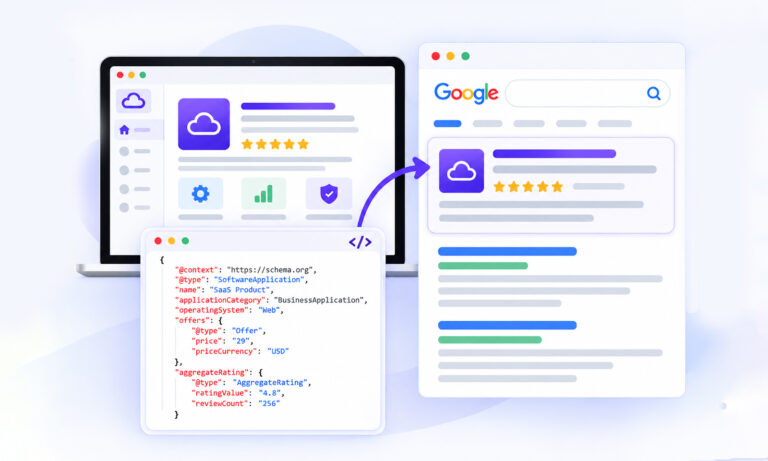
Building an on-site review system for SaaS gives you ownership of your customer feedback and provides the review data needed to implement SoftwareApplication review or AggregateRating structured data accurately.
In this guide, you’ll learn how to build a review system that benefits users, aligns with Google’s guidelines, and provides the foundation for review snippet eligibility in Google Search.
Quick Steps to Build an On-Site Review System for Your SaaS
Follow these practical steps to build an on-site review system that collects genuine customer feedback, improves trust, and supports compliant SoftwareApplication review markup.
| Step | What to Do |
|---|---|
| 1 | Add a review form to your SaaS product page. |
| 2 | Collect star ratings and written customer feedback. |
| 3 | Verify reviewers whenever possible. |
| 4 | Moderate reviews to remove spam while keeping genuine feedback. |
| 5 | Publish approved reviews and calculate the aggregate rating. |
| 6 | Connect visible reviews to SoftwareApplication and AggregateRating schema. |
| 7 | Keep review counts and ratings updated as new reviews are published. |
Why SaaS Companies Need an On-Site Review System
Building an on-site review system for SaaS gives you direct control over how customer reviews are collected, displayed, and maintained on your website. Unlike third-party platforms such as G2 or Capterra, first-party reviews live on your website, making them easier to manage and keep aligned with your product pages.
A well-designed SaaS review system helps you:
- Collect authentic first-party customer reviews.
- Display ratings where customers make buying decisions.
- Keep review data and structured data consistent.
- Build trust with fresh, user-generated content.
It also provides the underlying review data you need to implement SoftwareApplication Review or AggregateRating structured data accurately. While valid SaaS review markup doesn’t guarantee Google star ratings, it can make your product pages eligible for review snippets when they follow Google’s guidelines.
Owning your reviews also makes your review strategy more resilient. Third-party platforms can change their policies, pricing, or visibility at any time, but a well-maintained collection of first-party reviews for SaaS remains a long-term asset that you control.
How to Build an On-Site Review System for Your SaaS
Building an on-site review system for SaaS isn’t just about adding a star rating widget. The goal is to create a reliable process for collecting, displaying, and maintaining authentic customer reviews while keeping your review data consistent with your structured data.
Here’s a practical framework you can follow.
1. Decide Where Your Reviews Will Live
A SaaS product page is a logical place to collect and display reviews because users can evaluate the feedback alongside the product’s features, pricing, and other decision-making information. Keeping reviews close to pricing, features, or product details helps visitors make informed decisions and ensures the reviews are directly associated with the software being marked up.
If you use review structured data on a page, make sure the reviews or aggregate rating represented in the markup are readily available to users on that same page. A separate testimonials page should not be used as a substitute for displaying the marked-up review content.
2. Create a Review Submission Form
Your review form should be simple enough to encourage submissions while collecting the information users actually look for.
Include fields such as:
- Overall star rating
- Written review
- Reviewer name
- Review date
- Optional review title
The easier the form is to complete, the more likely customers are to leave feedback.
3. Verify Reviewers Whenever Possible
You can allow reviews from customers without making verification a Google requirement. However, verifying that a reviewer is a real customer can help reduce fake, duplicate, or abusive submissions. A reviewer can be verified through:
- A logged-in customer account
- An active or past subscription
- Email verification after submission
- Purchase or billing records
Verification can help your system reduce fake or duplicate submissions, but Google does not require a “verified customer” label for SoftwareApplication review snippets.
4. Moderate Reviews Without Filtering Out Honest Feedback
Moderation is important, but it should focus on removing spam, abusive language, or clearly fake submissions, not negative opinions.
Publishing only positive reviews can make a review system less transparent. A moderation policy should remove spam, abuse, or fraudulent submissions while allowing legitimate negative feedback to remain.
5. Display Reviews Clearly on the Product Page
Once approved, reviews should be publicly accessible on the page, and the review information represented in structured data should match what users can see. A typical review section includes:
- Average star rating
- Total review count
- Individual customer reviews
- Review date
- Reviewer name
- Sorting options such as newest or highest rated
The information shown to users should match the review data included in your structured data.
6. Connect Reviews to SoftwareApplication Schema
SoftwareApplication identifies the SaaS product being reviewed, while Review represents an individual customer review and AggregateRating represents the overall rating calculated from the ratings collected. These properties work together to connect your visible customer feedback with the software product described in your structured data.
After reviews are published, they should feed into your structured data automatically. Typically, the process looks like this:
Customer submits a review → Review is approved → Review and aggregate rating data are updated → SoftwareApplication structured data is updated → Google recrawls the page
This ensures your SoftwareApplication review schema and SoftwareApplication AggregateRating always reflect the reviews visible on the page.
7. Keep Ratings and Schema Updated
An on-site review system for SaaS isn’t a one-time setup. Every new review should automatically update:
- Average rating
- Total number of ratings or reviews, as applicable
AggregateRatingvalues, including the appropriateratingCountor reviewCount- Structured data on the page
ratingCount represents the total number of ratings, while reviewCount represents the number of people who submitted reviews, so the property used should match the data collected by the review system.
Keeping the visible review content and structured data synchronized helps ensure that the markup accurately represents what users can see on the page.
What Makes an On-Site Review System Google-Friendly?
Not every review system is suitable for structured data. For Google eligibility, the review or rating information represented in structured data should accurately reflect content that is available to users on the page and follow Google’s review snippet guidelines. The following practices combine those requirements with practical ways to keep a SaaS review system accurate and trustworthy.
| Best Practice | Why It Matters |
|---|---|
| Collect first-party reviews | Reviews should be submitted directly on your website. |
| Display reviews publicly | Users should be able to see the same reviews referenced in structured data. |
| Keep schema accurate | Ratings and review counts should always match the visible content. |
| Use the correct schema type | SaaS product pages should typically use SoftwareApplication schema. |
| Keep review data current | Update the visible review count, ratings, and corresponding structured data when reviews change. |
Following these practices won’t guarantee SaaS star ratings, but they provide the strongest foundation for eligibility. Google ultimately decides whether review snippets appear in search results based on its own ranking and display systems.
Common SaaS Review Schema Mistakes That Can Affect Google Eligibility
Even a well-designed SaaS review system can lose eligibility if review data isn’t implemented correctly. These are some of the most common mistakes to avoid.
| Mistake | Why It Matters |
|---|---|
| Aggregating reviews from third-party websites | Google says not to aggregate reviews or ratings from other websites in your review structured data. |
| Using schema without visible reviews | Structured data should match the reviews displayed on the page. |
| Publishing fake, fabricated, or undisclosed incentivized reviews | Misleading reviews violate Google’s spam policies and reduce trust. |
| Not updating aggregate ratings | Outdated ratings make your structured data inaccurate. |
| Using the wrong schema type | SaaS products should typically use SoftwareApplication schema instead of unrelated schema types. |
SaaS products should typically use SoftwareApplication schema instead of unrelated schema types.
SaaS Review System Maintenance Checklist
Once you’ve built an on-site review system for SaaS, keep it reliable by following a few simple practices:
- Encourage customers to leave honest, detailed reviews.
- Verify reviewers whenever possible.
- Publish both positive and critical feedback.
- Remove only spam or abusive content.
- Update SoftwareApplication AggregateRating automatically.
- Regularly check that your visible reviews and structured data match.
A trustworthy review system benefits both users and search engines over time.
Conclusion
Building an on-site review system for SaaS gives you a direct way to collect and display first-party customer feedback and maintain the review data used by your structured markup. By gathering genuine reviews, displaying them transparently, and keeping your SoftwareApplication review or AggregateRating structured data accurate, you can create the conditions required for review snippet eligibility. Google does not guarantee that star ratings will appear in Search.
FAQs
Q1: Can I use G2 or Capterra reviews in my SaaS review markup?
No, not as aggregated reviews from another website. Google says not to aggregate reviews or ratings from other websites in review structured data. If you want review markup based on customer feedback you control, collect and display those reviews directly on your own site.
Q2: Does SoftwareApplication review schema guarantee Google star ratings?
No. Valid SoftwareApplication review schema only makes your page eligible for review snippets. Google decides whether star ratings appear in search results.
Q3: What should a SaaS review form include?
A basic review form should collect a star rating, written review, reviewer name, and review date. Verifying reviewers can further improve trust.
Q4: Where should I display customer reviews?
A SaaS product page is a logical place to display customer reviews because users can evaluate the feedback alongside the product information. If you use review structured data, the reviews or aggregate rating represented in the markup should be readily available on that page.
Q5: How often should aggregate ratings be updated?
Ideally, every time a new review is approved. Update the aggregate rating whenever the underlying ratings change so that the rating value and review or rating count accurately reflect the currently published data.
Q6: Can testimonials replace customer reviews?
Not automatically. A testimonial is not necessarily a structured review with a rating. If you want to use Review or AggregateRating structured data, the marked-up content must represent genuine review or rating information and be readily available to users on the page.








 Wix Schema
 Squarespace Schema
 BigCommerce Schema
 Shopify Schema
 Hubspot Schema
 Webflow Schema
 GoHighlevel Schema
 Duda Schema
 Weebly Schema